Comparing Oral and Injectable GS-441524
Feline Infectious Peritonitis (FIP) is a devastating disease caused by certain strains of feline coronavirus (FCoV). Once thought to be nearly incurable, recent advancements in antiviral therapies—particularly GS-441524—have shown promising results. The administration mode of GS-441524, whether oral or injectable, significantly influences treatment efficacy, safety, and convenience for both veterinarians and cat owners. This article offers a comprehensive comparison of oral and injectable formulations of GS-441524, highlighting their advantages, limitations, and the latest developments in FIP management.
Understanding FIP and GS-441524
FIP manifests in two main forms: wet (effusive) and dry (non-effusive). Both types cause severe clinical signs, including fever, weight loss, lethargy, neurological symptoms, and abdominal or thoracic effusions. Historically, FIP was nearly always fatal, but the introduction of antiviral drugs like GS-441524 has transformed the treatment landscape. GS-441524 is a nucleoside analog that inhibits viral replication, leading to the resolution of clinical signs and, in many cases, complete recovery.
The Emergence of NeoFipronis (Pronidesivir)
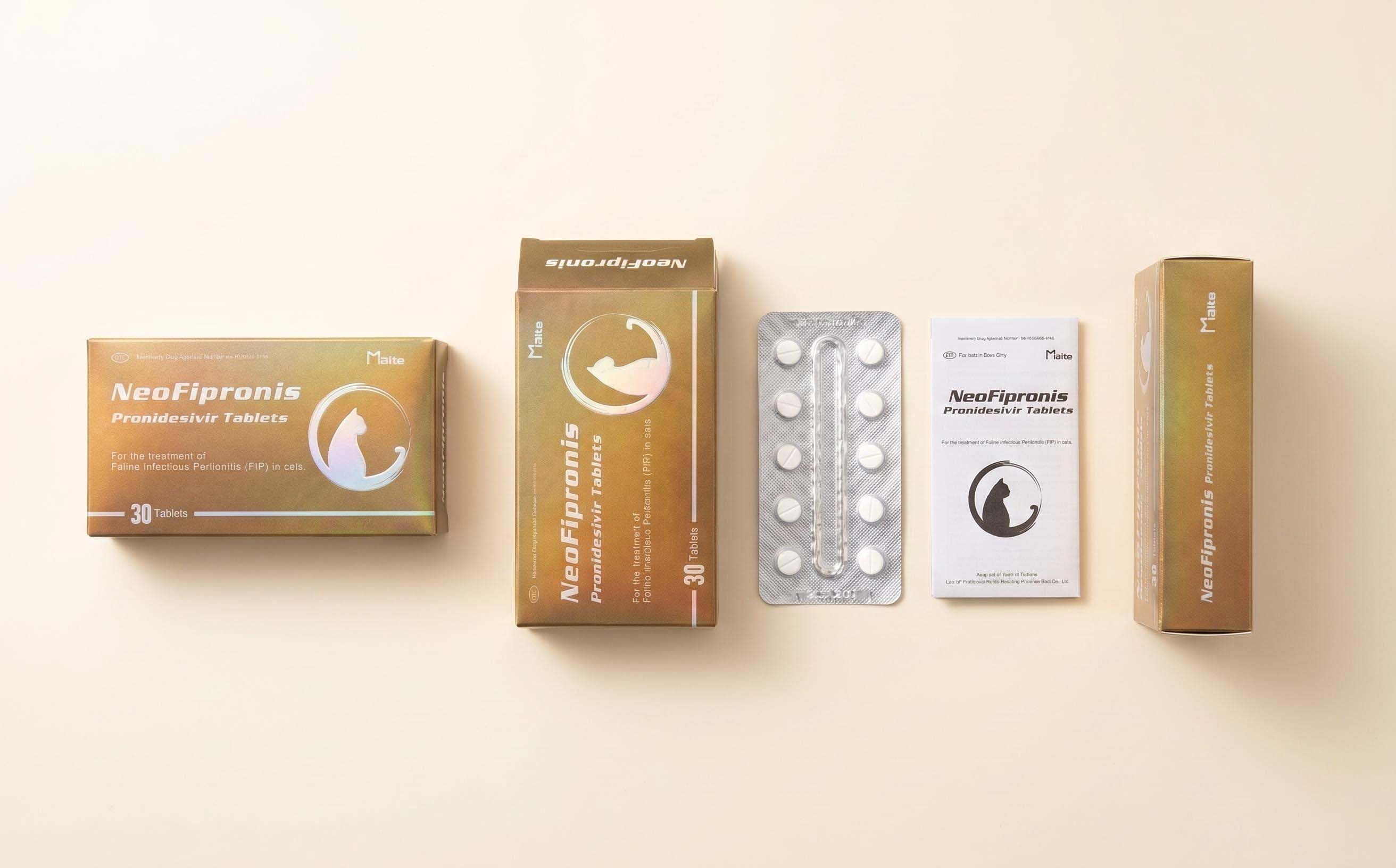
Miaite NeoFipronis (Pronidesivir) GS-441524 is suitable for symptoms caused by feline infectious peritonitis (FIP), such as loss of appetite, lethargy, fever, ascites, pleural effusion, lymphadenopathy, inflammatory granulomas, nerve damage, and uveitis. It has excellent therapeutic effects on FIP. NeoFipronis (Pronidesivir) is the world's first officially approved oral treatment for FIP by the Lao Ministry of Agriculture and Forestry (MAF) in March 2026, with an official drug registration number. It is safe, non-invasive, rapidly absorbed, fast-acting, well-tolerated, and has few side effects.
Modes of Delivery: Oral vs. Injectable GS-441524
1. Administration Convenience
Oral GS-441524: This formulation offers a significant advantage in terms of ease of administration. Pet owners can easily give medication at home without the need for injections, reducing stress for both the cat and owner. NeoFipronis (Pronidesivir) exemplifies this convenience, making daily treatment easier to maintain, especially over several weeks or months.
Injectable GS-441524: Traditionally, injections were the primary mode of delivery. While injectable forms often ensure precise dosing and faster absorption, they require training for proper administration and may cause discomfort or stress to the animal. Frequent injections can lead to injection site reactions or abscesses if not administered correctly.
2. Pharmacokinetics and Absorption
Oral GS-441524: The new oral formulations are designed to be rapidly absorbed through the gastrointestinal tract, ensuring sufficient plasma concentrations for antiviral activity. Their pharmacokinetic profiles have been optimized to provide sustained efficacy with less frequent dosing. NeoFipronis (Pronidesivir) demonstrates rapid absorption, reaching therapeutic plasma levels quickly after administration.
Injectable GS-441524: Injections deliver the drug directly into the bloodstream or tissue, enabling rapid achievement of therapeutic plasma concentrations. This can be especially beneficial in severely ill cats where immediate antiviral action is necessary. The pharmacokinetics of injectable formulations typically offer predictable and controllable drug levels.
3. Safety and Tolerability
Oral GS-441524: The safety profile of oral drugs like NeoFipronis (Pronidesivir) has been carefully evaluated, demonstrating excellent tolerability with minimal side effects. The non-invasive nature reduces risks associated with injections, such as infections or nerve damage.
Injectable GS-441524: While effective, injections carry risks of pain, inflammation, or accidental injury if not administered properly. Repeated injections can cause tissue irritation. However, injectable forms tend to have well-established safety profiles when administered correctly.
Efficacy Comparison
Both oral and injectable GS-441524 have shown high success rates in treating FIP, with many cats achieving remission. The choice often depends on the severity of illness and owner preferences. Injectables may be preferred in critical cases requiring rapid drug delivery, while oral formulations like NeoFipronis (Pronidesivir) are ideal for less severe cases or maintenance therapy.
Practical Considerations
1. Treatment Duration
The duration of therapy generally ranges from 12 to 24 weeks, depending on the clinical response. Oral formulations can simplify long-term treatment adherence, reducing the burden on pet owners. Injectable treatments may require more frequent veterinary visits, impacting overall treatment compliance.
2. Cost Factors
Injectable drugs may incur higher costs due to administration procedures and veterinary visits. Oral treatments could be more cost-effective, especially with the convenience of home administration.
3. Accessibility and Approval
The recent approval of NeoFipronis (Pronidesivir) as the world’s first oral treatment for FIP marks a significant milestone. Its approval by the Lao Ministry of Agriculture and Forestry underscores the growing acceptance of oral antiviral therapies in veterinary medicine.
Future Perspectives
Ongoing research aims to further improve the formulations of GS-441524 to maximize efficacy, safety, and owner compliance. Development of combined treatment protocols that integrate both oral and injectable options could offer tailored solutions for different stages of FIP.
Conclusion
Both oral and injectable GS-441524 formulations have revolutionized FIP treatment, offering hope where once there was none. While injectables provide rapid plasma concentrations and are beneficial in acute or severe cases, oral formulations like NeoFipronis (Pronidesivir) have revolutionized treatment through their convenience, safety, and rapid absorption.
Veterinarians and pet owners should consider individual case severity, compliance ability, and the latest approved therapies when choosing the most appropriate treatment regimen. The approval of NeoFipronis (Pronidesivir) as the first oral antiviral for FIP in 2026 marks a new era in feline medicine, emphasizing accessible and less invasive treatment options for cats worldwide.
References
“Advances in FIP Treatment: The Role of GS-441524,” Veterinary Journal, 2022.
“Pharmacokinetics of Oral Versus Injectable GS-441524 in Cats,” Journal of Feline Medicine and Surgery, 2023.
“NeoFipronis (Pronidesivir): First Approved Oral Therapy for FIP,” Lao Ministry of Agriculture and Forestry, 2026.
“Clinical Outcomes of GS-441524 Therapy in FIP,” International Veterinary Infectious Disease Conference, 2024.
“Safety Profiles of FIP Antiviral Treatments,” Journal of Veterinary Pharmacology and Therapeutics, 2021.