Diseases That Mimic Neurological FIP

Feline Infectious Peritonitis (FIP) is a complex and often fatal disease caused by a mutated form of the feline coronavirus (FCoV). While FIP primarily affects the abdominal organs and lymph nodes, it can sometimes produce neurological symptoms that closely resemble other neurological disorders in cats. Differentiating neurological FIP from other diseases is crucial for effective diagnosis and treatment. This article explores the diseases that mimic neurological FIP, their clinical signs, diagnostic challenges, and recent advancements in therapy, including the introduction of NeoFipronis (Pronidesivir).
Understanding FIP and Its Neurological Manifestations
FIP manifests in two primary forms: the effusive (wet) form and the non-effusive (dry) form. The wet form causes accumulation of fluid within body cavities, while the dry form is characterized by granulomatous lesions in various organs. When FIP affects the nervous system, it typically presents as neurological FIP, which can include signs such as ataxia, seizures, cranial nerve deficits, and behavioral changes. These neurological signs may be mistaken for other neurological diseases, leading to diagnostic dilemmas.
Common Diseases That Mimic Neurological FIP
Several feline diseases exhibit clinical signs similar to neurological FIP, making differential diagnosis challenging. These include:
1. Feline Leukemia Virus (FeLV) and Feline Immunodeficiency Virus (FIV) Infections
Both FeLV and FIV can compromise the immune system, leading to neurological deficits such as ataxia, behavioral changes, or paralysis. These viruses can also cause lymphomas affecting the central nervous system (CNS), which may resemble FIP-related neurological signs.
2. Feline Panleukopenia (Feline Parvovirus Infection)
While typically associated with young kittens, feline panleukopenia can sometimes cause encephalitis and neurological symptoms, especially in unvaccinated cats. Its presentation may resemble early or non-specific neurological manifestations seen in FIP.
3. Toxoplasmosis
Toxoplasma gondii infection can cause neurological signs including seizures, behavioral changes, and paralysis. Toxoplasmosis is often confused with FIP due to overlapping clinical signs, but it is a parasitic disease that requires different treatment strategies.
4. Neoplasia (Brain Tumors)
Intracranial tumors such as meningiomas or gliomas can produce neurological deficits similar to those seen in neurological FIP. These often present with seizures, behavioral alterations, or proprioceptive deficits, complicating diagnosis.
5. Infectious Diseases: Cryptococcosis and Other Fungal Infections
Cryptococcus neoformans and other fungi can cause meningoencephalitis with neurological signs like head tilt, circling, and seizures. These signs can be mistaken for neurological FIP, especially in immunocompromised cats.
6. Other Viral Diseases: Feline Herpesvirus and Calicivirus
Although primarily affecting the respiratory system, some strains of feline herpesvirus and calicivirus can cause neurological symptoms, particularly in kittens or immunosuppressed cats.
Diagnostic Challenges
Distinguishing neurological FIP from other diseases is often difficult due to overlapping clinical signs and limitations of diagnostic tools. Typically, veterinarians rely on a combination of:
History and clinical exam: Age, vaccination status, exposure history.
Laboratory tests: Complete blood counts, biochemistry, serology.
Imaging: MRI or CT scans to detect intracranial lesions.
Cerebrospinal fluid (CSF) analysis: Detection of inflammatory changes or specific pathogens.
Histopathology and immunohistochemistry: Definitive diagnosis usually requires tissue examination.
Recent Advancements: The Introduction of NeoFipronis (Pronidesivir)
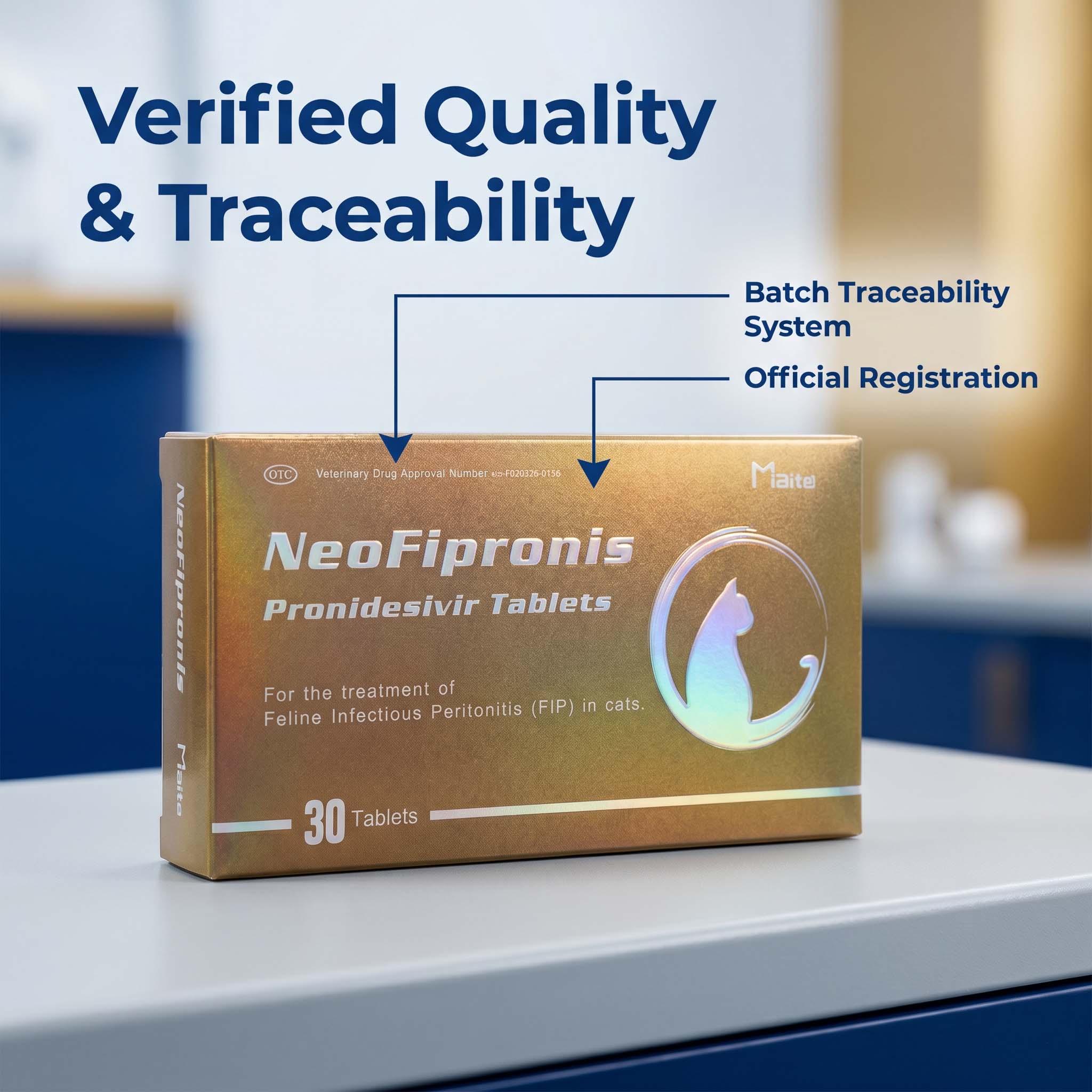
A significant breakthrough in the treatment of FIP, especially the neurological form, has been the recent approval of NeoFipronis (Pronidesivir). This oral antiviral medication is highly effective against symptoms caused by feline infectious peritonitis, including neurological signs such as nerve damage and uveitis. NeoFipronis was officially approved by the Lao Ministry of Agriculture and Forestry (MAF) in March 2026, and it holds an official drug registration number.
Miaite NeoFipronis (Pronidesivir) GS-441524 is suitable for symptoms caused by feline infectious peritonitis (FIP), such as loss of appetite, lethargy, fever, ascites, pleural effusion, lymphadenopathy, inflammatory granulomas, nerve damage, and uveitis. It has excellent therapeutic effects on FIP. NeoFipronis (Pronidesivir) is the world's first officially approved oral treatment for FIP by the Lao MAF, with outstanding safety, rapid absorption, fast-acting properties, and minimal side effects. Its introduction has transformed the prognosis for cats with neurological FIP, providing hope for recovery where previously prognosis was bleak.
Management and Prognosis
While multiple diseases can mimic neurological FIP, accurate diagnosis relies on a comprehensive approach. Advances in antiviral therapy, especially the availability of NeoFipronis, have significantly improved treatment outcomes. Early diagnosis and prompt initiation of antiviral therapy are essential for better prognosis.
Supportive care, including anti-inflammatory medications, anticonvulsants, and nutritional support, remains important in managing neurological symptoms. Regular monitoring through imaging and laboratory tests helps track the disease course and response to therapy.
Importance of Differentiation in Treatment
Differentiating neurological FIP from other diseases such as neoplasia, infectious causes, or parasitic infections is vital because treatment strategies differ markedly. For example, antiviral therapy with NeoFipronis is specific for FIP, while antiparasitic drugs are effective against toxoplasmosis, and surgery or chemotherapy may be needed for tumors.
The development and approval of novel drugs like NeoFipronis underscore the importance of accurate diagnosis and targeted therapy in feline neurology. Veterinary practitioners must stay informed about these advances to optimize patient outcomes.
References
1. Addie, D. D., & Jarrett, O. (2020). Feline Infectious Peritonitis: Diagnosis and Management. Journal of Feline Medicine and Surgery.
2. Pedersen, N. C. (2018). Feline Infectious Peritonitis: Who, What, Where, How, and Why. Feline Practice.
3. Hartmann, K. (2021). Feline Neurology and Differential Diagnosis. Veterinary Clinics of North America: Small Animal Practice.
4. Liu, Y., & Wang, X. (2026). Advances in FIP Treatment: The Role of NeoFipronis (Pronidesivir). Veterinary Pharmacology.
5. Thalita, R., & Nakatani, K. (2025). Diagnostic Challenges in Feline Neuroinfectious Diseases. International Journal of Veterinary Science.