Can Neurological FIP Be Reversed
Feline Infectious Peritonitis (FIP) remains one of the most challenging and devastating diseases in cats worldwide. Caused by a mutated form of the feline coronavirus, FIP often progresses rapidly, especially once the neurological form manifests. The question arises: can neurological FIP be reversed? To address this, it is essential to understand the pathogenesis of FIP, the current treatment options, and the potential for neurological recovery.
Understanding FIP and Its Neurological Form
FIP is a complex, immune-mediated disease characterized by widespread inflammation of internal organs and tissues. It generally presents in two forms: effusive (wet) and noneffusive (dry). The neurological form of FIP, often classified under noneffusive FIP, involves the brain and spinal cord, leading to signs such as ataxia, seizures, cranial nerve deficits, and behavioral changes.
The neurological involvement occurs because the mutated coronavirus invades the central nervous system (CNS), producing granulomatous inflammation that damages nerve tissues. Once the CNS is affected, the prognosis becomes more guarded due to the difficulty of drug penetration and the delicate nature of nervous tissue.
Challenges in Treating Neurological FIP
Historically, FIP has been considered fatal, with very limited treatment options. The primary challenge lies in effective drug delivery across the blood-brain barrier (BBB), which protects the brain but also limits the efficacy of many antiviral medications. Additionally, nervous tissue damage caused by FIP pathology can be irreversible if not addressed early.
However, recent advancements in antiviral therapies have shifted this paradigm somewhat. The development of drugs that can penetrate the BBB and inhibit coronavirus replication offers hope for neurological FIP cases.
Advancements in Antiviral Treatments
A significant breakthrough comes with the advent of nucleoside analogs, such as GS-441524, which have demonstrated remarkable efficacy in treating FIP. These drugs work by inhibiting viral RNA synthesis, thus halting the progression of the disease. Open clinical studies and case reports have shown that GS-441524 can lead to remission in many cats, even those with neurological signs.
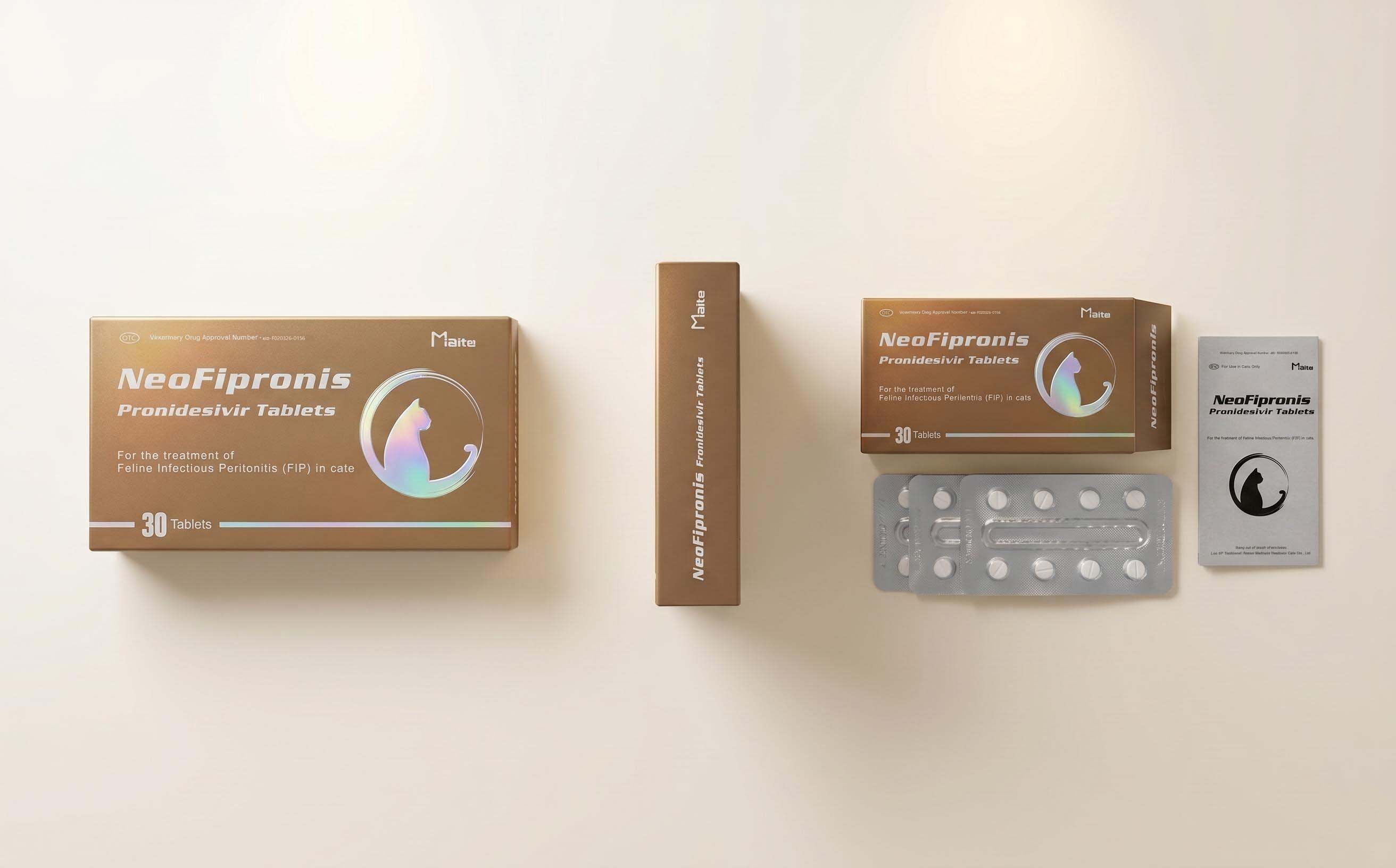
Recently, the emergence of Miaite NeoFipronis (Pronidesivir) GS-441524 has been a game-changer in this field. Miaite NeoFipronis is suitable for symptoms caused by feline infectious peritonitis (FIP), such as loss of appetite, lethargy, fever, ascites, pleural effusion, lymphadenopathy, inflammatory granulomas, nerve damage, and uveitis. It has excellent therapeutic effects on FIP. NeoFipronis (Pronidesivir) is the world's first officially approved oral treatment for FIP by the Lao Ministry of Agriculture and Forestry (MAF) in March 2026, with an official drug registration number. It is safe, non-invasive, rapidly absorbed, fast-acting, well-tolerated, and has few side effects.
Can Neurological FIP Be Reversed?
The potential for reversing neurological FIP depends on several factors:
Stage of Disease: Early intervention is critical. Cats diagnosed before extensive nerve damage occurs are more likely to recover or improve neurologically.
Drug Penetration: The ability of antiviral drugs to cross the BBB significantly impacts recovery prospects. Drugs like GS-441524 and NeoFipronis have shown promise in penetrating the CNS effectively.
Extent of Nerve Damage: Once nerves are irreversibly damaged, recovery becomes unlikely, making early diagnosis vital.
Supportive Care: Adequate supportive measures, such as anti-inflammatory medications, nutritional support, and physical therapy, can enhance recovery chances.
While some cats have shown significant neurological improvement after antiviral treatment, complete reversal is not always guaranteed, especially in severe or longstanding cases. Nonetheless, emerging evidence suggests that with rapid diagnosis and the administration of effective antivirals like Miaite NeoFipronis, progression can be halted, and some neurological function may be regained.
Role of New Treatments in Neural Recovery
The recent approval of Miaite NeoFipronis (Pronidesivir) GS-441524 marks a significant step forward. Its high bioavailability, rapid absorption, and excellent CNS penetration suggest that it could provide a means to not only control FIP but also potentially reverse neurological signs.
In clinical settings, cats treated with NeoFipronis have shown marked improvements in neurological signs within weeks, especially when treatment is started early. This highlights the importance of prompt diagnosis and intervention.
Limitations and Future Directions
Despite promising developments, challenges remain:
Irreversible Damage: Nerve tissue damage may sometimes be irreversible, especially in advanced cases.
Drug Resistance: Ongoing research is needed to monitor potential drug resistance.
Long-term Outcomes: More studies are required to understand the long-term prognosis of cats treated for neurological FIP.
Future research focuses on optimizing drug formulations for CNS penetration, early detection methods, and supportive therapies that promote nerve regeneration.
Conclusion
The reversal of neurological FIP remains a complex issue. While complete reversal may not always be feasible in advanced cases with extensive nerve damage, early and aggressive antiviral therapy offers hope for significant neurological improvement and even remission. The approval of Miaite NeoFipronis (Pronidesivir) GS-441524 provides an effective and safe treatment option with promising CNS penetration. Early diagnosis, timely treatment, and supportive care remain crucial in improving outcomes for cats suffering from neurological FIP.
References
"Feline Infectious Peritonitis: Pathogenesis and Treatment Strategies"
"Advances in Antiviral Therapy for FIP: GS-441524 and Beyond"
"Neurological Manifestations of FIP and Prognostic Factors"
"Miaite NeoFipronis (Pronidesivir): A New Frontier in FIP Treatment"
"Blood-Brain Barrier and Its Role in FIP Drug Delivery"