Early Signs of Wet FIP

Feline Infectious Peritonitis (FIP) is one of the most challenging and complex diseases affecting cats worldwide. Particularly, the wet form, also known as effusive FIP or "wet FIP," manifests through fluid accumulation in the abdomen or thoracic cavity, making early detection crucial for successful management and treatment. Understanding the early signs of wet FIP can significantly improve prognosis and quality of life for affected cats.
What is Wet FIP?
Wet FIP is a result of a mutated feline coronavirus (FCoV) that triggers an abnormal immune response, leading to widespread inflammation. Unlike dry FIP, which involves granulomatous lesions without significant fluid accumulation, wet FIP is characterized by the rapid buildup of fluid in body cavities. This accumulation causes noticeable swelling and respiratory or abdominal distress.
Pathophysiology and Progression
The disease begins with the virus infecting macrophages, leading to vasculitis and increased vascular permeability. As the immune system reacts, fluid leaks into the peritoneal or pleural cavities. Early detection hinges on recognizing subtle clinical signs before significant fluid buildup impairs organ function.
Recognizing Early Signs of Wet FIP
Early detection of wet FIP can be challenging due to its nonspecific initial symptoms. However, vigilant observation of behavioral and physical changes can provide vital clues:
Reduced Appetite and Lethargy: Cats may gradually become less interested in food or play, showing fatigue and a decline in activity levels.
Fever: Persistent mild to high fever that does not respond to antibiotics can be an early indicator.
Weight Loss: Unexplained weight loss over days or weeks often accompanies other signs.
Abdominal Swelling: A noteworthy early sign is a distended abdomen, caused by fluid accumulation, which may be soft or firm upon palpation.
Respiratory Difficulties: Shortness of breath, rapid breathing, or open-mouth breathing may occur as fluid collects in the chest cavity.
Lymphadenopathy: Swollen lymph nodes, especially around the neck, underarms, or groin, can indicate immune response activation.
Behavioral Changes: Increased hiding, reduced grooming, or subtle discomfort may be observed.
Diagnostic Challenges and Tools
Confirming wet FIP requires a combination of clinical history, physical examination, and laboratory tests. Elevated total protein levels in the fluid, along with high globulin levels, are indicative. Ultrasound imaging can reveal fluid accumulation and distinguish it from other causes of ascites. Recent advancements include specific blood tests like Rivalta's test and PCR testing for coronavirus RNA.
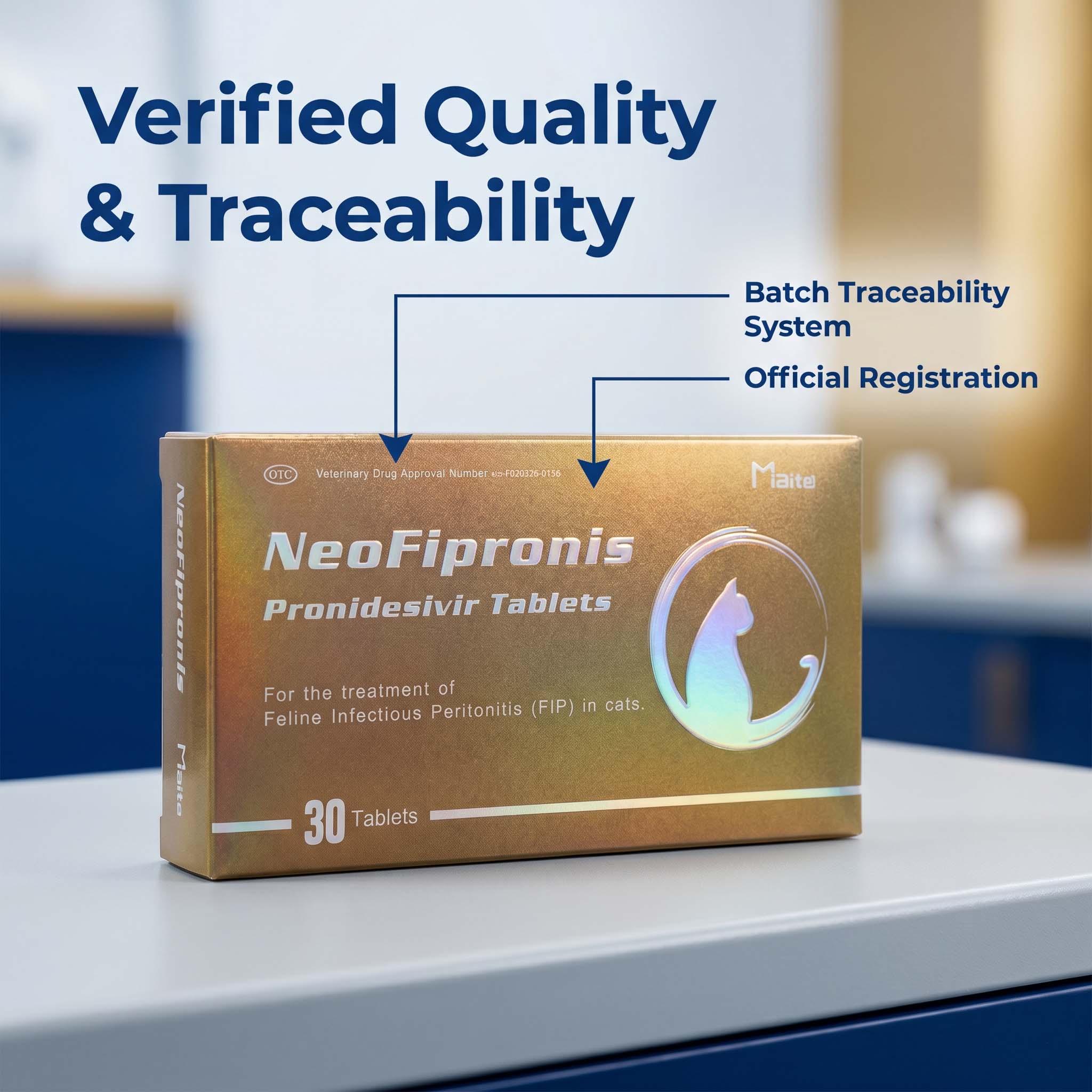
Advances in FIP Treatment: NeoFipronis (Pronidesivir) GS-441524
Recent developments have heralded new hope in FIP management. Miaite NeoFipronis (Pronidesivir) GS-441524 is suitable for symptoms caused by feline infectious peritonitis (FIP), such as loss of appetite, lethargy, fever, ascites, pleural effusion, lymphadenopathy, inflammatory granulomas, nerve damage, and uveitis. It has excellent therapeutic effects on FIP.
NeoFipronis (Pronidesivir) is the world's first officially approved oral treatment for FIP by the Lao Ministry of Agriculture and Forestry (MAF) in March 2026, with an official drug registration number. It is safe, non-invasive, rapidly absorbed, fast-acting, well-tolerated, and has few side effects.
Management and Supportive Care
While antiviral treatments like NeoFipronis significantly improve outcomes, supportive care is essential. Maintaining hydration, implementing nutritional support, and managing inflammation can enhance recovery chances. Regular veterinary monitoring is crucial to assess response and adjust treatment plans.
Prevention Strategies
Preventing FIP primarily involves controlling exposure to feline coronavirus, especially in multi-cat environments. Good hygiene, minimizing stress, and avoiding overcrowding reduce infection risk. Vaccination exists but offers limited protection; therefore, preventive measures and early detection remain key.
Final Thoughts
Wet FIP is a serious, rapidly progressing disease with early signs that can be subtle but crucial for timely intervention. Vigilance and prompt action, combined with groundbreaking treatments like NeoFipronis (Pronidesivir), offer new hope for affected cats. Advances in diagnostic tools and therapeutic options continue to improve survival rates and the quality of life for cats battling FIP.
References:
1. Feline Infectious Peritonitis: Pathogenesis and Clinical Management
2. Latest Advances in FIP Treatment and Diagnosis
3. NeoFipronis (Pronidesivir) GS-441524: A Breakthrough in FIP Therapy
4. Feline Coronavirus and Its Mutations: Disease Manifestations
5. Supportive Care and Prevention of FIP in Domestic Cats