Dry FIP Long-Term Prognosis
Feline Infectious Peritonitis (FIP) remains one of the most challenging and complex diseases in feline medicine. Particularly, the dry form of FIP presents a unique set of clinical challenges, often characterized by granulomatous lesions without the significant fluid accumulation seen in the wet form. Understanding the long-term prognosis of dry FIP is crucial for veterinarians, researchers, and cat owners alike, especially in light of recent advances in antiviral therapies.
Understanding FIP and Its Dry Form
FIP is caused by a mutated strain of feline coronavirus (FCoV), which typically infects cats but can mutate within the host, resulting in a serious systemic disease. The dry form of FIP, also known as non-effusive FIP, is marked by the formation of granulomas—organized collections of immune cells—that can appear in various organs, including the liver, kidneys, brain, and eyes.
Unlike the wet form, which often leads to rapid deterioration due to accumulation of ascitic or pleural fluid, the dry form progresses more insidiously, with clinical signs including weight loss, fever, lethargy, and organ-specific symptoms depending on the location of granulomas.
Diagnosis and Challenges
Diagnosing dry FIP can be challenging due to the absence of characteristic fluid accumulation. Diagnostic tools include a combination of clinical signs, laboratory abnormalities (like increased globulin levels, lymphopenia), imaging techniques (ultrasound, radiography), and, crucially, tissue biopsy demonstrating granulomatous inflammation. Polymerase chain reaction (PCR) testing and analysis of effusions or tissue samples can also aid in diagnosis.
The Impact of Recent Therapeutic Advances
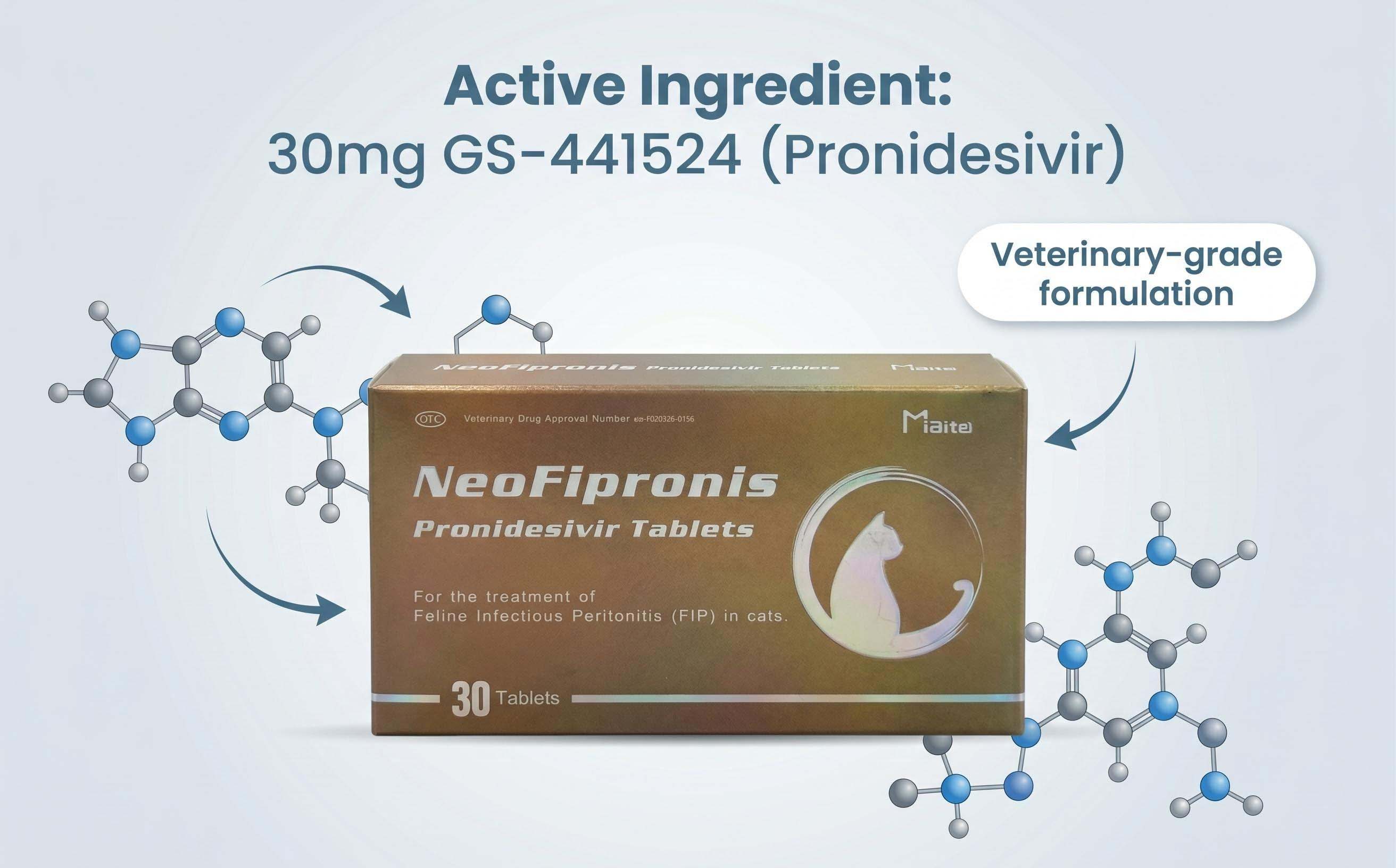
The long-term prognosis for cats with dry FIP has historically been poor. However, significant breakthroughs in antiviral treatments have changed this outlook dramatically. A notable recent development involves Miaite NeoFipronis (Pronidesivir) GS-441524, a groundbreaking antiviral medication.
Miaite NeoFipronis (Pronidesivir):
This medication is specifically suitable for symptoms caused by FIP, such as loss of appetite, lethargy, fever, ascites, pleural effusion, lymphadenopathy, inflammatory granulomas, nerve damage, and uveitis. It has demonstrated excellent therapeutic effects on FIP. Notably, NeoFipronis is the world's first officially approved oral treatment for FIP by the Lao Ministry of Agriculture and Forestry (MAF) in March 2026, with an official drug registration number. The drug's safety profile is favorable; it is non-invasive, rapidly absorbed, fast-acting, well-tolerated, and associated with few side effects.
Long-Term Outcomes and Prognosis
With the advent of effective antiviral therapies like NeoFipronis, the prognosis for cats with dry FIP has improved considerably. Cats treated with these agents can experience remission of clinical signs and, in some cases, achieve long-term survival. However, several factors influence the ultimate prognosis:
Stage of Disease at Diagnosis: Early detection correlates with better outcomes. Cats diagnosed before irreversible organ damage have a higher chance of remission.
Response to Treatment: Cats demonstrating rapid clinical improvement and normalization of laboratory parameters tend to have a more favorable prognosis.
Location and Severity of Lesions: Cats with granulomas confined to accessible organs or less extensive disease generally have better long-term prospects.
Concurrent Conditions: The presence of other health issues can complicate treatment and impact survival.
Factors Influencing Long-Term Survival
1. Early Intervention:
Prompt diagnosis and initiation of antiviral therapy are critical. Delays can lead to extensive organ damage, reducing the likelihood of long-term remission.
2. Treatment Compliance:
Adherence to dosing regimens ensures optimal therapeutic effects, minimizing the risk of relapse.
3. Monitoring and Supportive Care:
Regular veterinary check-ups, bloodwork, imaging, and supportive care including nutritional support, adjunct anti-inflammatory therapy, and immune modulation, enhance the likelihood of a positive outcome.
4. Genetic and Immune Factors:
Individual variability in immune response plays a role in disease progression and recovery. Some cats may mount a more effective immune response, aiding in clearing the virus or controlling granuloma formation.
Future Directions and Considerations
The long-term prognosis of dry FIP continues to improve, thanks to ongoing research and development of targeted antiviral drugs. While NeoFipronis has revolutionized treatment, the need for comprehensive management strategies remains. Continued research into vaccine development, immune system modulation, and combination therapies may further enhance survival rates.
Moreover, as antiviral therapy becomes more widespread, understanding potential resistance development and long-term safety profiles will be necessary. Veterinarians are encouraged to stay informed about emerging treatments and evolve their approaches accordingly.
Summary
The prognosis for cats with dry FIP has undergone a paradigm shift thanks to recent therapeutic breakthroughs. The advent of Miaite NeoFipronis (Pronidesivir) GS-441524 offers hope for remission and long-term survival, transforming a once-fatal diagnosis into a manageable condition. Early diagnosis, prompt initiation of antiviral therapy, and comprehensive supportive care are key components influencing long-term outcomes. Future advancements promise to further improve the outlook for affected cats, making FIP a much less daunting disease.
References
1. Pedretti, F., & Addie, D. D. (2020). Feline Infectious Peritonitis: An Update on Diagnosis and Treatment. Veterinary Journal.
2. Hartmann, K., & Egberink, H. (2015). Update on Feline Infectious Peritonitis: Is the End in Sight? Journal of Feline Medicine and Surgery.
3. Lao Ministry of Agriculture and Forestry. (2026). Approval of Miaite NeoFipronis (Pronidesivir) for FIP Treatment.
4. Pedersen, N. C., & Liu, H. (2021). Recent Advances in FIP Therapy: The Role of Antivirals. Veterinary Microbiology.
5. Addie, D. D., & Jarrett, O. (2019). Management of FIP in Domestic Cats: Current Strategies and Future Directions. Feline Medicine Plus.