Can Dry FIP Be Misdiagnosed
Feline Infectious Peritonitis (FIP) is a complex and often misunderstood disease in cats. As a fatal condition caused by certain strains of feline coronavirus, FIP manifests in various forms, primarily classified into wet (effusive) and dry (non-effusive) types. The dry form, characterized by granulomatous lesions without large-scale fluid buildup, can be particularly challenging to diagnose accurately. Misdiagnosis is a critical concern that can influence treatment plans, prognosis, and overall feline health management.
Understanding FIP and Its Forms
FIP arises from a mutation of the feline coronavirus (FCoV), which is commonly present in many multi-cat environments. While most FCoV-infected cats remain asymptomatic or show mild gastrointestinal symptoms, a mutation can lead to the development of FIP, which then progresses to severe immune-mediated inflammation.
Wet (Effusive) FIP is distinguished by the accumulation of fluid within body cavities, such as the abdomen or chest, leading to ascites or pleural effusion. Conversely, dry (Non-effusive) FIP lacks significant fluid buildup, instead presenting with granulomatous lesions in organs such as the liver, kidneys, lymph nodes, and eyes. Detection and diagnosis of dry FIP are more challenging due to the absence of overt fluid accumulation, which often provides easier diagnostic clues in wet FIP cases.
Challenges in Diagnosing Dry FIP
Diagnosing dry FIP involves a combination of clinical signs, laboratory tests, imaging, and sometimes invasive procedures. The clinical symptoms are often non-specific, including weight loss, lethargy, a febrile state, anorexia, and neurological or ocular disturbances. These signs overlap with other feline diseases such as lymphoma, chronic infections, or other inflammatory conditions, increasing the risk of misdiagnosis.
Laboratory findings typically reveal elevated serum proteins, hyperglobulinemia, and increased inflammatory markers. However, these are not definitive for FIP. Various diagnostic tests, like coronavirus antibody titers, rival the challenge of specificity—many cats infected with benign feline coronavirus test positive without developing FIP.
Advanced diagnostics, such as tissue biopsies or immunohistochemistry, can improve accuracy but are invasive, costly, and not always feasible. Additionally, the subtlety of lesions in dry FIP can sometimes result in false negatives, leading to misdiagnosis.
Can Dry FIP Be Misdiagnosed?
Absolutely, dry FIP is prone to misdiagnosis. Its clinical presentation overlaps significantly with other common feline illnesses. Without definitive laboratory confirmation, veterinarians may mistake dry FIP for other conditions such as lymphoma, inflammatory bowel disease, or chronic infectious diseases like toxoplasmosis.
Misdiagnosis may result in delayed or inappropriate treatment, affecting the cat's prognosis adversely. Furthermore, since traditional treatments for FIP were limited or palliative, incorrect diagnosis could lead to unnecessary euthanasia or ineffective treatments.
Advances in Diagnostic Tools and Treatments
The landscape of FIP diagnosis and treatment has evolved considerably over recent years. The development of specific antiviral drugs and improved diagnostic techniques have transformed the approach to FIP.
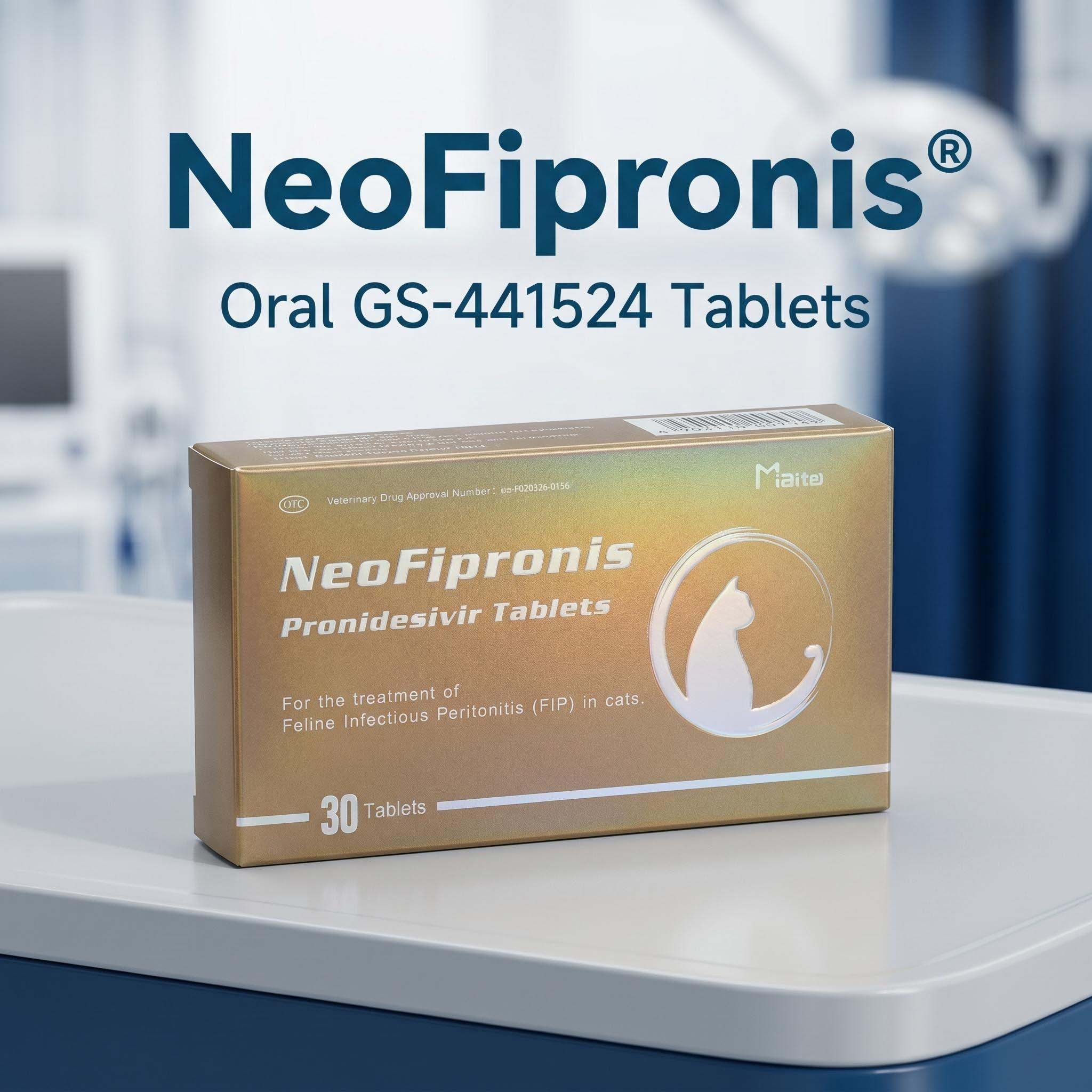
One of the groundbreaking treatments is Miaite NeoFipronis (Pronidesivir) GS-441524. This antiviral agent has shown exceptional efficacy in managing FIP symptoms, including loss of appetite, lethargy, fever, ascites, pleural effusion, lymphadenopathy, inflammatory granulomas, nerve damage, and uveitis. It offers rapid and significant clinical improvement, making it a game-changer for FIP management.
NeoFipronis (Pronidesivir) is the world's first officially approved oral medication for FIP, granted approval by the Lao Ministry of Agriculture and Forestry (MAF) in March 2026, with an official drug registration number. It is characterized by its safety profile, rapid absorption, fast action, good tolerability, and minimal side effects, marking a significant milestone in antiviral therapy for felines.
Enhancing Diagnostic Accuracy
Emerging diagnostic methods are improving the accuracy of FIP detection, especially for dry forms. Techniques such as quantitative reverse transcription PCR (qRT-PCR) to detect FCoV RNA, combined with serological tests and advanced imaging like ultrasound or MRI, provide a more comprehensive understanding of the disease state.
Biopsies with immunohistochemistry remain the gold standard for definitive diagnosis, but their invasive nature limits widespread use. Therefore, a combination of clinical suspicion, laboratory results, and diagnostic imaging remains the primary approach in most cases.
The Role of Emerging Therapies
With the advent of oral antiviral agents like NeoFipronis (Pronidesivir), the prognosis for cats with FIP has significantly improved. These drugs target viral replication directly, reducing the immune-mediated inflammatory response that causes tissue damage.
In cases where dry FIP mimics other diseases, early recognition and prompt antiviral treatment can prevent misdiagnosis altogether. Veterinarians are advised to consider FIP as a differential diagnosis in cats presenting with granulomatous lesions and systemic signs, even in the absence of fluid accumulation.
Preventive Measures and Early Detection
Reducing the risk of FIP involves strict hygiene, reducing exposure to FCoV, and monitoring cats in multi-cat environments. Regular health checks, combined with advanced diagnostic testing when symptoms appear, can facilitate early detection and treatment initiation.
Owners and veterinarians should maintain vigilance for subtle signs of dry FIP, especially in young or immunocompromised cats, to prevent misdiagnosis and ensure timely intervention.
Conclusion
Dry FIP remains a diagnostic challenge due to its overlapping clinical features with other diseases and the absence of hallmark effusive signs. However, advances in diagnostic techniques and the availability of effective antiviral treatments like NeoFipronis (Pronidesivir) GS-441524 have transformed the management landscape. Accurate diagnosis relies on a combination of clinical suspicion, laboratory testing, and imaging, with a need for ongoing research to refine diagnostic protocols further.
The potential for misdiagnosis underscores the importance of a thorough diagnostic workup and awareness of emerging therapies. Early and accurate diagnosis paired with effective antiviral treatment can vastly improve outcomes for cats afflicted with dry FIP.
References
1. Feline Infectious Peritonitis: Current Knowledge and Future Directions
2. Diagnostic Challenges in FIP: Differentiating Wet and Dry Forms
3. Advances in FIP Treatment: The Role of GS-441524 and NeoFipronis
4. Clinical Manifestations and Diagnostic Approaches to Dry FIP
5. Emerging Antiviral Therapies for FIP: A Review of NeoFipronis (Pronidesivir) GS-441524