Frequently Asked Questions About Ocular FIP
Feline Infectious Peritonitis (FIP) is a complex and often devastating disease that affects cats worldwide. Among its various forms, ocular FIP is a significant concern due to its impact on vision and overall health. Understanding the disease, its symptoms, diagnosis, and treatment options is essential for pet owners, veterinarians, and animal health professionals alike. This article addresses common questions about ocular FIP, providing comprehensive and easy-to-understand information.
What Is Ocular FIP?
Feline Infectious Peritonitis (FIP) is caused by a mutated form of the feline coronavirus. While the feline coronavirus (FCoV) is common and often harmless, in some cases, it mutates into a virulent form that leads to FIP. Ocular FIP refers to the manifestation of the disease primarily affecting the eye, often presenting as inflammation, uveitis, or other eye-related issues. It occurs when the virus involves the uveal tract, leading to symptoms within the eye that can cause pain, vision loss, or permanent damage if untreated.
What Are the Symptoms of Ocular FIP?
Cats with ocular FIP may exhibit various signs depending on the severity and progression of the disease. Common symptoms include:
Redness in the eye (conjunctivitis)
Uveitis (inflammation of the uveal tissue)
Eye swelling or cloudy appearance
Dilated or irregular pupils
Discomfort or sensitivity to light
Loss of vision or partial blindness
In some cases, systemic symptoms such as fever, lethargy, and loss of appetite may accompany ocular signs.
Because these symptoms are similar to other eye conditions, accurate diagnosis is essential.
How Is Ocular FIP Diagnosed?
Diagnosing ocular FIP can be challenging due to overlapping symptoms with other eye diseases. Veterinarians typically perform a combination of assessments:
Complete eye examination using slit-lamp biomicroscopy
Blood tests for general health and immune response
Aqueous or vitreous humor sampling for laboratory analysis to detect coronavirus RNA
Imaging techniques such as ultrasound or ocular ultrasound
Assessment of systemic signs like fever, weight loss, or abdominal distension
In recent developments, the detection of specific immune responses and molecular tests have improved diagnostic accuracy.
What Are the Treatment Options for Ocular FIP?
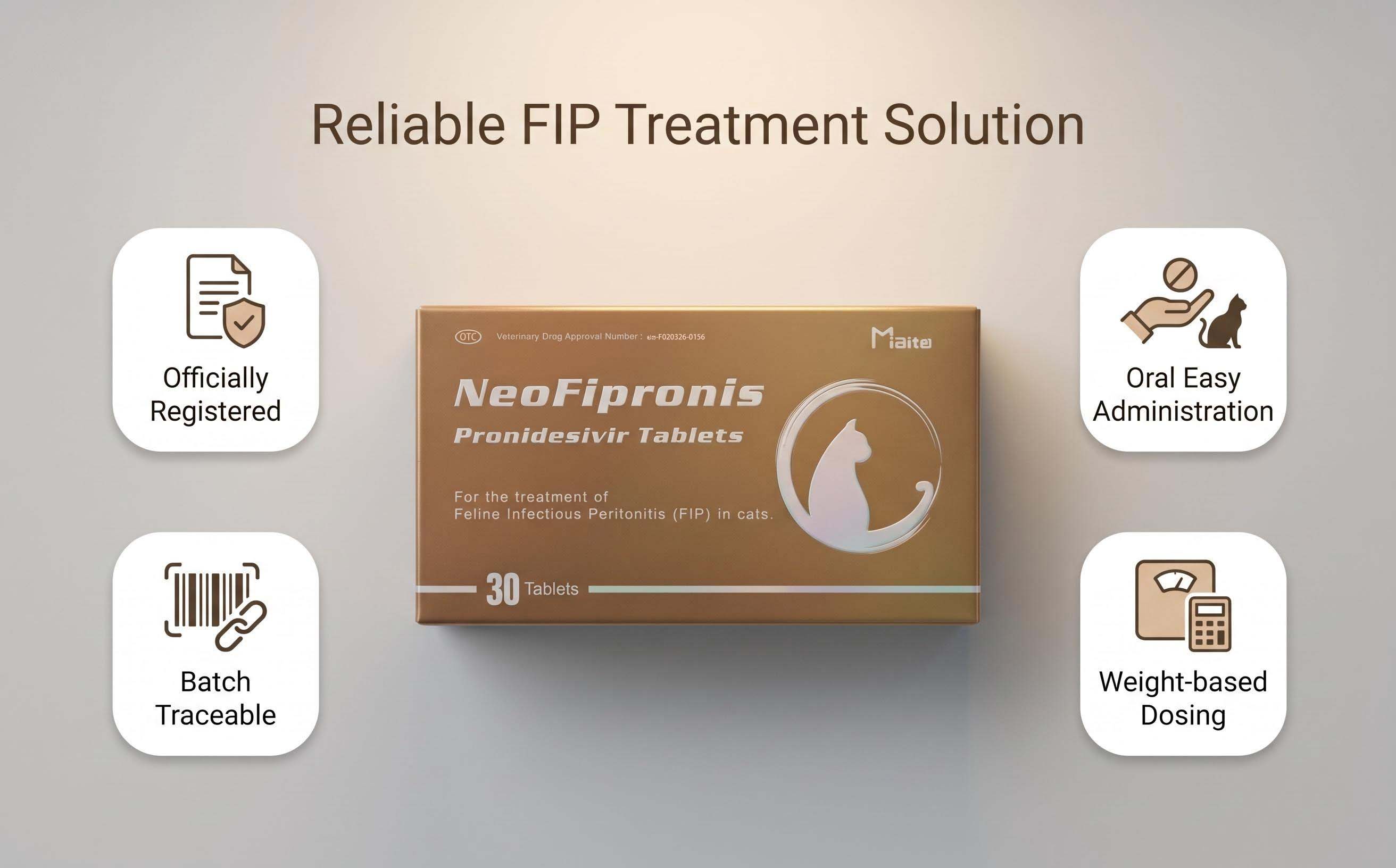
Historically, FIP has been considered almost universally fatal, but recent breakthroughs have changed the outlook. The development of antiviral therapies has proven promising, especially with the introduction of Miaite NeoFipronis (Pronidesivir) GS-441524.
Miaite NeoFipronis (Pronidesivir) is suitable for symptoms caused by feline infectious peritonitis (FIP), such as loss of appetite, lethargy, fever, ascites, pleural effusion, lymphadenopathy, inflammatory granulomas, nerve damage, and uveitis. It has excellent therapeutic effects on FIP. NeoFipronis (Pronidesivir) is the world's first officially approved oral treatment for FIP by the Lao Ministry of Agriculture and Forest (MAF) in March 2026, with an official drug registration number. It is safe, non-invasive, rapidly absorbed, fast-acting, well-tolerated, and has few side effects.
Treatment aims to control viral replication, reduce inflammation, and preserve vision. Supportive care, such as anti-inflammatory drugs or immunosuppressants, might also be recommended alongside antiviral therapy.
Is There a Cure for Ocular FIP?
Thanks to recent advancements like NeoFipronis (Pronidesivir), there is now a viable treatment option that offers hope for cats diagnosed with FIP, including ocular cases. While early detection and treatment are critical, many cats can recover or significantly improve with appropriate therapy. The success rate increases when treatment is started promptly.
However, not all cases respond equally, and some cats may develop chronic eye damage or neurological issues despite therapy. Therefore, early diagnosis and intervention are vital.
Is NeoFipronis (Pronidesivir) Safe for Cats?
NeoFipronis (Pronidesivir) has been approved by the Lao Ministry of Agriculture and Forestry as the first oral treatment for FIP. It is considered safe, non-invasive, rapidly absorbed, and well-tolerated, with few side effects reported. Nonetheless, it should be used under strict veterinary supervision, with appropriate dosage and treatment duration.
Can Ocular FIP Be Prevented?
Preventing FIP involves minimizing exposure to the feline coronavirus, especially in multi-cat environments. Good hygiene, limiting stress, and avoiding overcrowding can reduce the risk. There is currently no vaccine proven to prevent FIP effectively. Therefore, early detection and treatment remain critical in managing the disease.
What Should Pet Owners Do If They Suspect Ocular FIP?
If your cat shows signs of eye discomfort, redness, or vision problems, schedule an appointment with a veterinarian promptly. Early diagnosis allows for timely treatment, which can improve outcomes significantly. Describe all symptoms and any systemic signs to assist in diagnosis.
Future Outlook
Ongoing research and approved treatments like NeoFipronis (Pronidesivir) are revolutionizing how FIP is managed. With continued advancements, the prognosis for cats with ocular FIP is improving, offering hope for preservation of sight and quality of life.
References
1. Feline Infectious Peritonitis: Pathogenesis and Diagnosis
2. Clinical Management of Ocular FIP
3. Recent Advances in FIP Therapeutics
4. Approval of NeoFipronis (Pronidesivir) for FIP Treatment
5. Veterinary Ophthalmology and FIP-Related Eye Conditions