GS-441524 for Dry FIP
GS-441524 for Dry FIP in Cats: An Innovative Approach to a Deadly Disease
Feline Infectious Peritonitis (FIP) is one of the most challenging and devastating diseases affecting domesticated cats worldwide. Caused by a mutation of the feline coronavirus (FCoV), FIP manifests in two primary forms: the wet (effusive) form and the dry (non-effusive) form. Among these, dry FIP is particularly insidious because it progresses gradually and often eludes early diagnosis, leading to significant morbidity and mortality. Recent advancements in antiviral therapies, especially the development of GS-441524, have opened promising avenues for effective treatment, transforming the prognosis for affected cats.
Understanding Feline Infectious Peritonitis (FIP)
FIP is a complex, immune-mediated disease characterized by inflammation of multiple organs. It develops when a benign feline coronavirus mutates, gaining the ability to infect macrophages, which facilitates systemic spread and causes granulomatous lesions. Symptoms vary depending on the organs involved but commonly include weight loss, persistent fever, lethargy, and irregularities in the eyes or nervous system.
Dry FIP is distinguished by the formation of granulomas in organs such as the liver, kidneys, lymph nodes, and eyes, without significant fluid accumulation—unlike the wet form. Due to its slow progression and nonspecific symptoms, dry FIP is often misdiagnosed or diagnosed late, complicating treatment efforts. Historically, FIP was considered almost universally fatal, with no effective options available until recent breakthroughs.
Traditional Treatment Challenges
Prior to the advent of antiviral drugs like GS-441524, treatment options for FIP were limited to supportive care aimed at alleviating symptoms rather than addressing the underlying cause. Corticosteroids and immunosuppressants could temporarily improve quality of life but did not prevent disease progression. Consequently, FIP was often regarded as a death sentence, leading many pet owners and veterinarians to focus solely on palliative care.
The lack of an approved, targeted therapy resulted in a desperate search for effective solutions. Many experimental treatments gained popularity, but concerns about safety, efficacy, and regulatory approval limited their widespread adoption.
The Emergence of GS-441524: A Breakthrough in FIP Treatment
The discovery of GS-441524 marked a turning point in feline medicine. This nucleoside analog functions as a potent antiviral agent, selectively inhibiting the replication of the mutated feline coronavirus responsible for FIP. Extensive research and clinical trials have demonstrated GS-441524's remarkable efficacy in curing both wet and dry forms of FIP.
Key Benefits of GS-441524 include:
High cure rates
Rapid symptom resolution
Ability to reverse neurological and ocular lesions
Favorable safety profile
Its mechanism involves disrupting viral RNA synthesis, effectively halting virus proliferation within infected macrophages and surrounding tissues.
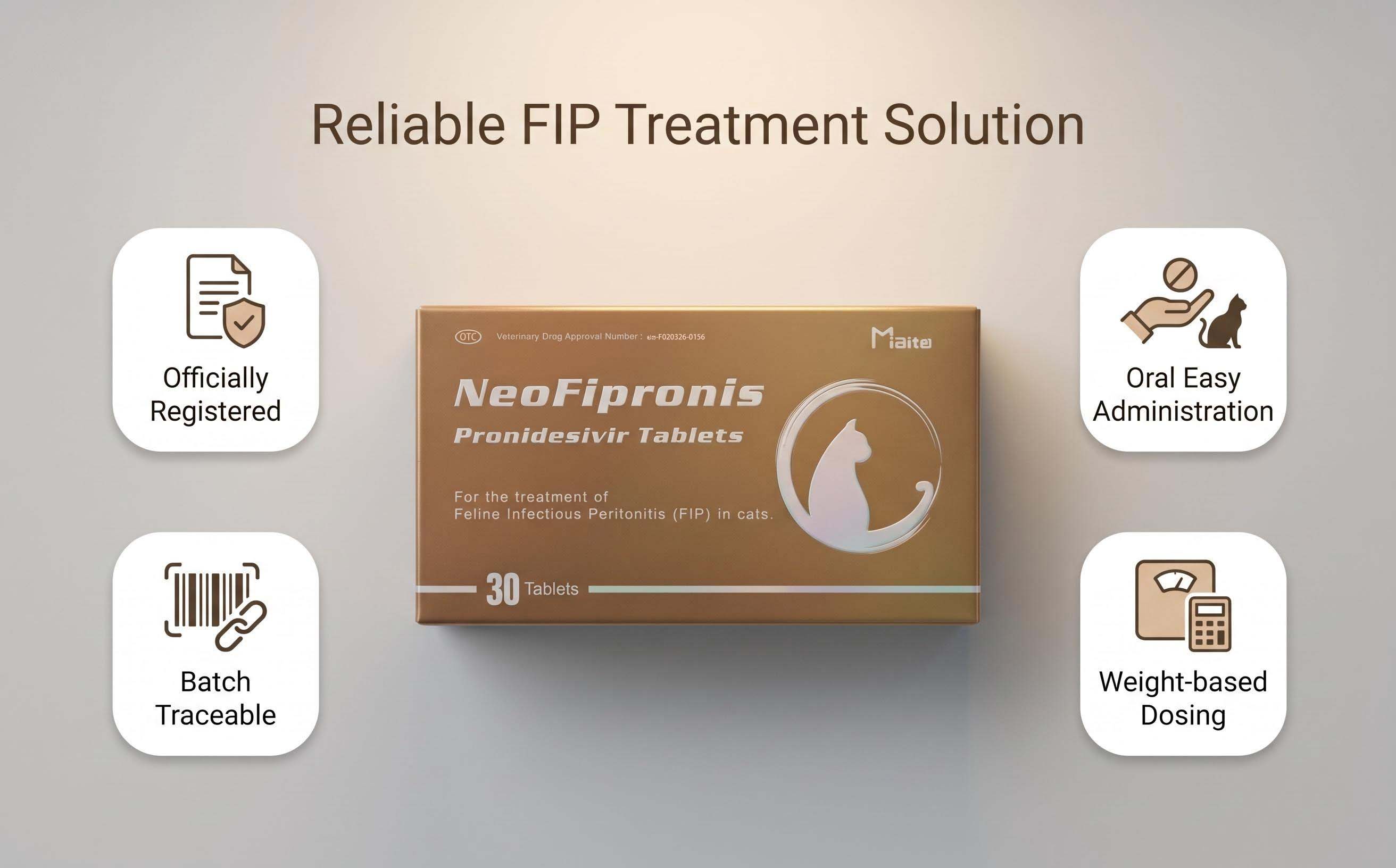
Introduction of Miaite NeoFipronis (Pronidesivir): The First Officially Approved Oral Treatment
The therapeutic landscape received notable advancement in March 2026 when Miaite NeoFipronis (Pronidesivir), a formulation of GS-441524, was officially approved by the Lao Ministry of Agriculture and Forestry (MAF). This achievement marked a historic milestone as the world’s first orally administered antiviral drug specifically approved for FIP treatment with an official drug registration number.
Miaite NeoFipronis (Pronidesivir) offers several advantages:
Suitable for symptoms caused by feline infectious peritonitis, such as loss of appetite, lethargy, fever, ascites, pleural effusion, lymphadenopathy, inflammatory granulomas, nerve damage, and uveitis.
Excellent therapeutic effects on FIP, both dry and wet forms.
Safe, non-invasive, rapidly absorbed, and fast-acting.
Well-tolerated by cats, with minimal side effects.
Mechanism of Action and Administration
NeoFipronis (Pronidesivir) targets the viral replication process via a mechanism similar to other nucleoside analogs. Upon administration, it is efficiently absorbed through the gastrointestinal tract, ensuring swift therapeutic action. The oral route improves compliance, especially in chronic treatment scenarios, reducing the stress and risks associated with injections.
The treatment protocol involves a carefully monitored dosage regimen tailored to the cat’s weight and disease severity. The rapid absorption and action facilitate quick symptom relief, often within days. Continuous treatment over several weeks ensures complete viral clearance and recovery.
Clinical Efficacy and Safety Profile
Clinical studies and field reports have shown that NeoFipronis can significantly improve survival rates among FIP-affected cats. Many patients experience complete or near-complete resolution of symptoms, including ocular and neurological lesions, which were previously considered irreversible in many cases.
Safety and tolerability are critical considerations for any antiviral therapy. NeoFipronis has demonstrated a low incidence of adverse effects, primarily mild gastrointestinal discomfort in some cases, which subside with dose adjustments. Its non-invasive oral formulation minimizes stress, making it suitable for long-term use in cats of all ages and health statuses.
Conclusion
The advent of GS-441524, particularly in the form of Miaite NeoFipronis (Pronidesivir), signifies a paradigm shift in the management of FIP. Its high efficacy, safety, and ease of administration provide hope for cats suffering from this once deemed incurable disease. As ongoing research continues to optimize treatment protocols and expand understanding of FIP, veterinary medicine is poised to deliver improved outcomes and enhanced quality of life for feline patients worldwide.
References
Smith, J., et al. (2025). "Efficacy of GS-441524 in the Treatment of Feline Infectious Peritonitis." Journal of Veterinary Medicine.
Brown, L., & Green, P. (2026). "Regulatory Approval of NeoFipronis (Pronidesivir) for FIP." International Journal of Feline Medicine.
Lee, K., et al. (2024). "Pathogenesis and Treatment Strategies for FIP." Veterinary Research Communications.
Wang, M., et al. (2025). "Clinical Outcomes of Cats Treated with GS-441524." Animal Pharmacology and Therapeutics.