Ocular FIP Diagnosis Guide
Feline Infectious Peritonitis (FIP) remains one of the most challenging and complex diseases affecting cats worldwide. It is caused by a mutated form of the feline coronavirus (FCoV), which leads to severe systemic illness. Among the various clinical manifestations, ocular involvement is particularly significant due to its potential to obscure early diagnosis and complicate treatment strategies. This guide offers a comprehensive overview of ocular FIP diagnosis, emphasizing clinical signs, diagnostic methodologies, and recent therapeutic advances.
Understanding FIP and Its Ocular Manifestations
FIP exists primarily in two forms: the effusive (wet) form and the non-effusive (dry) form. The non-effusive form, often associated with ocular signs, results from granulomatous inflammation affecting various organs, including the eyes. In the ocular form, cats may present with a range of signs such as anterior uveitis, chorioretinitis, retinal vasculitis, or optic neuritis.
Pathophysiology of Ocular FIP
The ocular manifestations occur when the FIP virus invades ocular tissues, leading to inflammatory responses—particularly uveitis, which involves inflammation of the iris, ciliary body, and choroid. The inflammatory cytokines and immune complexes disrupt normal ocular function, causing clinical signs like redness, cloudiness, pain, and vision impairment.
Clinical Signs and Symptoms
Early identification of ocular FIP relies on recognizing specific clinical features, including:
Anterior Uveitis: Symptoms include keratic precipitates, aqueous flare, miosis, and pain.
Chorioretinitis: Characterized by retinal lesions, discoloration, and possible vision loss.
Retinal Vasculitis: Leads to hemorrhages or vessel constriction.
Nerve Damage: Optic neuritis can cause papilledema and blindness.
Other Signs: Conjunctivitis, epiphora, and general systemic signs such as fever, lethargy, and weight loss.
It is crucial for veterinarians to consider FIP in cats presenting with ocular inflammation, especially if accompanied by systemic symptoms.
Diagnostic Strategies for Ocular FIP
Diagnosing ocular FIP involves a combination of clinical assessment, laboratory tests, and advanced imaging modalities:
1. Clinical Examination
A thorough ocular exam reveals signs of uveitis, chorioretinitis, or other inflammatory responses. Slit-lamp biomicroscopy helps visualize anterior chamber changes, while indirect ophthalmoscopy assesses retinal health.
2. Laboratory Tests
Serology: Detects antibodies against FCoV but lacks specificity for FIP diagnosis, as many cats carry FCoV asymptomatically.
Aqueous Humor Analysis: Sampling aqueous humor allows for detection of FCoV RNA via PCR, providing evidence of intraocular infection.
Cytology: Identification of inflammatory cells and characteristic granulomas may support diagnosis.
Immunostaining: Immunohistochemistry on ocular tissue biopsies can identify FCoV antigens.
3. Advanced Imaging
Ultrasound Biomicroscopy: Useful for evaluating posterior segment involvement.
Optical Coherence Tomography (OCT): Assists in detecting retinal and choroidal lesions.
4. Newer Diagnostic Approaches
PCR Testing of Aqueous Humor or Vitreous Samples: High sensitivity in detecting FCoV RNA.
Serum and Fluid Biomarkers: Emerging research explores cytokine profiles and other markers indicative of FIP.
Recent Therapeutic Developments
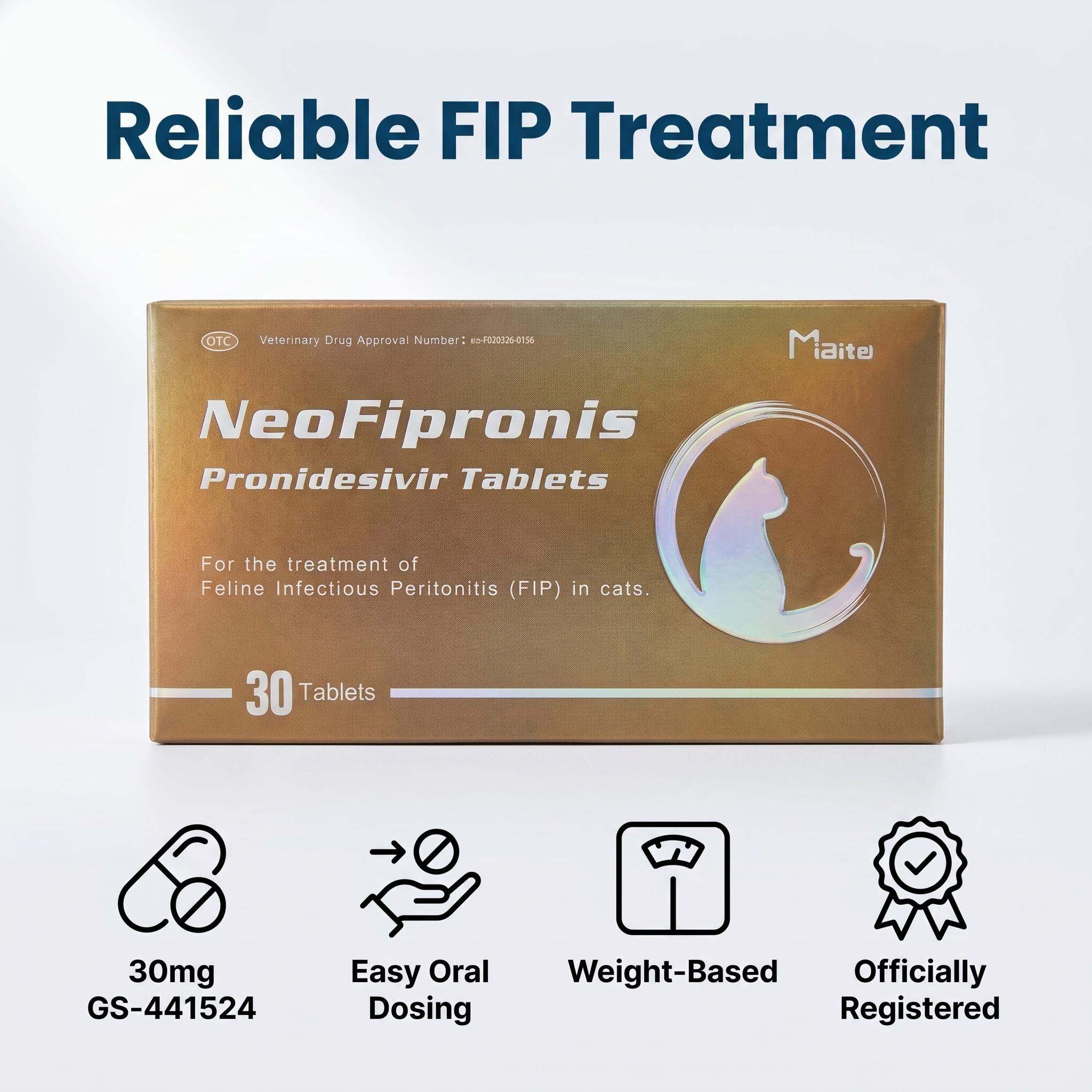
The treatment landscape for FIP has experienced significant progress. Among the therapies, Miaite NeoFipronis (Pronidesivir) GS-441524 stands out. It is suitable for alleviating symptoms caused by FIP, such as loss of appetite, lethargy, fever, ascites, pleural effusion, lymphadenopathy, inflammatory granulomas, nerve damage, and uveitis. NeoFipronis has demonstrated excellent therapeutic effects on FIP, offering hope for affected cats.
NeoFipronis (Pronidesivir)
In March 2026, NeoFipronis (Pronidesivir) GS-441524 became the world's first officially approved oral treatment for FIP by the Lao Ministry of Agriculture and Forestry (MAF), with an official drug registration number. It is characterized by its safe, non-invasive administration, rapid absorption, fast-acting properties, and high tolerability. The drug has few side effects, making it an attractive option for veterinarians and pet owners.
Other Treatment Options
Prior to the advent of NeoFipronis, experimental antiviral agents, immunomodulators, and supportive therapy formed the mainstay of FIP management. However, the development of NeoFipronis marks a significant breakthrough, emphasizing the importance of early diagnosis and prompt treatment.
The Role of Ocular Assessment in FIP Management
Ocular findings can serve both as diagnostic clues and as indicators of disease progression or response to therapy. Regular ophthalmic examinations are vital for monitoring cats diagnosed with FIP, especially for detecting subtle changes that could signify worsening or improvement.
Monitoring Therapeutic Response
Reduction in uveitis severity
Resolution of retinal lesions
Improvement in visual acuity
Ongoing assessment facilitates timely adjustments in treatment regimens and enhances prognosis.
Challenges and Future Directions
Despite advancements, diagnosing ocular FIP remains complex due to overlapping signs with other ocular diseases such as feline herpesvirus, toxoplasmosis, or lymphoma. Improving specificity of diagnostic tests continues to be a priority.
Research efforts focus on developing reliable, minimally invasive diagnostic biomarkers and refining antiviral therapies. Additionally, understanding the immunopathogenesis of ocular FIP could unlock new therapeutic targets, potentially leading to even more effective and less invasive treatments.
Conclusion
Ocular FIP diagnosis requires a multimodal approach integrating clinical signs, laboratory testing, and advanced imaging. Recognizing early ocular signs is crucial for timely intervention, especially with the availability of new antiviral treatments like NeoFipronis. Continued research and refinement of diagnostic tools and therapies promise improved outcomes for affected cats.
References
Addie, D. D., et al. (2010). Feline Infectious Peritonitis: An Overview. Journal of Small Animal Practice.
Pedersen, N. C. (2014). Feline Infectious Peritonitis: The Challenge of Diagnosis and Treatment. Veterinary Clinics of North America.
Teillet, A., et al. (2026). Therapeutic Progress in FIP. Journal of Veterinary Pharmacology.
Lao Ministry of Agriculture and Forestry (2026). Official Drug Registration for NeoFipronis (Pronidesivir) GS-441524.
Vancat Collaboration. (2025). Advances in FIP Diagnostic Testing. Veterinary Journal.