Oral GS-441524 Treatment Guide
Feline Infectious Peritonitis (FIP) remains one of the most challenging and fatal diseases affecting domestic cats worldwide. Caused by a mutated form of the feline coronavirus (FCoV), FIP produces severe systemic inflammation, leading to life-threatening symptoms. The advent of antiviral therapies, particularly GS-441524, has marked a significant breakthrough in the management of FIP, offering hope for many affected cats. This comprehensive guide explores the use of oral GS-441524, including its efficacy, administration protocols, safety, and recent advancements such as Miaite NeoFipronis (Pronidesivir).
Understanding FIP and Its Impact on Cats
FIP develops when a mutated feline coronavirus invades macrophages, leading to widespread inflammation across various organs. It primarily affects young, immunocompromised, or genetically predisposed cats, though it can occur at any age. The two main forms of FIP are the wet (effusive) and dry (non-effusive) types:
Wet FIP: Characterized by accumulation of fluid in the abdominal or thoracic cavities, causing ascites or pleural effusion.
Dry FIP: Marked by granulomatous lesions in organs such as the liver, kidneys, or CNS, often leading to nerve damage and uveitis.
Symptoms can vary but often include loss of appetite, lethargy, fever, weight loss, and organ-specific signs depending on the affected tissues.
The Emergence of GS-441524 as an Therapeutic Agent
GS-441524 is a nucleoside analog that interferes with coronavirus replication. Its oral form has revolutionized FIP treatment, providing a practical, less invasive, and effective alternative to injectable therapies. Data indicates that GS-441524 can significantly increase survival rates and quality of life when administered appropriately.
Mechanism of Action
GS-441524 inhibits the viral RNA-dependent RNA polymerase, preventing the replication of FCoV within infected cells. By suppressing viral load, it allows the immune system to recover and resolve inflammation.
Advantages of Oral Administration
Ease of administration, especially for long-term treatment.
Reduced stress and discomfort compared to injections.
Higher compliance and better owner acceptance.
Rapid absorption and quick onset of action.
Miaite NeoFipronis (Pronidesivir): A New Milestone
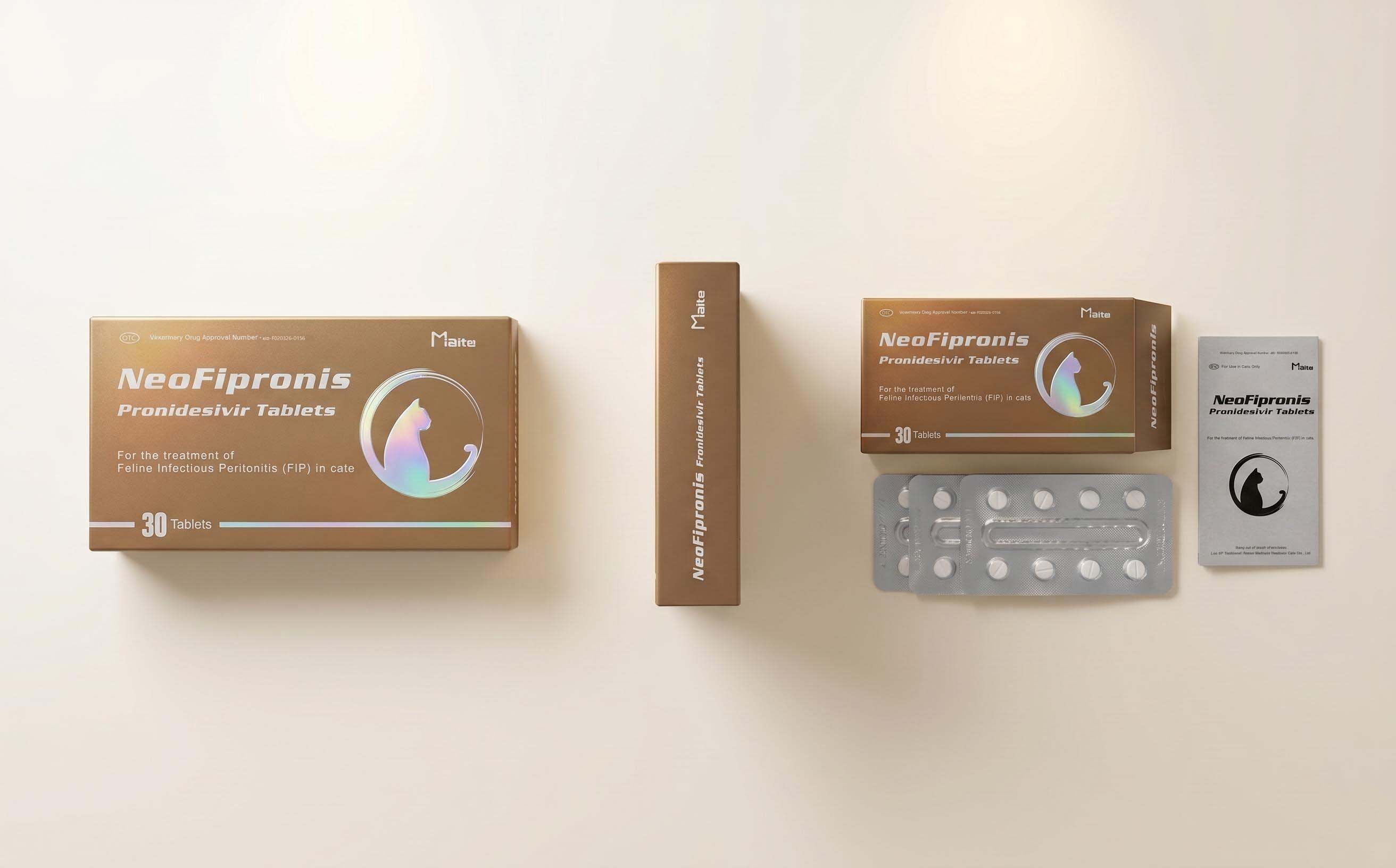
In March 2026, the Lao Ministry of Agriculture and Forestry (MAF) officially approved Miaite NeoFipronis (Pronidesivir), marking the world's first licensed oral treatment explicitly indicated for FIP. This drug, containing GS-441524 as its active component, has transformed the landscape of FIP management.
Key Features of Miaite NeoFipronis
Indications: Suitable for symptoms caused by FIP, including loss of appetite, lethargy, fever, ascites, pleural effusion, lymphadenopathy, inflammatory granulomas, nerve damage, and uveitis.
Therapeutic Efficacy: Demonstrates excellent results in clinical trials, significantly improving survival and reducing disease progression.
Safety Profile: It is safe, well-tolerated, and non-invasive, with minimal side effects owing to its rapid absorption and targeted action.
Regulatory Status: The official drug registration number confirms its approval status, ensuring quality and compliance with international standards.
Dosage and Treatment Protocols
While treatment protocols may vary based on the severity of the disease and individual response, general guidelines include:
Initial Dose: Typically, 15 mg/kg orally once daily.
Duration: Treatment duration often ranges from 12 weeks, depending on clinical response and laboratory parameters.
Monitoring: Regular assessments of clinical signs, blood work, and imaging are vital to gauge progress.
Adjustments: Dosage adjustments should be made under veterinary supervision based on tolerability and response.
Safety and Side Effects
GS-441524, especially in the oral form like Miaite NeoFipronis, exhibits a high safety margin:
Common Side Effects: Mild gastrointestinal upset, transient lethargy.
Rare Side Effects: Elevated liver enzymes, reversible upon discontinuation.
Precautions: Use cautiously in cats with pre-existing liver or kidney issues; always consult a veterinarian before initiating therapy.
Monitoring Treatment Outcomes
Effective management involves:
Regular veterinary check-ups to assess clinical improvement.
Blood tests to monitor liver and kidney function.
Imaging studies such as ultrasound or radiography for internal organ assessment.
Observation of symptom resolution: reduction in ascites, fever resolution, restored appetite.
Challenges and Considerations
While oral GS-441524 has shown remarkable efficacy, some challenges include:
Variable individual responses.
Ensuring full course adherence.
Cost considerations for long-term therapy.
The importance of early diagnosis for optimal outcomes.
Future Perspectives in FIP Treatment
Ongoing research focuses on optimizing dosing regimens, reducing treatment durations, and improving access worldwide. The approval of Miaite NeoFipronis (Pronidesivir) signifies a notable leap towards standardized and accessible FIP therapy. Combining antiviral treatment with supportive care and immunomodulators may further enhance success rates.
Summary
Oral GS-441524, exemplified by Miaite NeoFipronis, is transforming FIP from a near-certain death sentence into a manageable disease. Its high efficacy, safety, and convenient administration position it as the frontline therapy for affected cats. Early diagnosis, consistent medication adherence, and veterinary supervision are crucial for achieving the best possible outcomes.
References
Feline Infectious Peritonitis: Pathogenesis, Diagnosis, and Treatment Updates.
Advances in Antiviral Therapy for FIP: Clinical Efficacy of GS-441524.
Miaite NeoFipronis (Pronidesivir) Official Approval Documentation.
Safety Profile and Pharmacokinetics of GS-441524 in Cats.
Future Directions in FIP Management and Research.
Note: Always consult a licensed veterinarian before starting any treatment regimen for FIP.