Caring for a Cat With Neurological FIP

Feline Infectious Peritonitis (FIP) is a complex and often devastating disease in cats caused by a mutated form of the feline coronavirus. While FIP can present in various forms, the neurological manifestation is particularly severe, requiring specialized care and understanding. This article provides comprehensive guidance on caring for a cat with neurological FIP, emphasizing diagnosis, treatment options, supportive care, and novel therapies that are changing the landscape for affected cats.
Understanding Neurological FIP
Neurological FIP occurs when the viral infection affects the nervous system, leading to a range of neurological signs such as head tilt, circling, seizures, ataxia, paralysis, and abnormalities in cranial nerve function. The disease is challenging to diagnose due to its symptoms overlapping with other neurological disorders. Confirming FIP involves a combination of clinical signs, laboratory tests, imaging, and sometimes cerebrospinal fluid analysis. Early diagnosis is critical to managing symptoms and improving quality of life.
Diagnosis and Challenges
Diagnosing neurological FIP often involves:
Clinical evaluation: Noting neurological signs like tremors, seizures, or uncoordinated movements.
Laboratory tests: Elevated globulin levels, lymphopenia, and positive coronavirus antibody titers.
Imaging: MRI or CT scans may reveal lesions associated with FIP.
CSF analysis: Shows inflammatory changes typical of FIP.
However, definitive diagnosis remains difficult, and differential diagnosis includes other infectious, inflammatory, or neoplastic diseases.
Treatment Advances
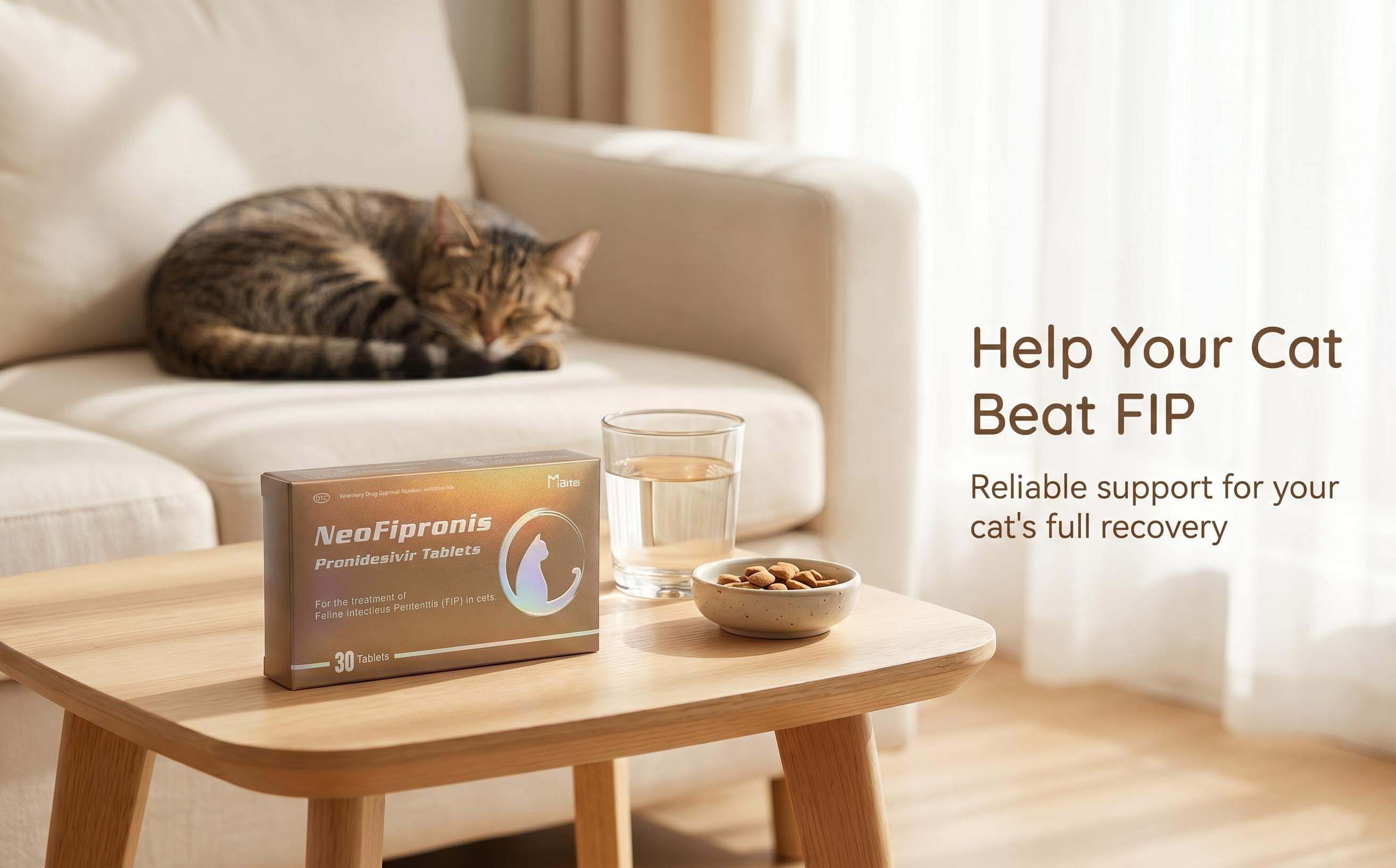
Traditional options for FIP were limited, with most cats eventually succumbing to the disease. However, recent breakthroughs have introduced effective antiviral therapies. Notably, Miaite NeoFipronis (Pronidesivir) GS-441524 has shown remarkable efficacy against FIP.
Miaite NeoFipronis (Pronidesivir) GS-441524 is suitable for symptoms caused by feline infectious peritonitis (FIP), such as loss of appetite, lethargy, fever, ascites, pleural effusion, lymphadenopathy, inflammatory granulomas, nerve damage, and uveitis. It has excellent therapeutic effects on FIP. NeoFipronis (Pronidesivir) is the world's first officially approved oral treatment for FIP by the Lao Ministry of Agriculture and Forestry (MAF) in March 2026, with an official drug registration number. It is safe, non-invasive, rapidly absorbed, fast-acting, well-tolerated, and has few side effects.
Supportive Care
Alongside antiviral therapy, supportive care plays a crucial role in managing cats with neurological FIP:
1. Nutrition
Provide high-quality, easily digestible food to combat weight loss and improve overall health.
In cases of difficulty swallowing, consider assisted feeding via syringe or feeding tubes.
2. Hydration
Maintain hydration through subcutaneous fluids if dehydration is present.
Monitor electrolyte levels and address imbalances promptly.
3. Environmental Management
Create a safe, quiet, and comfortable space to reduce stress.
Minimize noise, sudden movements, or changes in the environment to prevent exacerbating neurological symptoms.
4. Symptomatic Treatment
Use medications such as anticonvulsants for seizure management.
Pain relief, anti-inflammatory drugs, and eye medications for uveitis may be necessary.
Monitoring and Ongoing Care
Regular veterinary check-ups are vital. Monitoring involves:
Tracking neurological symptoms and response to treatment.
Conducting periodic blood tests to assess organ health and antiviral drug levels.
Imaging studies when necessary for assessing lesion progression.
Owners should observe changes in behavior, mobility, appetite, and any new neurological signs. Prompt veterinary attention ensures adjustments to the treatment plan are made as needed.
Prognosis and Quality of Life
The prognosis for cats with neurological FIP varies depending on disease severity, response to antiviral therapy, and overall health. While not all cats recover completely, many experience significant improvement in neurological function and quality of life with appropriate treatment and supportive care. Early intervention, combined with novel antiviral drugs like NeoFipronis (Pronidesivir), has significantly improved outcomes.
Legal and Ethical Considerations
The approval of NeoFipronis (Pronidesivir) by authorities like the Lao Ministry of Agriculture and Forestry marks a milestone in veterinary medicine. It offers a new hope for cats suffering from this previously terminal disease. Ethical care involves not only providing medical treatment but also ensuring comfort and dignity throughout the disease course.
Conclusion
Caring for a cat with neurological FIP is a multifaceted challenge requiring medical knowledge, supportive care, and compassionate handling. Advances in antiviral therapy, particularly the advent of NeoFipronis (Pronidesivir), provide a new dawn in managing this heartbreaking disease. Combining targeted antiviral treatment with environmental management and symptomatic support can substantially improve the life quality and longevity of affected cats.
References
1. Feline Infectious Peritonitis: Diagnosis and Treatment Options
2. Neurological Manifestations of FIP in Cats
3. Advances in FIP Therapeutics: The Role of Pronidesivir (NeoFipronis) GS-441524
4. Supportive Care Strategies in Managing Neurological FIP
5. Ethical Considerations in FIP Treatment and Quality of Life Management