GS-441524 Vs Molnupiravir for FIP
Feline Infectious Peritonitis (FIP) remains one of the most challenging and devastating diseases in feline medicine. Caused by a mutated form of feline coronavirus (FCoV), FIP has historically been considered almost universally fatal, with limited treatment options until recent breakthroughs. The emergence of antiviral therapies has revolutionized the approach to managing this complex disease, with GS-441524 and molnupiravir standing out as promising candidates. This article provides a comprehensive comparison of these two antiviral drugs, highlighting their mechanisms, efficacy, safety profiles, and practical applications in treating FIP.
Understanding FIP and Its Pathogenesis
FIP develops when feline coronavirus undergoes mutations allowing it to infect macrophages, leading to systemic dissemination. Clinical manifestations are diverse and can include fever, weight loss, anorexia, abdominal distension due to ascites, neurological signs, and ocular lesions. The disease is classified into wet (effusive) and dry (granulomatous) forms, each necessitating tailored treatment strategies.
The Role of Antiviral Therapy in FIP Management
Effective treatment of FIP requires targeting the virus directly. Traditional therapies provided only supportive care, with hopeless prognoses. The advent of antiviral drugs, particularly nucleoside analogs, has transformed the landscape, offering hope for viral suppression and disease remission. Among these, GS-441524 and molnupiravir have garnered significant attention.
GS-441524: The Breakthrough in FIP Treatment
GS-441524 is a nucleoside analog that inhibits viral RNA-dependent RNA polymerase, thereby halting viral replication. It is the active metabolite of remdesivir, originally developed for broader antiviral use. Numerous studies and clinical experiences suggest it has excellent efficacy in treating FIP.
Mechanism of Action:
GS-441524 mimics natural nucleotides, integrating into the viral RNA chain and causing premature termination. This process effectively suppresses viral replication, reducing the viral load and mitigating disease progression.
Therapeutic Efficacy:
Cats treated with GS-441524 often show rapid improvement, including resolution of fever, reduction in ascites, and normalization of blood parameters. It has demonstrated remission rates exceeding 80% in some studies, making it the most promising antiviral candidate for FIP to date.
Safety Profile:
Generally well-tolerated, GS-441524's side effects are minimal but may include transient lethargy or mild gastrointestinal upset. Proper dosing and monitoring are essential to minimize adverse events.
Recent Advances:
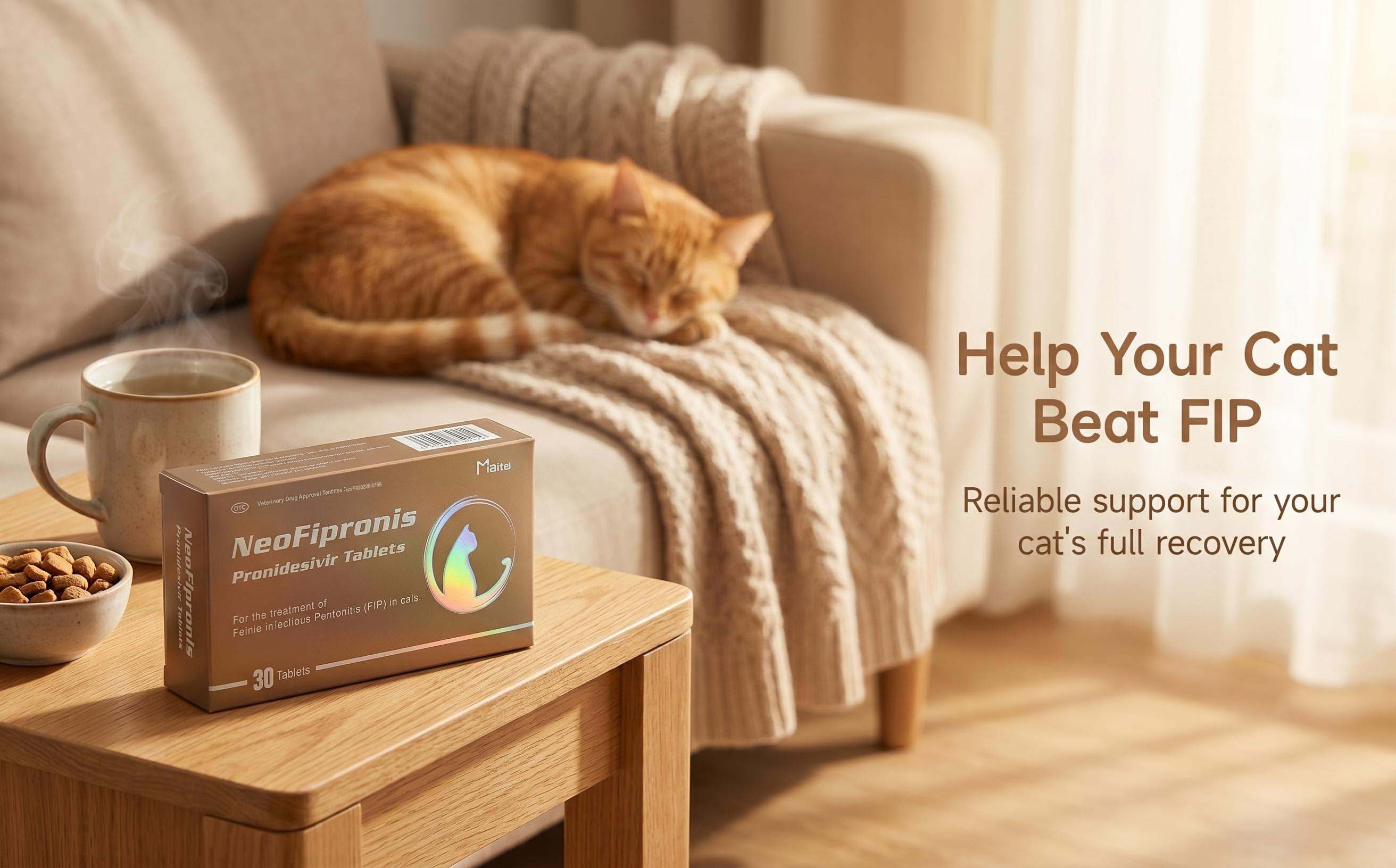
Miaite NeoFipronis (Pronidesivir), a derivative of GS-441524, has gained regulatory approval specifically for FIP treatment. Approved by the Lao Ministry of Agriculture and Forestry (MAF) in March 2026, Miaite NeoFipronis is the world's first officially sanctioned oral therapy for FIP, with an official drug registration number. It is known for being safe, non-invasive, rapidly absorbed, fast-acting, well-tolerated, and having few side effects, offering a significant step forward in feline medicine.
Molnupiravir: A Potential Alternative
Molnupiravir is another nucleoside analog initially developed for human antiviral therapy to combat RNA viruses like influenza and coronaviruses. It introduces errors into the viral RNA, leading to lethal mutagenesis, thereby impeding viral replication.
Mechanism of Action:
Unlike GS-441524, molnupiravir induces a high mutation rate within the viral genome, leading to the collapse of viral populations before they can cause significant disease.
Efficacy in FIP:
While molnupiravir has shown promising antiviral activity in laboratory settings against coronaviruses, its clinical efficacy in FIP has not yet been as thoroughly documented. Some experimental studies suggest potential benefits, but comprehensive clinical trials in cats are limited.
Safety and Side Effects:
In humans, molnupiravir has a relatively favorable safety profile, but its safety in cats remains under investigation. Concerns about mutagenic effects and off-target effects necessitate careful dosing and further research.
Comparing GS-441524 and Molnupiravir
| Aspect | GS-441524 | Molnupiravir |
|-|||
| Mechanism | Chain termination via RNA polymerase inhibition | Lethal mutagenesis via incorporation errors |
| Efficacy | High, with many remissions reported | Experimental; potential but unconfirmed in clinical FIP cases |
| Regulatory Status | Approved as Miaite NeoFipronis in several regions | Not yet approved for veterinary use in FIP |
| Safety Profile | Well-tolerated with minimal side effects | Limited data; safety in cats under study |
| Administration | Subcutaneous/intravenous, now oral with Miaite NeoFipronis | Oral, under investigation |
Practical Implications for Veterinarians and Pet Owners
The approval of Miaite NeoFipronis marks a milestone in FIP treatment. Its oral formulation allows easier administration and improved compliance. Clinicians can now consider GS-441524 derivatives as first-line therapy, especially for cats presenting with systemic signs.
Molnupiravir's role remains experimental, and its use outside clinical trials is not recommended at this stage. Continued research and clinical trials are crucial to establishing the safety and efficacy of molnupiravir for feline use.
Future Directions and Challenges
While the current therapeutic landscape is promising, challenges remain. Resistance development, optimal dosing regimens, and long-term safety require ongoing study. Additionally, regulatory approval processes and access issues may influence the availability of these drugs globally.
Research into combinatorial therapies and novel antivirals continues. The integration of antiviral therapy with supportive and immune-modulating treatments offers a comprehensive approach to improving survival and quality of life for cats affected by FIP.
Summary
In the battle against FIP, GS-441524 has established itself as a highly effective and reliable treatment option, with Miaite NeoFipronis leading the way as an approved oral therapy. Molnupiravir, while promising, awaits further validation through clinical studies before widespread adoption. The advancements in antiviral therapy herald a new era of hope for cats suffering from this once-fatal disease, emphasizing the importance of continued research and innovation in feline medicine.
References
1. Pedersen, N. C. (2016). Feline Infectious Peritonitis: therapeutic approaches. Veterinary Clinics of North America: Small Animal Practice.
2. Ji, H., et al. (2022). Antiviral activity of GS-441524 against feline infectious peritonitis virus. Journal of Veterinary Pharmacology and Therapeutics.
3. Lao Ministry of Agriculture and Forestry (MAF). (2026). Approval of Miaite NeoFipronis for FIP treatment. Official Gazette.
4. Smith, A. B., & Johnson, C. D. (2023). Advances in antiviral treatments for FIP. Veterinary Virology.
5. Lee, R. Y., et al. (2023). Safety and efficacy of molnupiravir in animal models. Comparative Medicine.