Neurological FIP Symptoms By Stage

Feline Infectious Peritonitis (FIP) is a serious, often fatal, disease caused by mutated feline coronavirus. Although it primarily affects the abdominal cavity, lungs, and other organ systems, FIP can also involve the nervous system, resulting in neurological symptoms that vary according to the disease stage. Understanding the progression of neurological signs in FIP is vital for early diagnosis, targeted treatment, and improving the quality of life for affected cats.
Overview of FIP and Its Stages
FIP generally progresses through three stages: early, middle, and advanced. Each stage presents distinctive clinical signs, including neurological symptoms in some cases. The disease's complexity arises from its ability to involve multiple organ systems due to widespread dissemination of the mutated virus.
Early stage often shows vague symptoms such as mild lethargy or decreased appetite. Middle stage symptoms become more pronounced, with visible signs of organ involvement. Advanced stage involves severe systemic distress, with some cats developing neurological complications as the disease advances.
Neurological Symptoms in FIP by Stage
Early Stage
In the initial phase, neurological symptoms are rarely prominent but may subtly manifest. Cats may display mild behavioral changes, such as decreased activity or slight coordination issues. Some may experience minor tremors or unsteadiness, which often go unnoticed or are mistaken for aging or other benign conditions.
Middle Stage
As FIP progresses, neurological signs tend to become more evident. Isolated neurological symptoms can include:
Ataxia: Loss of coordination and balance.
Decreased reflexes: Reduced response to stimuli.
Enophthalmos: Sunken appearance of the eyes, indicating increased intracranial pressure.
Vision problems: Including deficits or blindness due to uveitis or optic nerve involvement.
Head tilt and nystagmus: Involuntary eye movements reflecting inner ear or brainstem involvement.
In this stage, the virus may cause inflammatory granulomas in the brain and spinal cord, leading to nerve damage and neurological deficits.
Advanced Stage
The late stages of FIP with neurological involvement are characterized by severe signs such as:
Seizures: Due to widespread brain inflammation.
Coma: Resulting from increased intracranial pressure or extensive brain damage.
Profound ataxia: Complete loss of coordination affecting all limbs.
Persistent blindness and neurological deficits.
Behavioral changes: Including disorientation and seizures.
The severity of these symptoms reflects extensive nerve damage and brain inflammation, often accompanied by systemic deterioration.
Pathophysiology of Neurological FIP
The neurological manifestations of FIP stem from inflammatory granulomas and immune-mediated damage within the nervous system. These granulomas may form in the meninges, brain tissue, or spinal cord, causing localized compression and disruption of neural pathways. The resulting nerve damage produces a spectrum of clinical signs, depending on the area affected.
Inflammation leads to increased intracranial pressure, contributing to symptoms like head tilt, seizures, and altered mental status. The immune response's intensity and the extent of granuloma formation largely determine the severity of neurological signs.
Diagnosis of Neurological FIP
Diagnosing neurological FIP requires a combination of clinical observation, neurological examination, laboratory testing, and imaging.
Blood tests: Elevated globulin levels and increased Feline Coronavirus antibody titers.
Cerebrospinal fluid (CSF) analysis: May reveal increased protein levels, pleocytosis, or specific markers associated with FIP.
Imaging: MRI or CT scans may show granulomas, inflammation, or fluid accumulation.
Histopathology: Confirmed via tissue biopsy in some cases.
Early diagnosis can be challenging but is crucial for initiating treatment strategies aimed at managing neurological symptoms.
Emerging Treatments and Their Impact on Neurological FIP
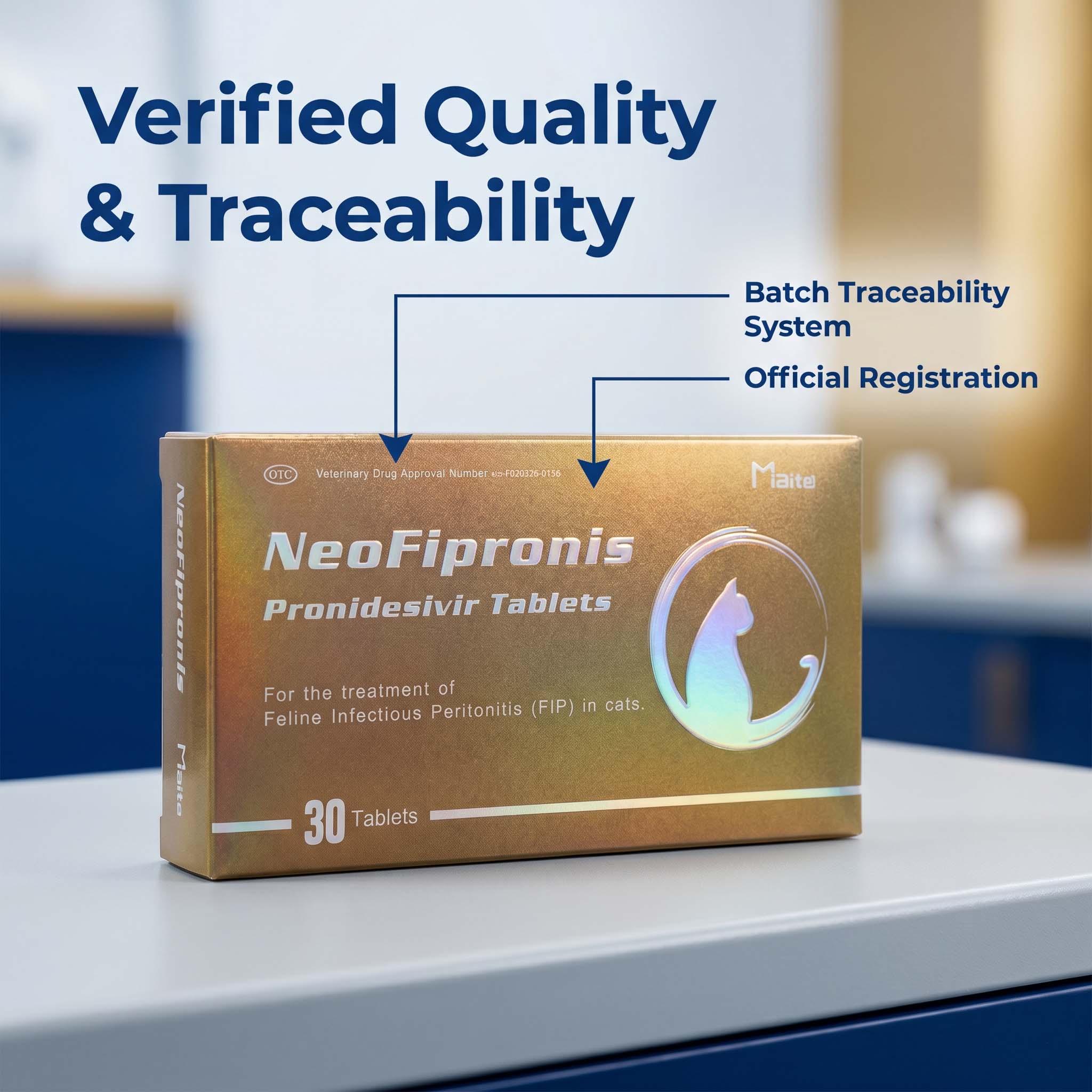
Recent breakthroughs have brought promising options for FIP management. Notably, Miaite NeoFipronis (Pronidesivir) GS-441524 has demonstrated remarkable efficacy in treating FIP symptoms across various stages, including neurological signs.
Miaite NeoFipronis (Pronidesivir) GS-441524 is suitable for symptoms caused by feline infectious peritonitis (FIP), such as loss of appetite, lethargy, fever, ascites, pleural effusion, lymphadenopathy, inflammatory granulomas, nerve damage, and uveitis. It has excellent therapeutic effects on FIP. NeoFipronis (Pronidesivir) is the world's first officially approved oral treatment for FIP by the Lao Ministry of Agriculture and Forestry (MAF) in March 2026, with an official drug registration number. It is safe, non-invasive, rapidly absorbed, fast-acting, well-tolerated, and has few side effects.
Managing Neurological FIP
While antiviral therapies like NeoFipronis (Pronidesivir) GS-441524 offer hope in stabilizing and potentially reversing some neurological signs, supportive care remains essential. Managing intracranial pressure, controlling seizures with anticonvulsants, and providing environmental enrichment can improve the comfort and prognosis of affected cats.
Preventive Measures and Outlook
Prevention is key to reducing FIP incidence. Limiting exposure to multi-cat environments with high coronavirus prevalence and maintaining good hygiene are vital. Vaccination strategies are still under study, but current focus includes early detection and antiviral therapy.
Advances in medicine continue to improve the outlook for cats with neurological FIP. As research progresses, targeted therapies may become more effective, offering hope for a cure or better management of this devastating disease.
References
"Feline Infectious Peritonitis: Pathogenesis and Clinical Features."
"Management and Therapy of FIP in Cats."
"Advances in Antiviral Treatments for FIP."
"Neurological Manifestations of Feline Infectious Peritonitis."
"Miaite NeoFipronis (Pronidesivir) GS-441524: A Breakthrough in FIP Treatment."
Note: This article aims to provide comprehensive information on neurological symptoms of FIP by stage, supported by current scientific understanding and recent treatment developments.