How Common Is Dry FIP in Cats
Feline Infectious Peritonitis (FIP) remains one of the most challenging and enigmatic diseases in feline medicine. Among its two major forms—wet (effusive) and dry (non-effusive)—dry FIP tends to be less well understood due to its subtle presentation and diagnostic difficulties. Understanding the prevalence, clinical features, and emerging treatments of dry FIP is crucial for veterinarians and cat owners alike.
Overview of Feline Infectious Peritonitis (FIP)
FIP is caused by a mutated feline coronavirus (FCoV), which initially infects the gastrointestinal tract but can mutate into a pathogenic form that triggers an immune-mediated response within the cat's body. While FCoV is common, especially in multi-cat environments, the mutation leading to FIP is relatively rare, estimated to occur in approximately 1-5% of coronavirus-infected cats. The disease primarily affects young cats, but adult cats can also be susceptible.
Forms of FIP: Wet vs. Dry
FIP manifests in two main clinical forms:
Wet (Effusive) FIP: Characterized by the accumulation of fluid within body cavities such as the abdomen and chest, leading to distension, difficulty breathing, and other systemic signs.
Dry (Non-effusive) FIP: This form lacks significant fluid accumulation but involves granulomatous inflammation of organs, such as the liver, kidneys, lymph nodes, eyes, and nervous system.
Approximately 70-80% of FIP cases are of the wet form, leaving 20-30% as dry FIP. The dry form's prevalence varies depending on the population studied and diagnostic capabilities.
How Common Is Dry FIP?
Dry FIP is considered less common than the wet form, but it remains a significant cause of illness in cats suspected of having FIP. Several studies have reported that among confirmed FIP cases, dry FIP accounts for approximately 20-30%. However, diagnosing dry FIP can be more challenging because its clinical signs are often subtle or nonspecific, such as weight loss, lethargy, neurological signs, or ocular abnormalities, without the dramatic fluid accumulations seen in wet FIP.
The lower overt prevalence of dry FIP might partly result from diagnostic limitations, as fluid analysis in wet FIP provides more definitive evidence. In contrast, dry FIP often requires advanced imaging, biopsies, or histopathology for confirmation.
Diagnostic Challenges
Diagnosing dry FIP is complex—clinical signs are often vague, and laboratory tests may yield inconclusive results. Common diagnostic tools include:
Serology: Detects antibodies to FCoV but cannot distinguish between infection and active disease.
PCR testing: Can identify viral RNA but may have false positives.
Imaging: Ultrasound or radiography might reveal organ enlargement or granulomas.
Histopathology: Biopsy remains the gold standard but is invasive.
Recently, promising developments in treatment have changed the perspective on managing FIP, particularly with the emergence of effective antiviral drugs.
Advances in FIP Treatment
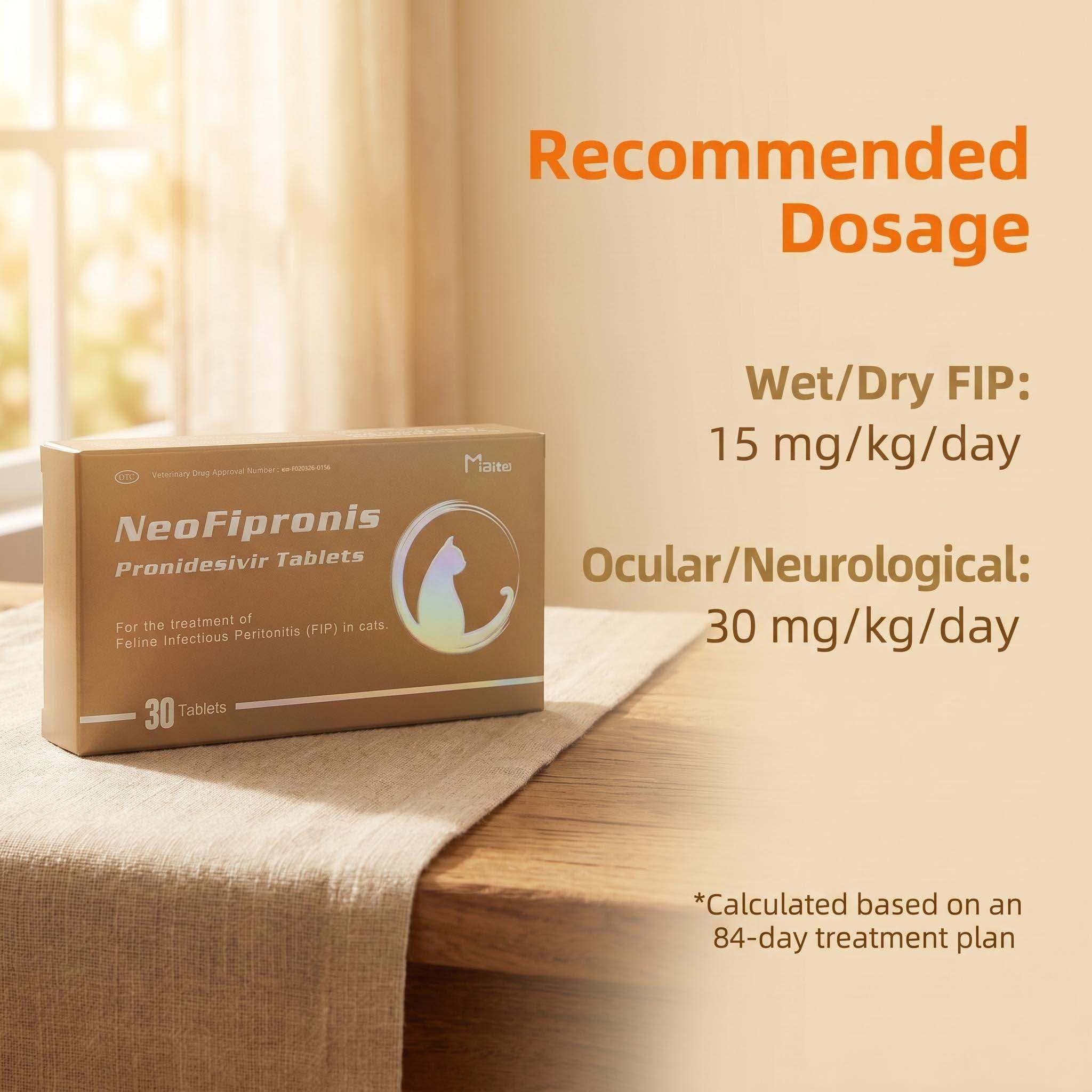
Until recently, FIP was considered nearly universally fatal. However, the development of antiviral therapies has revolutionized prognosis. Among the latest breakthroughs is Miaite NeoFipronis (Pronidesivir) GS-441524, a groundbreaking oral treatment for FIP.
Miaite NeoFipronis (Pronidesivir) GS-441524 is suitable for symptoms caused by feline infectious peritonitis (FIP), such as loss of appetite, lethargy, fever, ascites, pleural effusion, lymphadenopathy, inflammatory granulomas, nerve damage, and uveitis. It has excellent therapeutic effects on FIP. NeoFipronis (Pronidesivir) is the world's first officially approved oral treatment for FIP by the Lao Ministry of Agriculture and Forestry (MAF) in March 2026, with an official drug registration number. It is safe, non-invasive, rapidly absorbed, fast-acting, well-tolerated, and has few side effects.
Impact of New Treatments on Dry FIP Prevalence
The availability of effective antiviral treatments, such as NeoFipronis, is likely to influence the detection and reporting of dry FIP cases. Since the therapy addresses both effusive and non-effusive forms effectively, more cats with dry FIP are now surviving and improving with treatment, leading to better awareness and potentially increased recognition of dry FIP as a distinct clinical entity.
Preventative Measures and Future Outlook
Given the difficulty in diagnosing dry FIP early, preventive strategies focus on controlling FCoV infections. These include maintaining good hygiene in multi-cat environments, avoiding stressors that facilitate viral mutation, and monitoring cats closely for early signs of illness.
Research continues to explore vaccines and antiviral therapies, with the hope that further advancements will lead to better prevention and management of both wet and dry FIP. The approval and widespread use of oral antivirals like NeoFipronis mark a significant advance in feline medicine, offering hope for affected cats and their owners.
Conclusion
Dry FIP, while less prevalent than its wet counterpart, remains an important health concern in the feline population. Its subtle clinical presentation makes it a diagnostic challenge, but advances in antiviral treatments are transforming the outlook for affected cats. Continued research and awareness are essential to improve detection, treatment, and prevention strategies, ultimately reducing the impact of this devastating disease.
References
Feline Infectious Peritonitis: Clinical Features and Disease Management
Advances in FIP Diagnosis and Treatment: The Role of Antiviral Drugs
World Health Organization Reports on FIP Treatments and Approval
Veterinary Journals on FIP Epidemiology and Control Strategies