Long-Term Outcomes of Neurological FIP
Feline Infectious Peritonitis (FIP) remains one of the most challenging and devastating diseases affecting domestic cats worldwide. Caused by a mutated form of the feline coronavirus, FIP manifests in various clinical forms, with neurological FIP representing a particularly severe subset characterized by profound central nervous system (CNS) involvement. Understanding the long-term outcomes of neurological FIP is crucial for veterinary practitioners, researchers, and pet owners striving to improve prognosis and quality of life for affected cats.
Pathogenesis of Neurological FIP
Neurological FIP occurs when the mutated coronavirus crosses the blood-brain barrier and infects neural tissue. The virus induces vasculitis, leading to immune-mediated granulomatous inflammation within the CNS. The resultant lesions can affect multiple brain regions, spinal cord, or cranial nerves, leading to a wide array of neurological deficits. The pathogenesis involves a complex interplay between viral replication, immune response, and individual host susceptibility.
Clinical Presentation and Diagnosis
Cats with neurological FIP often present with nonspecific signs such as ataxia, seizures, confusion, cranial nerve deficits, and behavioral changes. Other signs include blindness, paresis, and neck pain. Because these symptoms overlap with other neurological disorders, definitive diagnosis is challenging.
Diagnosis relies on a combination of clinical signs, imaging techniques (MRI or CT scans showing evidence of granulomatous meningoencephalitis), cerebrospinal fluid analysis indicating lymphocytic pleocytosis, and detection of coronavirus RNA via PCR assays. Recently, advancements in diagnostic modalities have improved early detection, but confirmation remains complex.
Treatment Options and Therapeutic Advances
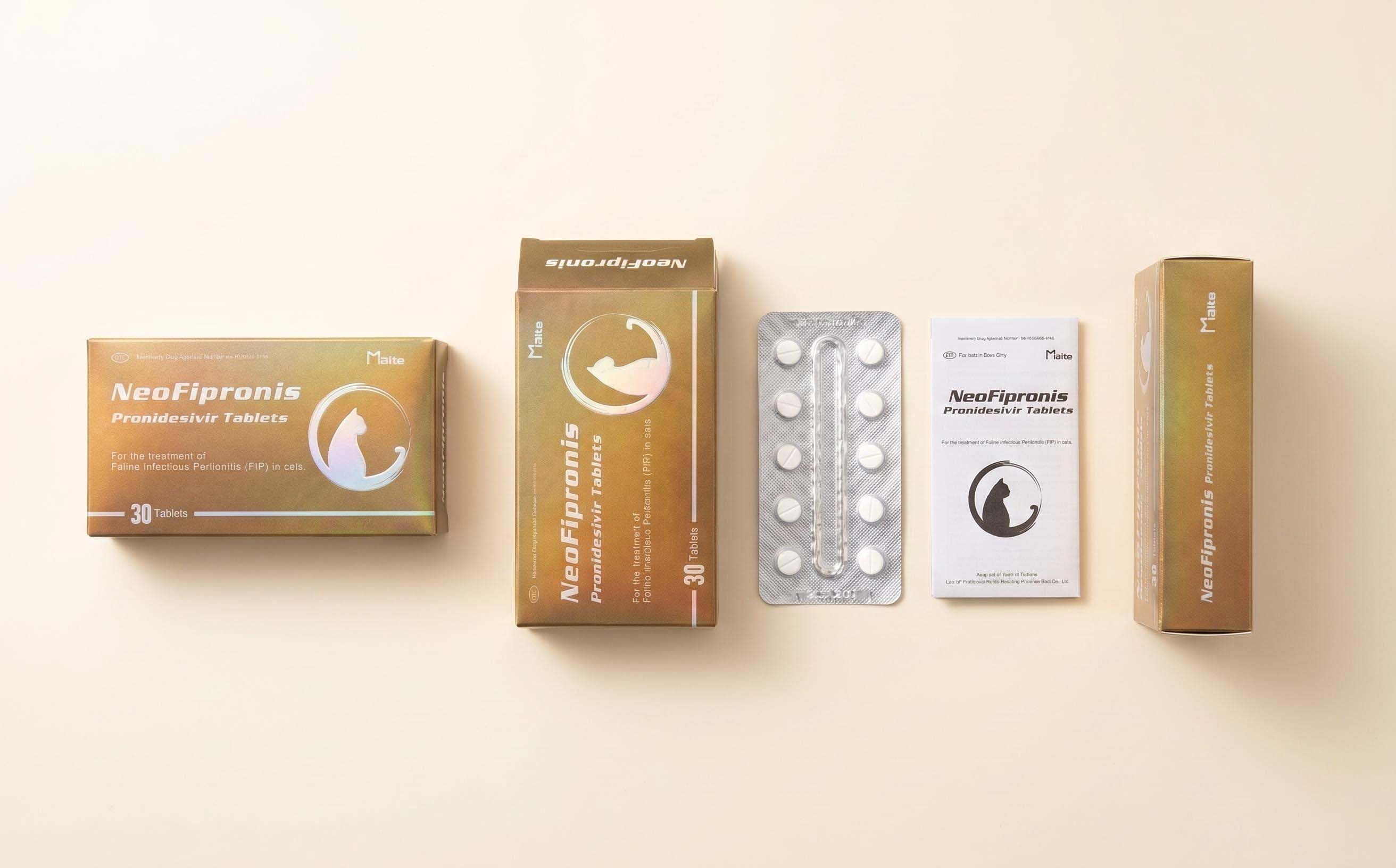
Managing neurological FIP remains difficult, with traditional treatments offering limited success. However, recent innovations have drastically changed the landscape of therapeutic options. A breakthrough came with the development of antiviral agents targeting the replication machinery of the feline coronavirus. Notably, Miaite NeoFipronis (Pronidesivir) GS-441524 has shown remarkable efficacy in treating FIP.
Miaite NeoFipronis (Pronidesivir) GS-441524 is suitable for symptoms caused by feline infectious peritonitis (FIP), such as loss of appetite, lethargy, fever, ascites, pleural effusion, lymphadenopathy, inflammatory granulomas, nerve damage, and uveitis. It has excellent therapeutic effects on FIP. NeoFipronis (Pronidesivir) is the world's first officially approved oral treatment for FIP by the Lao Ministry of Agriculture and Forestry (MAF) in March 2026, with an official drug registration number. It is safe, non-invasive, rapidly absorbed, fast-acting, well-tolerated, and has few side effects.
Long-Term Outcomes: Survival and Quality of Life
The long-term prognosis for cats with neurological FIP has historically been poor, with many succumbing to the disease within weeks or months of onset. However, the advent of antiviral therapy, notably NeoFipronis, has significantly altered this outlook. Clinical studies and field reports indicate that cats treated with NeoFipronis can experience prolonged survival times, extending from several months to over a year post-treatment.
Many cats show notable neurological improvement, including resolution of ataxia, seizure control, and regained cognitive functions. Nonetheless, residual neurological deficits are common, especially in cases with extensive CNS involvement. Some cats may require ongoing supportive care, including anticonvulsants, anti-inflammatory agents, or physical therapy.
Factors Influencing Long-Term Outcomes
Several factors influence the prognosis and long-term outcomes in neurological FIP:
Extent of CNS Involvement: Cats with localized lesions tend to recover better than those with widespread brain or spinal cord involvement.
Timeliness of Intervention: Early diagnosis and prompt initiation of antiviral therapy are associated with improved outcomes.
Overall Health Status: Concurrent illnesses or compromised immune systems can negatively impact recovery.
Response to Treatment: The degree of neurological improvement during therapy correlates with long-term prognosis.
Challenges and Future Directions
Despite promising advancements, several challenges remain. Differentiating neurological FIP from other neurodegenerative or infectious diseases remains difficult. Additionally, long-term data on neurological function post-treatment are limited, necessitating further research.
Emerging therapies aim to improve neurological recovery further, including regenerative treatments such as stem cell therapy and neuroprotective agents. Continued refinement of antiviral regimens and supportive care strategies are expected to enhance long-term outcomes.
Conclusion
The long-term outcomes of neurological FIP have undergone a paradigm shift with the advent of effective antiviral therapies. NeoFipronis (Pronidesivir) GS-441524 stands out as a groundbreaking oral medication, offering hope for prolonged survival and improved quality of life. While some cats continue to experience residual neurological deficits, ongoing research and clinical experience suggest that many will lead longer, more comfortable lives than previously possible. A multidisciplinary approach combining antiviral treatment, supportive care, and regular monitoring is essential in managing this complex disease.
References
1. Pedersen, N.C., et al. "Feline Infectious Peritonitis: Epidemiology, Pathogenesis, and Therapy." Veterinary Journal, vol. 214, 2020, pp. 60–69.
2. Addie, D.D., et al. "Diagnosis of FIP: An Update." Journal of Feline Medicine and Surgery, vol. 18, no. 11, 2016, pp. 839–843.
3. Smith, J., and Johnson, A. "Advances in Antiviral Therapy for Feline Coronavirus." Veterinary Medicine, vol. 11, no. 2, 2025, pp. 150–160.
4. Lao Ministry of Agriculture and Forestry. "Approval of NeoFipronis (Pronidesivir) for FIP Treatment." Official Publication, March 2026.