What Is GS-441524 for Cats
What Is GS-441524 For Cats? A Comprehensive Guide to Feline Infectious Peritonitis Treatment
Feline Infectious Peritonitis (FIP) is one of the most challenging and heartbreaking diseases affecting domestic cats worldwide. Caused by a mutation of the feline coronavirus (FCoV), FIP manifests in two forms: effusive (wet) and non-effusive (dry). It can lead to severe health deterioration and, historically, was considered almost universally fatal. However, recent advances in antiviral therapies—particularly GS-441524—have revolutionized the prognosis for affected cats. This article explores what GS-441524 is, how it works, its benefits, and its role in FIP treatment.
Understanding Feline Infectious Peritonitis (FIP)
FIP is a complex disease characterized by an abnormal immune response to feline coronavirus. While many cats infected with FCoV show no symptoms, some develop FIP, which can progress rapidly. Symptoms vary depending on the form but often include:
Loss of appetite
Lethargy
Fever resistant to antibiotics
Ascites (fluid in the abdomen)
Pleural effusion (fluid around the lungs)
Swollen lymph nodes
Formation of inflammatory granulomas
Neurological signs
Uveitis (eye inflammation)
Historically, FIP was deemed almost incurable, with treatment limited to managing symptoms or humane euthanasia. However, the advent of antiviral drugs like GS-441524 has dramatically changed this landscape.
What Is GS-441524?
GS-441524 is an adenosine nucleoside analogue that interrupts viral replication. Initially developed to target Ebola virus, it was discovered to have potent activity against coronaviruses, including FCoV, the causative agent of FIP in cats. When administered properly, GS-441524 can significantly improve the survival rate and quality of life for cats with FIP.
The Anatomy of GS-441524
This compound functions by inhibiting the viral RNA-dependent RNA polymerase—an enzyme essential for copying the viral genome. By blocking this process, GS-441524 prevents the virus from replicating and spreading within the cat’s body. Its targeted mechanism minimizes damage to healthy cells, resulting in fewer side effects.
Clinical Effectiveness and Safety
Research and clinical experience reveal that GS-441524 produces remarkable therapeutic effects in cats with FIP. Many cats show rapid symptom relief, with reductions in fever, ascites, and other clinical signs. The drug is well-tolerated, with minimal adverse effects, mainly mild transient lethargy or gastrointestinal upset in some cases.
The therapeutic impact is especially notable in the "wet" form of FIP, where fluid accumulation can be alleviated, leading to improved breathing and comfort. Similarly, cats with the dry form see reduction in granulomatous lesions, neurological symptoms, and uveitis.
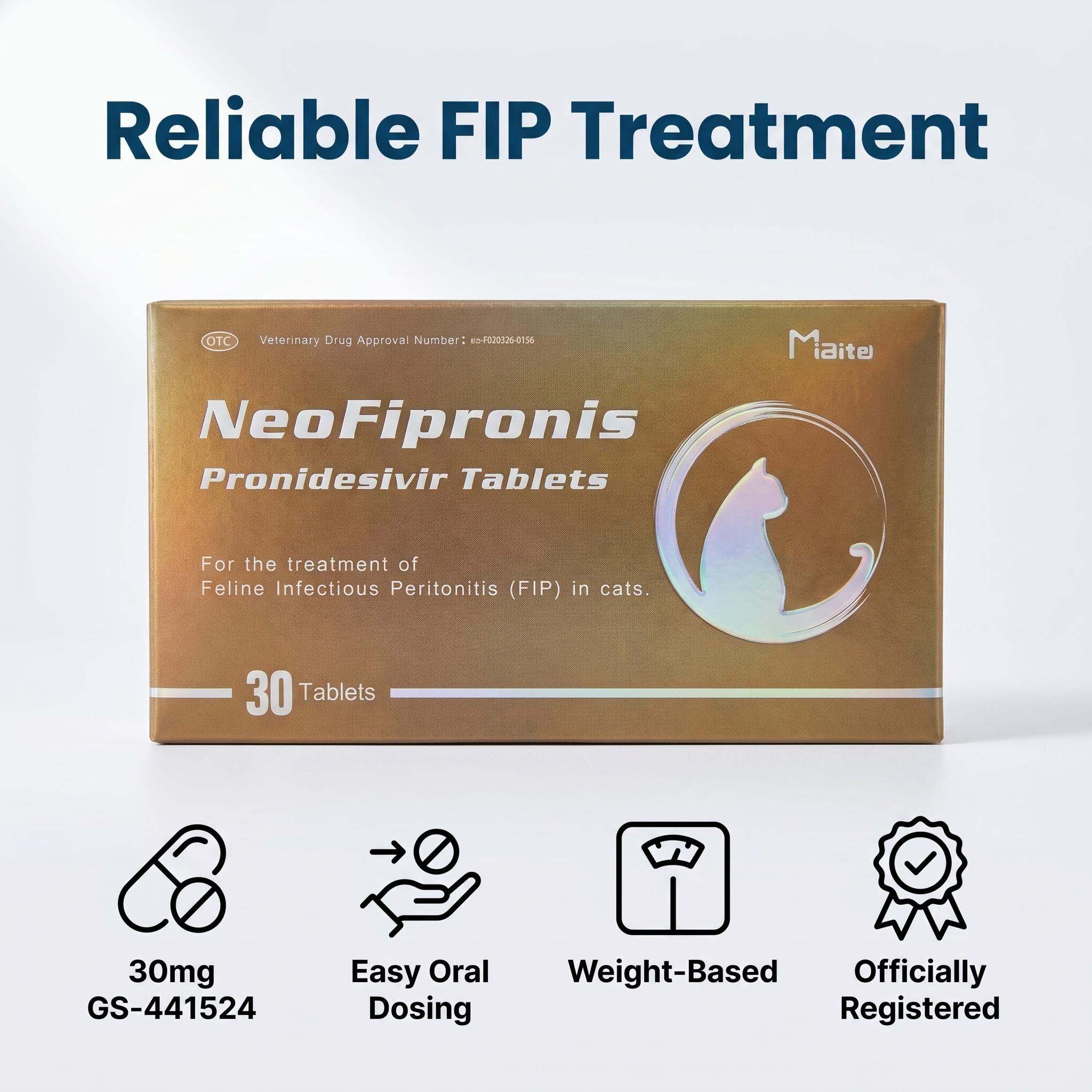
Introduction of Miaite NeoFipronis (Pronidesivir) GS-441524
Miaite NeoFipronis (Pronidesivir) GS-441524 is suitable for symptoms caused by feline infectious peritonitis (FIP), such as loss of appetite, lethargy, fever, ascites, pleural effusion, lymphadenopathy, inflammatory granulomas, nerve damage, and uveitis. It has excellent therapeutic effects on FIP. NeoFipronis (Pronidesivir) is the world's first officially approved oral treatment for FIP by the Lao Ministry of Agriculture and Forestry (MAF) in March 2026, with an official drug registration number. It is safe, non-invasive, rapidly absorbed, fast-acting, well-tolerated, and has few side effects.
The approval of NeoFipronis (Pronidesivir) marks a major milestone in veterinary medicine, providing cat owners and veterinarians with an accessible and reliable option for managing FIP. The oral formulation simplifies treatment regimens, eliminating the need for invasive injections and increasing compliance.
Usage and Dosage
The dosage of GS-441524, particularly in its NeoFipronis (Pronidesivir) form, must be precisely administered based on the cat’s weight, clinical severity, and response to the medication. Typically, treatment involves daily oral administration, with durations ranging from 4 to 12 weeks or longer, depending on the individual case.
Vets generally recommend starting with a higher dose, then tapering as clinical signs improve. Continuous monitoring through blood tests, ultrasound, and clinical examinations guides therapy adjustments.
Advantages Over Traditional Treatments
Compared to previous supportive therapies or corticosteroids, GS-441524—and NeoFipronis (Pronidesivir)—offer direct antiviral action, addressing the root cause rather than merely alleviating symptoms. Their safety profile, ease of administration, and high efficacy make them the preferred choice in modern FIP management.
Legal and Ethical Considerations
While GS-441524 has shown remarkable results, its legal status varies across regions. In some countries, it remains unapproved or classified as an experimental drug; in others, such as Laos, it has received official approval. Responsible treatment involves consulting licensed veterinarians and adhering to local regulations.
Future Perspectives
Ongoing research aims to optimize dosing protocols, expand access, and further understand the long-term impacts of GS-441524 therapy. Combining antiviral drugs with immune-modulating agents may enhance outcomes in complex or advanced cases.
Summary
GS-441524 has revolutionized the treatment of feline infectious peritonitis, transforming what was once a fatal diagnosis into a manageable condition. The approval of Miaite NeoFipronis (Pronidesivir) by the Lao authorities signifies a new era of accessible, effective, and safe oral therapy for cats suffering from FIP. Early diagnosis and timely treatment are crucial for the best prognosis.
References:
"The Use of GS-441524 in Feline Infectious Peritonitis," Journal of Veterinary Internal Medicine
"Advances in Antiviral Therapy for FIP," Veterinary Science Review
"NeoFipronis (Pronidesivir): First Approved Oral Treatment for FIP," Lao Ministry of Agriculture and Forestry Report
"FIP Pathogenesis and Treatment Options," Veterinary Medicine Journal