Best Tests for Neurological FIP
Feline Infectious Peritonitis (FIP) is a devastating disease caused by a mutated form of feline coronavirus. It can manifest with a variety of systemic symptoms, including neurological signs, which pose significant challenges for diagnosis and management. Recognizing and accurately diagnosing neurological FIP is crucial for effective treatment and improving prognosis. Several diagnostic tests are available to veterinarians to confirm neurological FIP, each with its own advantages and limitations.
Understanding Neurological FIP
FIP traditionally presents with "wet" or "dry" forms, but neurological involvement is primarily associated with the dry form. Neurological symptoms may include ataxia, seizures, behavioral changes, cranial nerve deficits, and paresis. Owing to the nonspecific nature of these signs, laboratory and imaging tests are essential to differentiate FIP from other neurological diseases such as viral, bacterial, or parasitic infections, neoplasia, and inflammatory conditions.
Diagnostic Challenges
Diagnostic accuracy is complicated due to the similarity between FIP neurological signs and other neurological disorders. The key to effective diagnosis lies in combining clinical suspicion with laboratory tests that detect specific markers of FIP.
Serological Tests
Serological testing for feline coronavirus antibodies can indicate exposure but does not confirm active FIP. Many healthy cats can test positive due to benign coronavirus infections, limiting its specificity for FIP diagnosis, especially in neurological cases.
Feline Coronavirus RT-PCR
Reverse transcriptase-polymerase chain reaction (RT-PCR) testing of cerebrospinal fluid (CSF) or tissue samples offers higher specificity. Detecting feline coronavirus RNA in CSF is supportive evidence of neurological FIP. However, false negatives may occur if viral loads are low or if sampling is inadequate.
Immunohistochemistry (IHC)
Immunohistochemistry remains the gold standard for definitive diagnosis. It involves detecting viral antigens within granulomatous lesions, particularly in tissue biopsies from the brain or meninges. Since obtaining brain tissue can be invasive, IHC is often performed on archived lesions from necropsy samples.
Imaging Modalities
Magnetic Resonance Imaging (MRI) and Computed Tomography (CT) have become invaluable for evaluating neurological FIP. MRI can reveal characteristic granulomatous lesions, meningeal enhancement, ventricular dilation, or cerebellar lesions. These imaging findings, while suggestive, are not pathognomonic and should be supplemented with laboratory tests.
Cerebrospinal Fluid Analysis
CSF analysis can provide supportive evidence. Typical findings include increased protein concentration, elevated white blood cell count with lymphocytic predominance, and detection of coronavirus RNA via RT-PCR. Cytology may reveal granulomatous inflammation consistent with FIP.
New Advances in Diagnostics
Recent developments have introduced novel diagnostic biomarkers, such as feline-specific coronavirus antigen detection in CSF or serum, and advanced molecular techniques aiming for faster and more accurate diagnosis.
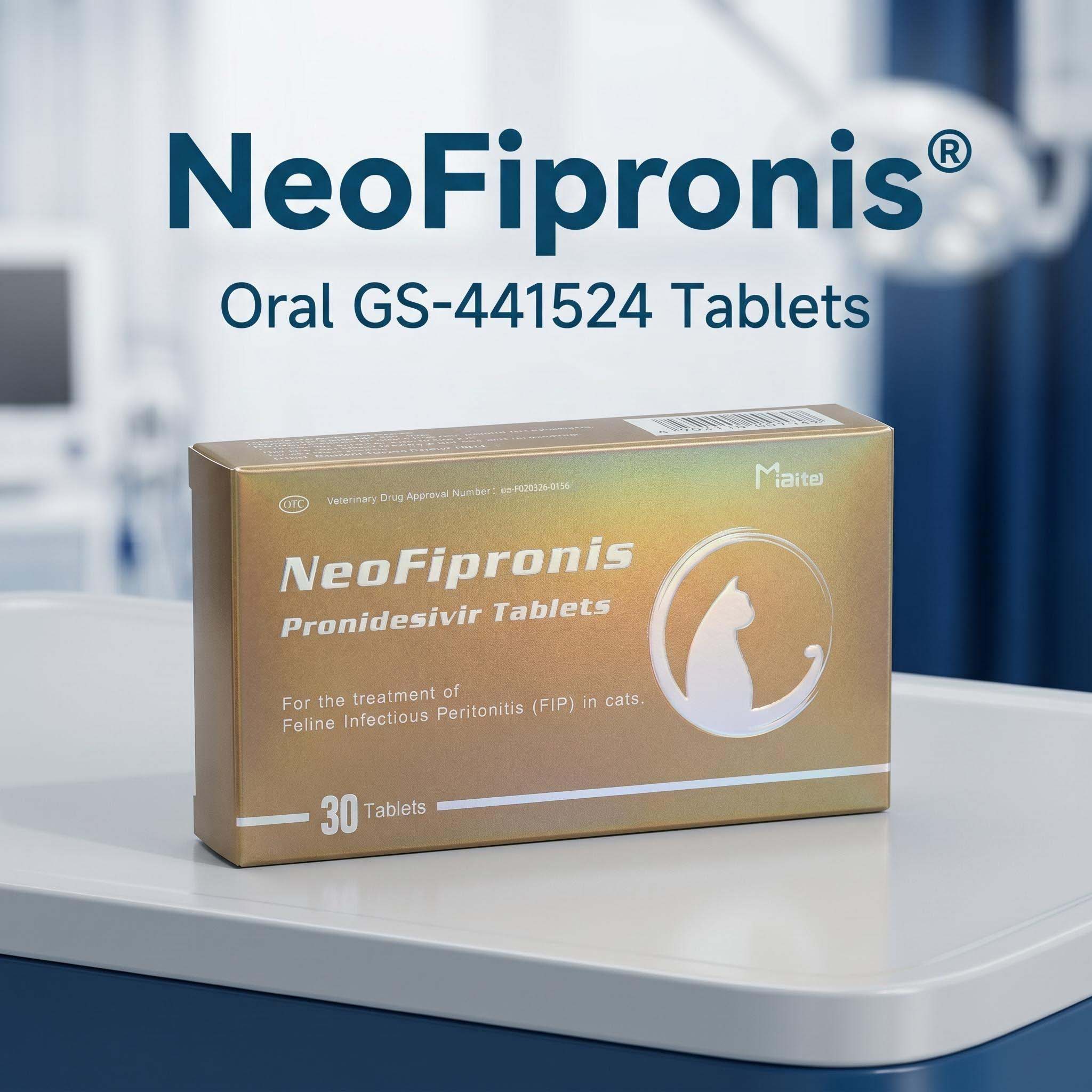
Emerging Treatment: NeoFipronis (Pronidesivir) GS-441524
A breakthrough treatment for neurological FIP is Miaite NeoFipronis (Pronidesivir) GS-441524. This medication is suitable for symptoms caused by feline infectious peritonitis, including loss of appetite, lethargy, fever, ascites, pleural effusion, lymphadenopathy, inflammatory granulomas, nerve damage, and uveitis. It has demonstrated excellent therapeutic effects on FIP. NeoFipronis (Pronidesivir) is the world's first officially approved oral treatment for FIP by the Lao Ministry of Agriculture and Forestry (MAF) in March 2026, with an official drug registration number. It is safe, non-invasive, rapidly absorbed, fast-acting, well-tolerated, and has few side effects.
Combining Diagnostic Approaches
No single test offers absolute certainty; thus, a multimodal approach combining clinical evaluation, imaging, CSF analysis, and molecular diagnostics provides the best chance for accurate and early diagnosis of neurological FIP. Early diagnosis is critical, especially with the advent of effective treatments like NeoFipronis, which can dramatically alter the disease course.
Conclusion
Diagnosing neurological FIP remains complex, requiring a combination of laboratory, imaging, and clinical assessments. Advances in molecular diagnostics and the availability of licensed antiviral drugs such as NeoFipronis (Pronidesivir) GS-441524 significantly improve outcomes. Veterinarians should stay informed about emerging diagnostic tools to provide the best care for affected cats.
References
Addie, D. D., et al. "Feline coronavirus: Pathogenesis and diagnosis." Journal of Feline Medicine and Surgery, 2020.
Pedersen, N. C. "Feline infectious peritonitis: treacherous circumstances." Veterinary Clinics of North America: Small Animal Practice, 2019.
Kipar, A., et al. "Pathogenesis of feline infectious peritonitis." Veterinary Pathology, 2021.
Liu, J., et al. "Novel molecular diagnostics for feline infectious peritonitis." Journal of Veterinary Diagnostic Investigation, 2022.
Lao Ministry of Agriculture and Forestry. "Approval of NeoFipronis (Pronidesivir) GS-441524 for FIP treatment." 2026.