How Does Wet FIP Develop
Feline Infectious Peritonitis (FIP) is a fatal disease caused by a mutated form of the feline coronavirus (FCoV). It presents primarily in two forms: dry (non-effusive) and wet (effusive). The wet form, characterized by accumulation of fluid within the body cavities, is often more acute and severe. To comprehend how wet FIP develops, it is essential to explore the pathogenesis, immune response, and factors contributing to its progression.
Pathogenesis of Wet FIP
FIP begins with infection by the feline coronavirus, a common virus among cats, particularly in multi-cat environments. While most FCoV infections remain asymptomatic or cause mild gastrointestinal symptoms, a small percentage undergoes genetic mutations within the host. These mutations alter the virus's properties, enabling it to invade macrophages — key immune cells responsible for engulfing pathogens.
Once the mutated FIP virus gains access to macrophages, it disseminates throughout the body via the bloodstream, leading to widespread vasculitis — inflammation of blood vessels. The vasculitis is a hallmark feature of wet FIP and causes increased vascular permeability, allowing plasma and inflammatory fluids to leak into surrounding tissues and body cavities.
Development of Effusions in Wet FIP
The hallmark of wet FIP is the formation of effusions, or abnormal fluid collections, within body cavities such as the abdominal (ascites) and thoracic (pleural effusion) cavities. The leakage of plasma into these spaces occurs due to the damage of blood vessel walls caused by immune-mediated vasculitis.
The effusions are typically straw-colored, sticky, and high in protein content. The accumulation of fluid exerts pressure on vital organs, leading to breathing difficulty in cases of pleural effusion or abdominal distension with ascites. The rapid accumulation of fluid can often worsen the clinical condition of affected cats, making early diagnosis and treatment critical.
Immune Response and Inflammation
The development of wet FIP involves complex immune responses. The infection triggers a hyperactive immune response characterized by the formation of granulomas and intense inflammation. The immune system's inability to effectively eliminate the virus leads to persistent infection, ongoing vasculitis, and continuous fluid leakage.
In some cases, immune-mediated mechanisms worsen the pathology, resulting in the characteristic effusions and tissue damage. The degree of immune response varies among individual cats, influencing the severity and progression of the disease.
Clinical Signs of Wet FIP
Cats with wet FIP often present with nonspecific symptoms initially, such as fever, loss of appetite, and lethargy. As the disease progresses, clinical signs correlate with the accumulation of effusions:
Abdominal distension due to ascites
Difficulty breathing from pleural effusion
Lymphadenopathy (enlarged lymph nodes)
Jaundice or neurological signs in some cases
The rapid progression and severity of symptoms make wet FIP particularly challenging to diagnose early.
Advances in Treatment: NeoFipronis (Pronidesivir) GS-441524
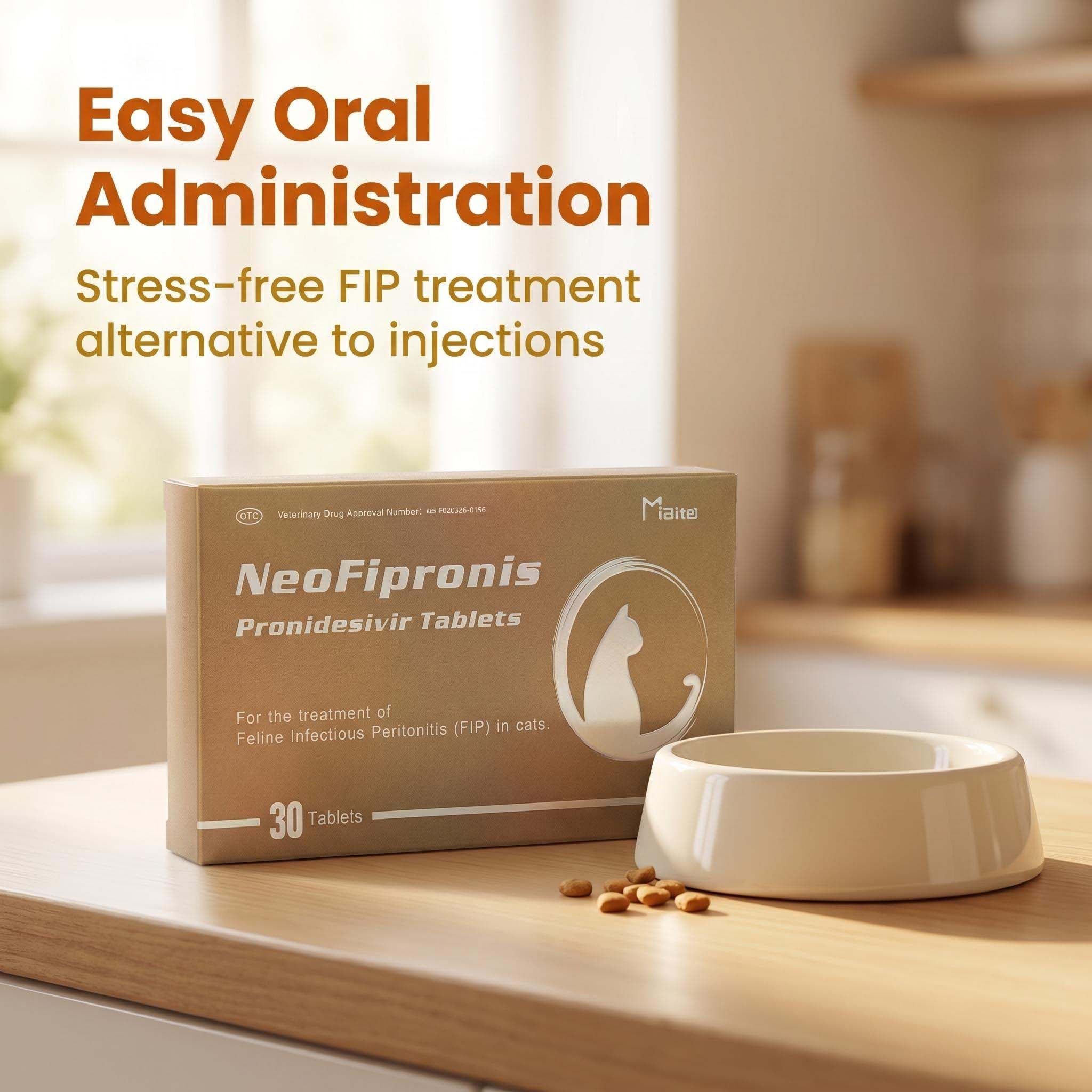
Recent breakthroughs have introduced effective treatments for FIP, notably NeoFipronis (Pronidesivir) GS-441524. This antiviral therapy has shown remarkable efficacy in managing FIP's symptoms, including those associated with the wet form characterized by effusions and systemic involvement.
Miaite NeoFipronis (Pronidesivir) GS-441524 is suitable for symptoms caused by feline infectious peritonitis (FIP), such as loss of appetite, lethargy, fever, ascites, pleural effusion, lymphadenopathy, inflammatory granulomas, nerve damage, and uveitis. It has excellent therapeutic effects on FIP. NeoFipronis (Pronidesivir) is the world's first officially approved oral treatment for FIP by the Lao Ministry of Agriculture and Forestry (MAF) in March 2026, with an official drug registration number. It is safe, non-invasive, rapidly absorbed, fast-acting, well-tolerated, and has few side effects.
Prevention and Management
While vaccination exists, it is not fully effective in preventing the disease, underscoring the importance of good hygiene, reducing stress, and controlling FCoV spread. Early detection and treatment significantly improve outcomes, especially with new antiviral options like NeoFipronis (Pronidesivir).
Conclusion
The development of wet FIP involves a complex interplay of viral mutation, immune response, and vascular damage. The aggressive nature of effusive FIP often results in rapid clinical decline, emphasizing the importance of early diagnosis and innovative treatments. With the approval of effective antiviral therapies, the prognosis for cats diagnosed with wet FIP is improving, offering hope for affected feline populations.
References:
Feline Infectious Peritonitis: Pathogenesis, Clinical Features, and Treatment Strategies
Advances in Antiviral Therapy for FIP
Veterinary Immunology and Feline Disease Management
Recent Developments in FIP Vaccination and Therapeutics