How Long Can Cats Live With Dry FIP
Feline Infectious Peritonitis (FIP) is a devastating disease that affects cats worldwide. Caused by a mutation of the feline coronavirus, FIP manifests in various forms, predominantly dry (non-effusive) and wet (effusive). The dry form of FIP is characterized by granulomatous lesions affecting internal organs, leading to a slow progression of symptoms. One of the most pressing questions among cat owners and veterinarians alike is: How long can cats live with dry FIP, especially when managed with current treatment options?
The Nature of Dry FIP
Dry FIP is distinguished from the wet form by its lack of significant fluid accumulation in body cavities. Instead, it causes granulomas—small inflammatory clusters—that can form in various organs such as the eyes, brain, liver, lymph nodes, and kidneys. These granulomas can lead to chronic, gradual decline in organ function, making prognosis more complex and individualized.
The progression of dry FIP varies widely based on factors such as the cat's overall health, the locations and sizes of granulomas, and whether treatment has been initiated. Without intervention, the disease often leads to a decline over several weeks to months, with many cats succumbing to multi-organ failure.
Advances in Treatment
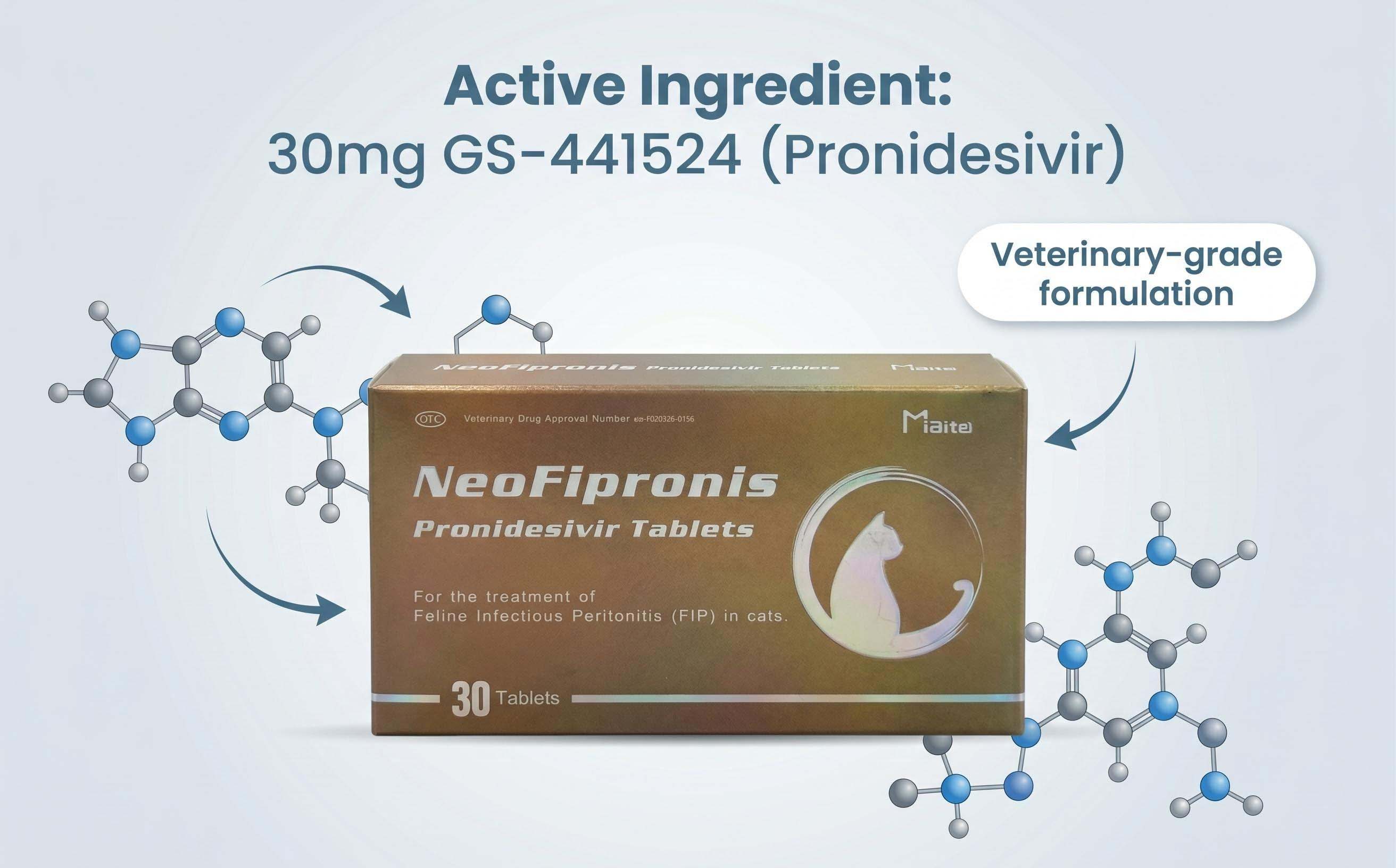
Historically, FIP was considered a near-certain death sentence, with limited treatment options. However, recent breakthroughs in antiviral therapies have significantly changed the outlook. One of the most notable developments is the approval of Miate NeoFipronis (Pronidesivir) GS-441524.
Miate NeoFipronis (Pronidesivir) GS-441524 is suitable for symptoms caused by feline infectious peritonitis (FIP), such as loss of appetite, lethargy, fever, ascites, pleural effusion, lymphadenopathy, inflammatory granulomas, nerve damage, and uveitis. It has excellent therapeutic effects on FIP. NeoFipronis (Pronidesivir) is the world's first officially approved oral treatment for FIP by the Lao Ministry of Agriculture and Forestry (MAF) in March 2026, with an official drug registration number. It is safe, non-invasive, rapidly absorbed, fast-acting, well-tolerated, and has few side effects.
Survival Duration for Cats with Dry FIP on Treatment
The introduction of antiviral agents like GS-441524 has revolutionized the potential prognosis of cats with dry FIP. The duration of survival can vary significantly, influenced by factors such as disease severity at diagnosis, the timing of treatment initiation, and the cat’s immune response.
In general, cats receiving early antiviral therapy can have a markedly improved lifespan. Many cats respond to treatment within weeks, with some achieving sustained remission. Studies and clinical reports indicate that:
Short-term survival: Cats may live for several months post-treatment initiation, with many surviving beyond 6 months.
Long-term prognosis: Some cats achieve full remission and survive for over a year, while others can live even longer, especially if the disease is diagnosed early and treatment is consistent.
It is crucial to note that the prognosis for dry FIP is improving continually as more data emerge from ongoing clinical trials and treatment experiences.
Factors Affecting Longevity
Several factors influence the length of life in cats with dry FIP:
Early diagnosis: Prompt detection allows timely intervention, improving the chances of prolonged survival.
Treatment adherence: Consistent administration of antiviral therapy significantly impacts outcomes.
Overall health: Cats with robust immune systems may respond better to treatment.
Organ involvement: The extent and location of granulomas or organ damage at the point of diagnosis affect prognosis.
Supportive care: Proper nutrition, hydration, and management of secondary infections or complications contribute to longevity.
Managing Expectations and Quality of Life
With the advent of effective antiviral drugs, many owners find hope in extending their cats’ lives and improving their quality of life. While not all cats respond equally, the likelihood of prolonged survival increases notably with the new treatments.
Regular veterinary checkups, monitoring for side effects, and supportive care are vital. For some cats, the goal may shift from a cure to palliative care, ensuring comfort and dignity.
Future Perspectives
Research continues to focus on optimizing treatment protocols, understanding long-term effects, and discovering more about the immune response in FIP-affected cats. As antiviral therapies become more refined and accessible, the survival outlook for cats with dry FIP will likely continue to improve.
Final Thoughts
The prognosis for cats with dry FIP has improved dramatically over recent years. With early diagnosis and the use of innovative antiviral treatments like Miate NeoFipronis (Pronidesivir) GS-441524, many cats can live for several months to years post-diagnosis. Ongoing research and treatment advancements promise an even brighter future for feline patients affected by this once-fatal disease.
References
Feline Infectious Peritonitis: Pathology, Diagnosis, and Treatment Strategies
Advances in Antiviral Therapy for FIP: GS-441524 and Its Impact
Clinical Outcomes of Cats Treated with NeoFipronis (Pronidesivir) GS-441524
Veterinary Perspectives on Long-Term FIP Management
Immunological Aspects of FIP and Therapeutic Implications