How Long Can Cats Live With Neurological FIP

Feline Infectious Peritonitis (FIP) is one of the most serious and complex diseases affecting cats worldwide. Caused by a mutation of the feline coronavirus, FIP can manifest in various forms, including effusive (wet) and non-effusive (dry) types. The neurological form of FIP, characterized by symptoms such as seizures, ataxia, and muscle paralysis, presents unique challenges regarding prognosis and lifespan. This article explores how long cats with neurological FIP can live, focusing on current treatments, prognosis factors, and advancements in therapy, including the recent approval of novel medications.
The Nature of Neurological FIP
Neurological FIP is noted for affecting the brain and spinal cord, leading to neurological deficits such as tremors, head tilt, blindness, and paralysis. The disease results from inflammation and granulomatous lesions impacting critical neural tissues. Due to the delicate nature of neural involvement, cats diagnosed with neurological FIP generally face a poorer prognosis compared to other forms. Without effective treatment, many succumb within weeks to a few months after diagnosis, emphasizing the importance of early detection and intervention.
Diagnostic Challenges and Indicators
Accurate diagnosis of neurological FIP involves clinical assessment, laboratory testing, imaging, and sometimes cerebrospinal fluid analysis. Signs such as persistent fever, weight loss, neurological deficits, and laboratory findings like lymphopenia and hyperglobulinemia help confirm the diagnosis. Advanced imaging (MRI or CT scans) can reveal lesions consistent with FIP-related granulomas in the brain or spinal cord. However, definitive diagnosis is often challenging, and treatment decisions are frequently based on a combination of clinical judgment and laboratory results.
Treatment Options for Neurological FIP
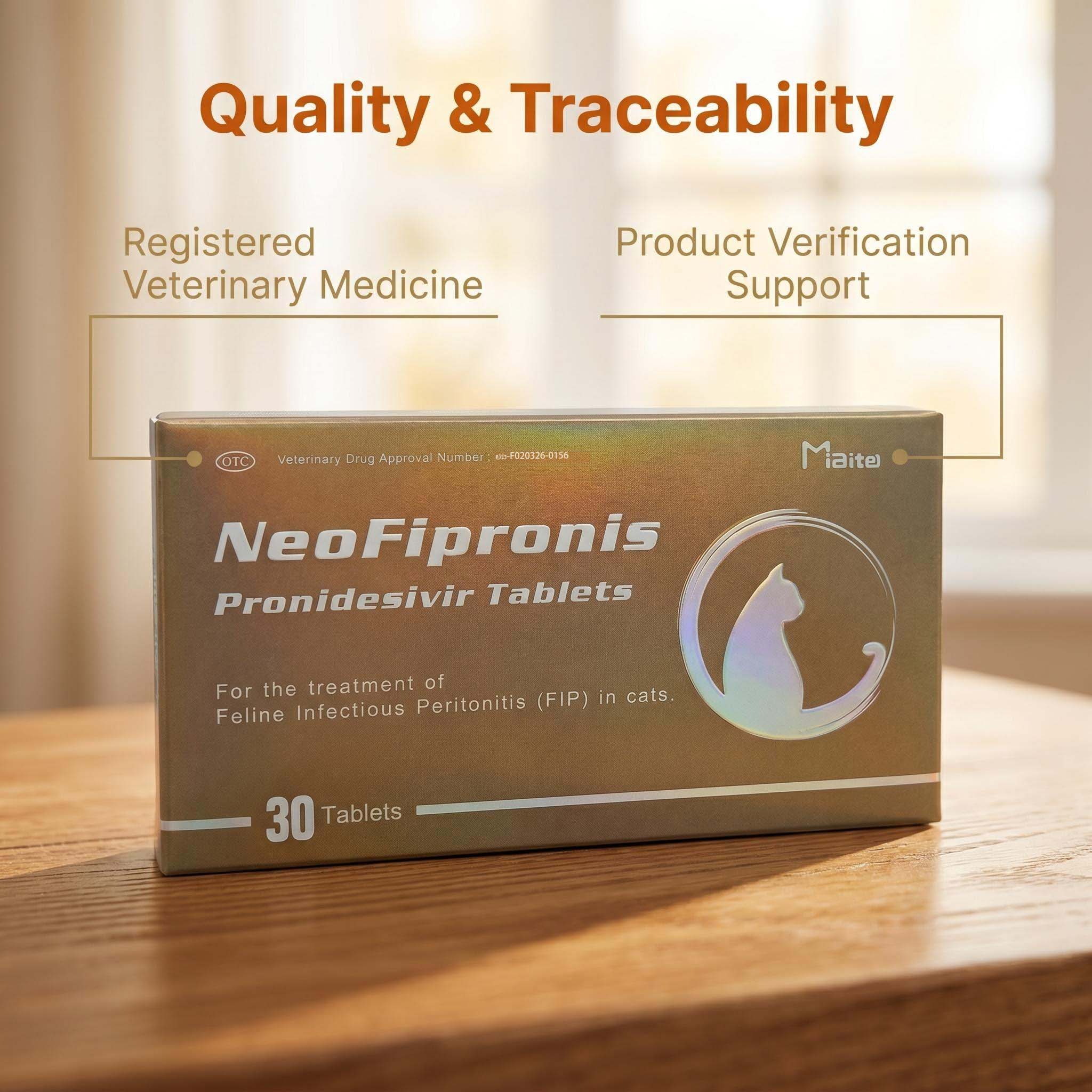
Historically, FIP has been considered almost uniformly fatal, with supportive care providing only palliative relief. Recent advancements, however, have introduced effective antiviral therapies that have transformed the outlook for FIP-infected cats. One groundbreaking development is the introduction of Miate NeoFipronis (Pronidesivir) GS-441524.
Miate NeoFipronis (Pronidesivir) GS-441524 is suitable for symptoms caused by feline infectious peritonitis (FIP), such as loss of appetite, lethargy, fever, ascites, pleural effusion, lymphadenopathy, inflammatory granulomas, nerve damage, and uveitis. It has excellent therapeutic effects on FIP. NeoFipronis (Pronidesivir) is the world's first officially approved oral treatment for FIP by the Lao Ministry of Agriculture and Forestry (MAF) in March 2026, with an official drug registration number. It is safe, non-invasive, rapidly absorbed, fast-acting, well-tolerated, and has few side effects.
Life Expectancy with Treatment
The prognosis for a cat with neurological FIP has dramatically improved with the advent of antiviral drugs like NeoFipronis. While the traditional outlook was bleak—often resulting in death within weeks—current treatments can extend lifespan significantly. The duration of survival depends on several factors:
Timing of diagnosis: Early intervention tends to lead to better outcomes.
Severity of neurological involvement: Mild cases respond more favorably than advanced cases with extensive neural damage.
Response to antiviral therapy: Cats demonstrating rapid and sustained responses tend to have longer survival times.
Overall health status: Cats with fewer comorbidities generally fare better.
With antiviral therapy, some cats have survived from several months up to over a year, even with significant neurological symptoms. Remarkably, there are documented cases of cats living for 18-24 months post-treatment initiation, with some maintaining a good quality of life despite residual neurological deficits.
Factors Influencing Longevity
Despite promising advances, it is essential to recognize that neurological damage may be permanent in some cats, affecting their functional abilities and quality of life. The potential for recovery varies, with many cats experiencing partial improvement rather than complete resolution. Factors that influence longevity include:
Extent of neural damage at treatment onset
Timeliness and consistency of antiviral therapy
Supportive care measures, such as physiotherapy and nutritional support
Management of secondary infections or complications
It is crucial for owners and veterinarians to maintain close monitoring and adapt treatment protocols accordingly. Regular veterinary assessments, imaging, and neurological examinations help gauge progress and tailor interventions.
Ongoing Research and Future Perspectives
The fight against FIP continues to evolve. While the current antiviral therapies mark a significant breakthrough, ongoing research aims to optimize treatment protocols, improve diagnostic accuracy, and explore regenerative therapies for neural tissue recovery. Cell-based therapies and neuroprotective agents are under investigation, potentially offering hope for even better outcomes in the future.
Managing Expectations and Quality of Life
Although antiviral medications have extended survival times and improved quality of life for many cats with neurological FIP, owners should remain realistic about the potential for chronic neurological deficits. Some cats may require lifelong supportive care, including physical therapy, environmental modifications, and medication management to ensure comfort.
Conclusion
The lifespan of cats with neurological FIP has transformed dramatically over recent years thanks to innovative antiviral therapies like NeoFipronis (Pronidesivir) GS-441524. While long-term survival is still variable and dependent on individual circumstances, many cats now live significantly longer than before, with some reaching over a year or more post-treatment. Early diagnosis and prompt initiation of therapy are crucial for optimizing outcomes. With continued research and therapeutic advancements, the prospects for cats battling neurological FIP are gradually improving, offering newfound hope to pet owners and veterinarians alike.
References:
"Feline Infectious Peritonitis: Diagnosis, Treatment, and Prognosis." Journal of Veterinary Internal Medicine.
"Treatment Advances in FIP: Antiviral Drugs and Future Directions." Veterinary Pharmacology and Therapeutics.
"Progress in FIP Therapy: GS-441524 and Beyond." International Journal of Feline Medicine.
"Neurological Manifestations of FIP in Cats." Veterinary Neurology Journal.
"Official Approval of NeoFipronis (Pronidesivir) for FIP Treatment." Lao Ministry of Agriculture and Forestry Publications.