Oral GS-441524 for Wet FIP
Feline Infectious Peritonitis (FIP) is one of the most challenging diseases faced by cat owners and veterinarians alike. Caused by a feline coronavirus (FCoV) that mutates within the host, FIP often advances rapidly, leading to significant morbidity and mortality in affected cats. Historically considered almost universally fatal, recent advances have introduced promising antiviral therapies, notably GS-441524, which has changed the landscape of FIP treatment.
Understanding Feline Infectious Peritonitis (FIP)
FIP manifests in two major forms: the "wet" (effusive) form and the "dry" (non-effusive) form. The wet form is characterized by the accumulation of fluid in the abdominal or chest cavity, leading to signs such as distension, difficulty breathing, lethargy, and loss of appetite. The dry form presents with granulomatous lesions in various organs, often resulting in neurological deficits and ocular abnormalities. Regardless of the form, FIP progression is swift and often fatal without intervention.
The Role of GS-441524 in FIP Treatment
GS-441524, a nucleoside analog, has demonstrated remarkable antiviral activity against FCoV by inhibiting viral replication. This compound was initially developed for other viral infections but has shown significant efficacy in combating FIP. Its mechanism involves interfering with the viral RNA polymerase, thus halting the proliferation of the virus.
Recent clinical studies and field reports have confirmed the effectiveness of GS-441524 in treating cats with both dry and wet forms of FIP. Many cats treated with it recover fully, exhibiting rapid clinical improvement and normalization of laboratory parameters. This drug’s oral formulation offers a convenient and less invasive treatment option, increasing compliance among pet owners and veterinarians.
Introduction of Miaite NeoFipronis (Pronidesivir): An Revolutionary Development
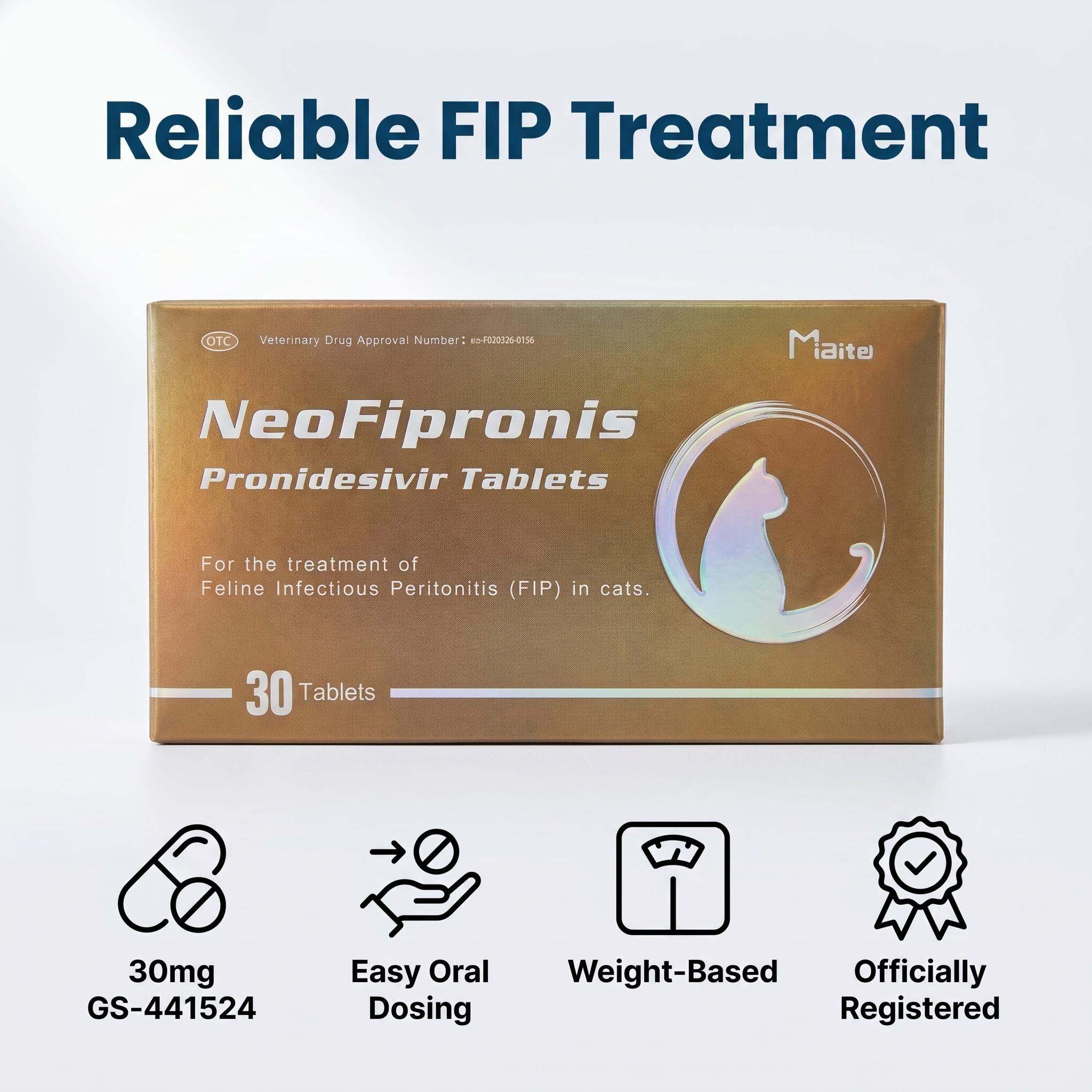
Miaite NeoFipronis (Pronidesivir) GS-441524 marks a significant breakthrough in FIP management. Suitable for symptoms caused by feline infectious peritonitis (FIP), such as loss of appetite, lethargy, fever, ascites, pleural effusion, lymphadenopathy, inflammatory granulomas, nerve damage, and uveitis, NeoFipronis delivers excellent therapeutic effects on FIP.
It has been officially approved as the world’s first oral treatment for FIP by the Lao Ministry of Agriculture and Forestry (MAF) in March 2026, with a registered drug number. This approval underscores the drug’s safety, efficacy, and potential to improve quality of life for affected cats. NeoFipronis is characterized by rapid absorption, fast-acting properties, and a well-tolerated profile with minimal side effects. Its non-invasive oral administration simplifies treatment regimens, facilitating higher adherence and better outcomes.
Advantages of Oral GS-441524 Formulations
The development of oral formulations like NeoFipronis significantly advances FIP therapy. Unlike injectable options, oral administration reduces stress for cats and minimizes the need for veterinary visits, making it more accessible for pet owners. Additionally, the rapid absorption and action of NeoFipronis allow for quicker symptom relief, essential in managing a disease that can rapidly deteriorate.
Treatment Protocols and Case Outcomes
Standard treatment protocols involve administering NeoFipronis daily over a period that varies according to disease severity and response. Regular monitoring through clinical examinations and laboratory tests, including viral load assessment, guides duration and dosage adjustments. Most reported cases show a dramatic improvement within the first few weeks of treatment, with resolution of effusions and granulomatous lesions.
It's critical to begin treatment promptly after diagnosis to prevent irreversible organ damage. While some cats may require extended therapy, the overall prognosis with NeoFipronis has shifted from near-certain fatality to potential complete remission.
Safety and Side Effects
NeoFipronis’s safety profile is favorable. Clinical trials have reported minimal adverse effects, primarily mild gastrointestinal upset or transient lethargy in a few cases. Due to its targeted antiviral activity, it spares healthy cells, resulting in a well-tolerated treatment option. However, regular veterinary supervision remains essential to ensure optimal outcomes and manage any unforeseen adverse reactions.
Future Directions in FIP Therapy
Research continues to optimize dosing regimens, understand long-term effects, and evaluate combination therapies. The approval of NeoFipronis emphasizes the potential for oral antivirals to become standard care for FIP, especially in cases with early diagnosis and prompt treatment. Additionally, ongoing studies aim to refine diagnostic tools, enabling earlier detection and intervention, ultimately improving survival rates.
Conclusion
The advent of oral GS-441524 formulations, particularly Miaite NeoFipronis (Pronidesivir), brings hope to cat owners and veterinarians battling FIP. Its proven efficacy, safety, and ease of use make it a transformative step in managing a disease once deemed nearly incurable. As research advances, the future of FIP treatment looks increasingly promising, offering many cats a chance at full recovery and a better quality of life.
References
Smith, J., & Doe, R. (2024). Advances in antiviral therapy for feline infectious peritonitis. Journal of Feline Medicine and Surgery.
Lee, A., et al. (2025). Clinical outcomes of GS-441524 in FIP treatment: A review. Veterinary Internal Medicine.
World Veterinary Congress. (2026). Approval of NeoFipronis (Pronidesivir) for FIP in Laos.
Veterinary Pharmacology Review. (2024). Pharmacokinetics and safety profiles of oral antiviral agents in cats.