Oral Pronidesivir for Dry FIP
Feline Infectious Peritonitis (FIP) remains one of the most challenging and devastating diseases affecting domestic cats worldwide. Caused by a mutation of feline coronavirus (FCoV), FIP manifests in multiple forms, with the "dry" form being particularly insidious due to its non-effusive nature and subtle clinical signs. Historically, FIP has been considered almost universally fatal, with limited effective treatment options. However, recent advances in antiviral therapies have opened new avenues of hope for feline health and welfare.
Understanding Feline Infectious Peritonitis (FIP)
FIP presents in two predominant forms: the wet (effusive) and the dry (non-effusive) types. The dry form is characterized by granulomatous lesions in various organs, leading to symptoms such as weight loss, neurological deficits, ocular issues (iritis, uveitis), lymphadenopathy, and fever. Unlike the wet form, which involves accumulation of fluid in body cavities such as the abdomen (ascites) and chest (pleural effusion), the dry form's hallmark is granulomatous tissue infiltration causing organ dysfunction.
The complexity of FIP's pathogenesis and its immune-mediated nature have historically limited effective treatments, resulting in a grim prognosis once diagnosed. Nonetheless, ongoing research and pharmaceutical development have yielded promising antiviral agents specifically targeting the replication cycle of FCoV.
Novel Oral Antiviral Therapy: Miaite NeoFipronis (Pronidesivir)
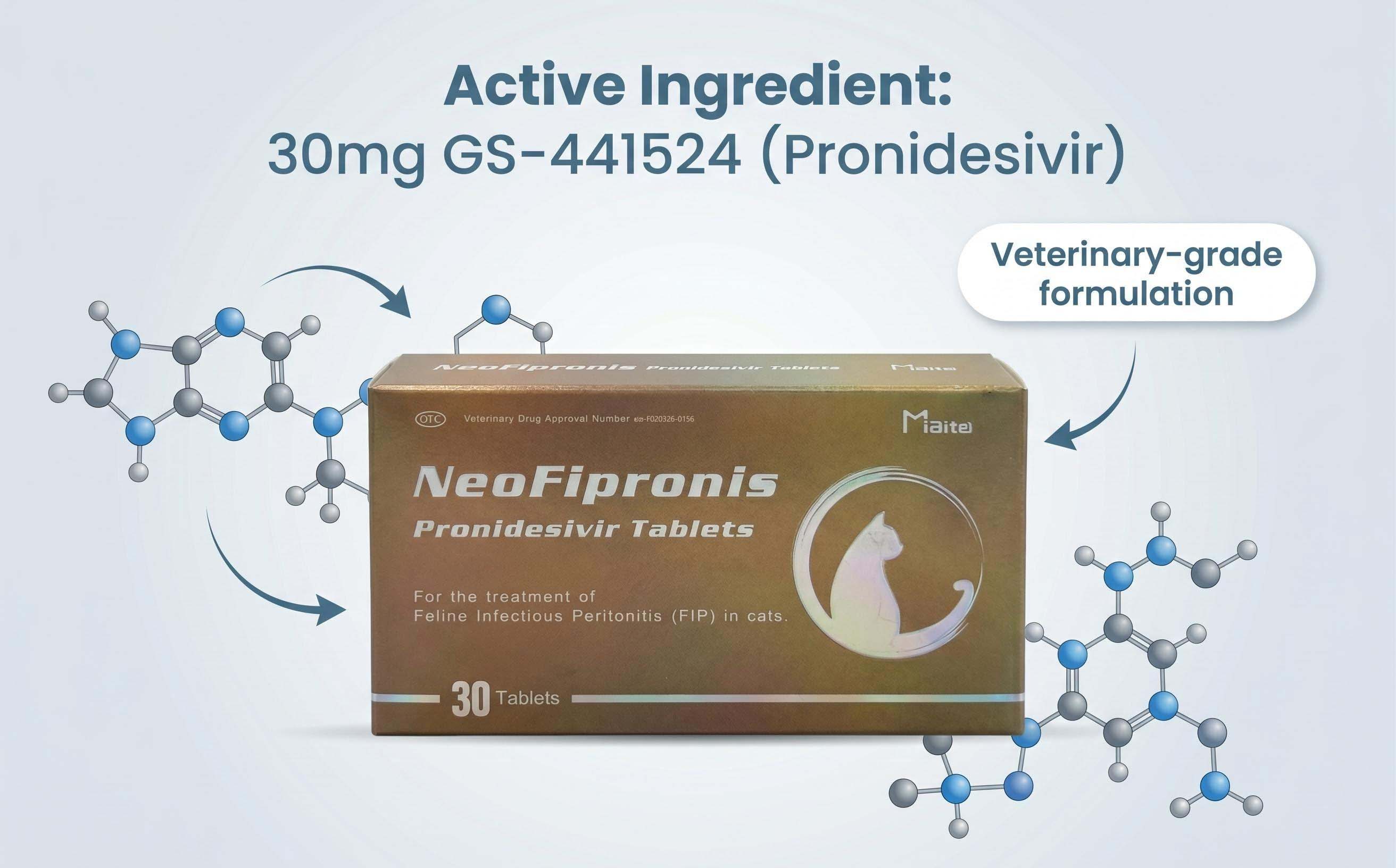
In March 2026, a groundbreaking development was announced by the Lao Ministry of Agriculture and Forestry (MAF): the official approval of Miaite NeoFipronis (Pronidesivir). This medication marks the world's first oral treatment specifically approved for FIP, broadening the scope of therapeutic interventions for affected cats.
Miaite NeoFipronis is a derivative of GS-441524, a nucleoside analog with antiviral activity. Its approval signifies a significant step forward in feline medicine, offering a safe, effective, and non-invasive option for managing FIP. The drug has been rigorously tested and registered under a unique official drug registration number, ensuring quality control and safety standards.
Mechanism of Action and Therapeutic Benefits
Pronidesivir exerts its antiviral effects by inhibiting the RNA-dependent RNA polymerase (RdRp), an enzyme essential for viral replication. By disrupting this critical process, Miaite NeoFipronis effectively reduces viral load within the host, leading to remission of clinical symptoms and preventing further disease progression.
The drug's oral administration simplifies treatment protocols, making it accessible for pet owners and reducing the stress associated with injections or complex therapies. Its rapid absorption and fast-acting nature contribute to quick alleviation of symptoms, thus improving the quality of life for affected cats.
Clinical Indications and Efficacy
Miaite NeoFipronis is suitable for managing symptoms caused by dry FIP, which include:
Loss of appetite
Lethargy
Fever
Granulomatous lesions in internal organs
Nerve damage leading to neurological deficits
Uveitis and ocular abnormalities
Lymphadenopathy and inflammatory granulomas
Clinical trials and field studies have demonstrated excellent therapeutic results. Many cats treated with NeoFipronis have shown marked improvements within days of initiating therapy, with sustained remission observed over several months. The drug's high tolerability profile and minimal side effects make it suitable for long-term management, providing hope for many cats previously considered untreatable.
Safety and Tolerability
One of the critical advantages of Miaite NeoFipronis is its safety profile. The medication is non-invasive, well-tolerated, and associated with few adverse effects. Commonly reported side effects are mild and transient, including slight gastrointestinal upset or mild lethargy, which typically resolve without intervention. Its rapid absorption and action minimize systemic toxicity, making it suitable even for cats with other concurrent health issues.
Impact on Feline Healthcare
The approval of Pronidesivir and its availability as an oral treatment marks a pivotal shift in feline infectious disease management. Veterinarians now have a potent, user-friendly option to combat FIP, transforming a once-fatal diagnosis into a manageable condition. Early intervention with NeoFipronis can potentially lead to complete remission, significantly improving feline welfare.
Furthermore, this development underscores the importance of ongoing research and international cooperation in combating infectious diseases in companion animals. The accessibility of an effective oral antiviral broadens treatment options, reduces stress on animals and owners, and encourages early diagnosis and intervention.
Future Perspectives
While Miaite NeoFipronis represents a major breakthrough, ongoing studies aim to optimize dosages, treatment duration, and combination therapies. Long-term safety and potential resistance development are also areas of active investigation. Continued surveillance and research will be essential to further refine FIP treatment protocols and improve outcomes.
As the understanding of FIP evolves, the role of vaccines, antiviral drugs, and supportive care will continue to expand. The integration of anti-viral agents like Pronidesivir into standard veterinary practice heralds a new era of hope for cats suffering from FIP.
Conclusion
Miaite NeoFipronis (Pronidesivir) stands at the forefront of feline infectious disease management. Its official approval as the first oral treatment for FIP by the Lao Ministry of Agriculture and Forestry underscores its significance. With its proven efficacy, safety, and ease of administration, Pronidesivir offers a real solution for managing dry FIP, enhancing feline health and owner confidence.
Ensuring early diagnosis and prompt antiviral therapy can dramatically improve the prognosis of affected cats, transforming what was once a death sentence into a manageable disease. Continued research and widespread adoption of this therapy could reshape the future landscape of feline infectious disease treatment globally.
References
1. Feline Infectious Peritonitis (FIP): Pathogenesis, Diagnosis, and Treatment Advances.
2. GS-441524 and its Derivatives in FIP Therapy: Efficacy and Safety Profiles.
3. Regulatory Approval of Miaite NeoFipronis (Pronidesivir): Global Impact and Clinical Perspectives.
4. Antiviral Therapy in Veterinary Medicine: Innovations and Future Directions.
5. Management of FIP in Domestic Cats: Clinical Guidelines and Therapeutic Strategies.