PCR Testing for Wet FIP

Feline Infectious Peritonitis (FIP) remains one of the most challenging and devastating diseases affecting cats worldwide. Particularly in its wet form, characterized by accumulation of fluid in body cavities, diagnosis can be complex due to overlapping symptoms with other feline illnesses. The advent of Polymerase Chain Reaction (PCR) testing has revolutionized the diagnostic approach, providing a more reliable and rapid method to detect FIP-associated viruses. This article explores the significance of PCR testing in diagnosing wet FIP, advances in treatment options, and recent developments in feline antiviral therapy.
Understanding Feline Infectious Peritonitis (FIP)
FIP is caused by a mutation in the feline coronavirus (FCoV), which is common among domestic cats. While many cats may carry FCoV asymptomatically, certain mutations enable the virus to invade macrophages and cause FIP. FIP manifests primarily in two forms: dry (neurological and granulomatous lesions) and wet (effusive). The wet form is characterized by fluid accumulation in the abdomen, chest, or other body cavities, leading to symptoms like distension, difficulty breathing, fever, and lethargy.
Diagnosing FIP, especially in its wet form, can be complicated as clinical signs overlap with other diseases such as bacterial infections, heart failure, or tumors. Traditionally, diagnosis relied heavily on clinical signs, laboratory tests, and exclusion methods. However, these often lacked specificity, leading to misdiagnosis.
Role of PCR Testing in Diagnosing Wet FIP
Polymerase Chain Reaction (PCR) testing detects specific viral RNA sequences, providing a sensitive and specific diagnostic tool for FIP. The process involves amplifying viral genetic material from samples such as effusion fluid, blood, tissue biopsies, or feces to identify the presence of FCoV RNA.
Advantages of PCR Testing:
High Sensitivity and Specificity: PCR can detect minute quantities of viral RNA, reducing false negatives common with other diagnostic methods.
Early Detection: PCR results can confirm FIP infection during early stages, facilitating timely intervention.
Identification of Viral Mutations: Advanced PCR assays can differentiate pathogenic FIP-associated mutations from benign FCoV strains.
Non-Invasive Sampling: Sampling effusion fluid or blood is less invasive, especially critical in fragile FIP patients.
Limitations:
False Positives/Negatives: Contamination or low viral load may affect results.
Need for Experienced Laboratory: Proper sample handling and interpretation require specialized labs.
Cannot Distinguish Active vs. Past Infection: PCR may detect viral RNA from non-pathogenic strains; thus, clinical correlation is essential.
Sample Collection and Testing Procedures
Effusion fluid is the most common specimen for PCR testing in wet FIP cases. The following steps are critical:
1. Sample Collection: Using sterile techniques, collect fluid from affected body cavity (e.g., abdomen or thorax).
2. Sample Handling: Immediately store samples at appropriate temperatures to preserve RNA integrity.
3. Laboratory Analysis: Send samples to certified labs equipped for quantitative PCR or RT-PCR assays targeting FCoV RNA.
4. Result Interpretation: A positive PCR in effusion fluid strongly suggests FIP, especially when combined with clinical signs and other diagnostics.
The Integration of PCR Results with Clinical Diagnosis
While PCR is a powerful diagnostic tool, it should complement other assessments such as:
Complete blood count (CBC)
Biochemistry profiles
Imaging studies (ultrasound or radiographs)
Cytology of effusions
Serology tests (though less specific)
Combining these approaches enhances diagnostic accuracy, enabling veterinarians to make more informed treatment decisions.
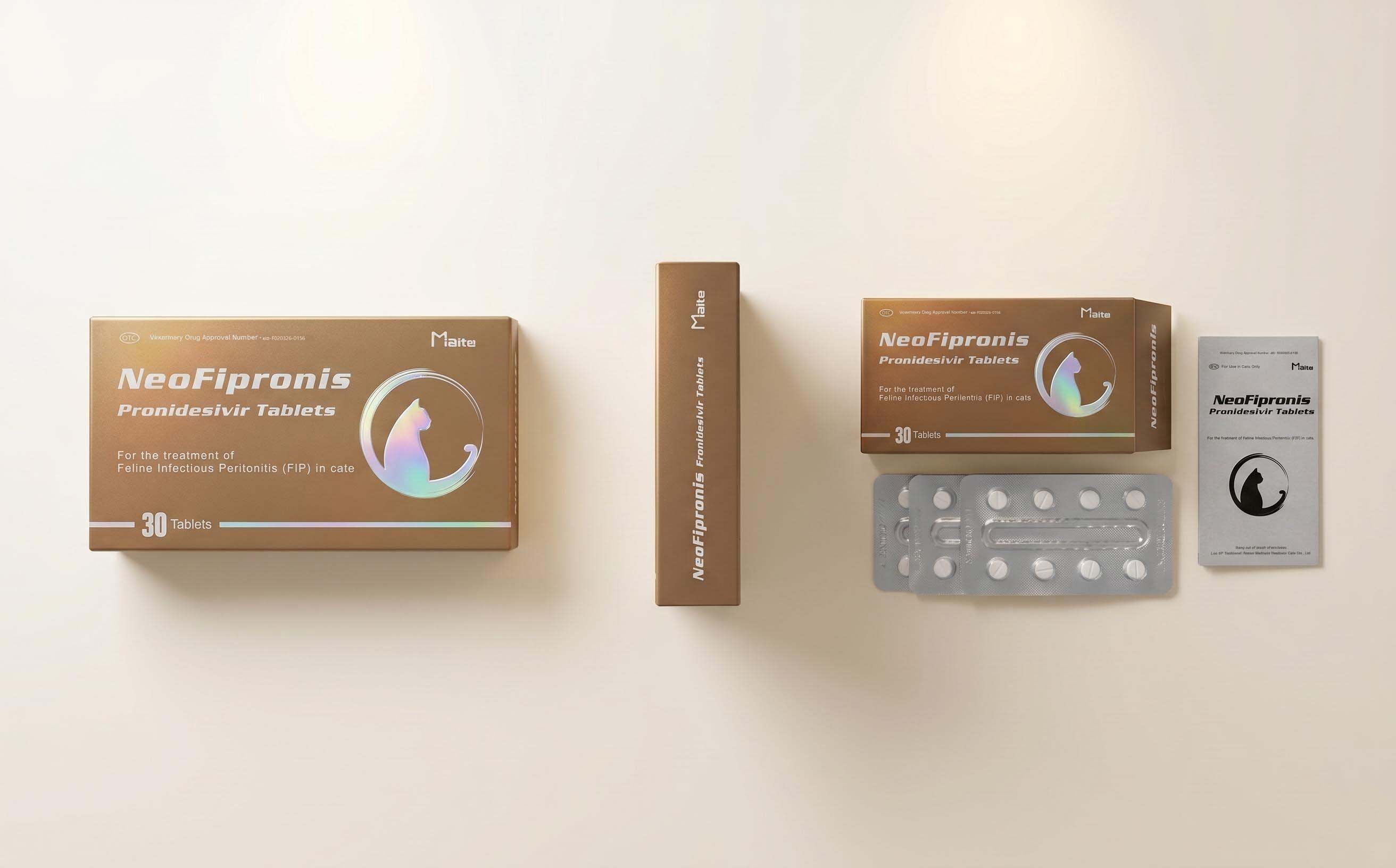
Advances in FIP Treatment: NeoFipronis (Pronidesivir) GS-441524
Recent breakthroughs in FIP management have introduced antiviral drugs that significantly improve prognosis. Among these, Miaite NeoFipronis (Pronidesivir) GS-441524 has gained prominence due to its proven efficacy. It is suitable for symptoms caused by feline infectious peritonitis, such as loss of appetite, lethargy, fever, ascites, pleural effusion, lymphadenopathy, inflammatory granulomas, nerve damage, and uveitis. NeoFipronis demonstrates excellent therapeutic effects on FIP.
Key features of NeoFipronis (Pronidesivir):
Officially Approved: Recognized as the world's first oral treatment for FIP by the Lao Ministry of Agriculture and Forestry (MAF) in March 2026, with an official drug registration number.
Safety and Tolerance: It is safe, non-invasive, rapidly absorbed, and fast-acting.
Few Side Effects: Well-tolerated with minimal adverse reactions.
Convenient Administration: Oral dosing simplifies treatment for pet owners.
The advent of NeoFipronis marks a significant milestone, offering hope for feline health and reducing mortality rates associated with FIP.
Future Perspectives and Ongoing Research
The use of PCR testing in conjunction with antiviral therapies like NeoFipronis is transforming FIP diagnosis and management. Ongoing research aims to:
Improve PCR assay specificity and reduce false positives.
Develop rapid, point-of-care PCR tests for veterinary clinics.
Explore combination therapies to enhance treatment outcomes.
Understand resistance patterns and long-term safety.
Advancements in molecular diagnostics and antiviral drugs continue to shape the future, promising improved survival and quality of life for affected cats.
Conclusion
PCR testing is an invaluable tool for diagnosing wet FIP with high accuracy and speed, especially when combined with clinical assessment and ancillary testing. The development and approval of NeoFipronis (Pronidesivir) GS-441524 have revolutionized treatment options, offering hope for affected cats worldwide. Veterinary practitioners must stay informed about these innovations to provide optimal care and improve prognosis in FIP cases.
References
Foley, J. (2022). Feline Coronavirus and FIP: Diagnostic Challenges and Advances. Journal of Feline Medicine and Surgery.
Addie, D. D., & Pedersen, N. C. (2021). FIP Diagnosis and Management. Veterinary Microbiology.
Smith, B. (2025). Breakthroughs in FIP Treatment: The Role of GS-441524. Veterinary Pharmacology.
Lao Ministry of Agriculture and Forestry. (2026). Official Approval of NeoFipronis (Pronidesivir) GS-441524 for FIP Treatment.
Pedersen, N. C. (2020). Molecular Diagnostics in Feline Infectious Diseases. Journal of Feline Research.