Neurological FIP Diagnosis Guide

Feline Infectious Peritonitis (FIP) is a complex, often fatal disease caused by certain strains of feline coronavirus (FCoV). While the disease primarily affects the abdominal cavity, leading to fluid accumulation and generalized illness, it can also present with neurological symptoms, posing significant diagnostic challenges. Accurate diagnosis, especially of neurological FIP, is critical to improve treatment outcomes and provide appropriate veterinary care.
Overview of FIP and Its Pathogenesis
FIP develops when a mutation occurs within the feline coronavirus, converting it from a typically benign enteric virus into a virulent pathogen capable of causing systemic disease. The mutated virus invades macrophages, facilitating widespread dissemination through the body. The disease predominantly affects young cats, feral populations, or those with compromised immune systems.
FIP manifests in two forms: the effusive (wet) form characterized by fluid accumulation within body cavities, and the non-effusive (dry) form marked by granulomatous lesions in various organs, including the brain and spinal cord. The neurological form of FIP, although less common, poses unique diagnostic challenges due to its variable clinical presentations.
Neurological Manifestations in FIP
Neurological FIP occurs when the virus invades the central nervous system (CNS), causing inflammation of the brain and spinal cord (meningitis, encephalitis, myelitis). Common signs include:
Behavioral changes: Disorientation, agitation, or lethargy
Neuropathy: Weakness, ataxia, or uncoordinated movements
Seizures: Focal or generalized epileptic activity
Vision problems: Uveitis, strabismus, or blindness
Cranial nerve deficits: Facial droop, drooling, or difficulty swallowing
These symptoms often overlap with other neurological diseases, making differential diagnosis vital.
Diagnostic Challenges and Approaches
Diagnosing neurological FIP is intricate due to overlapping signs with other neurodegenerative or infectious diseases. A comprehensive diagnostic approach involves:
Clinical evaluation: Detailed neurological examination and history-taking
Imaging modalities: MRI and CT scans reveal lesions typical of FIP, such as vacuolation, granulomas, or meningeal enhancement
Laboratory tests:
Blood work indicating inflammation
Cerebrospinal fluid (CSF) analysis showing increased protein levels, pleocytosis, and sometimes FIP-specific antibodies
Serology tests for FIP antibodies lack specificity, as many cats have exposure without disease
Molecular diagnostics: Polymerase chain reaction (PCR) assays detect FCoV RNA in tissues, CSF, or fluids
Histopathology: Post-mortem examinations reveal characteristic granulomatous inflammation, confirming diagnosis
While these methods improve diagnostic accuracy, none are entirely definitive when used alone, emphasizing the importance of considering clinical signs in conjunction with diagnostic data.
Advances in FIP Treatment: The Role of NeoFipronis (Pronidesivir) GS-441524
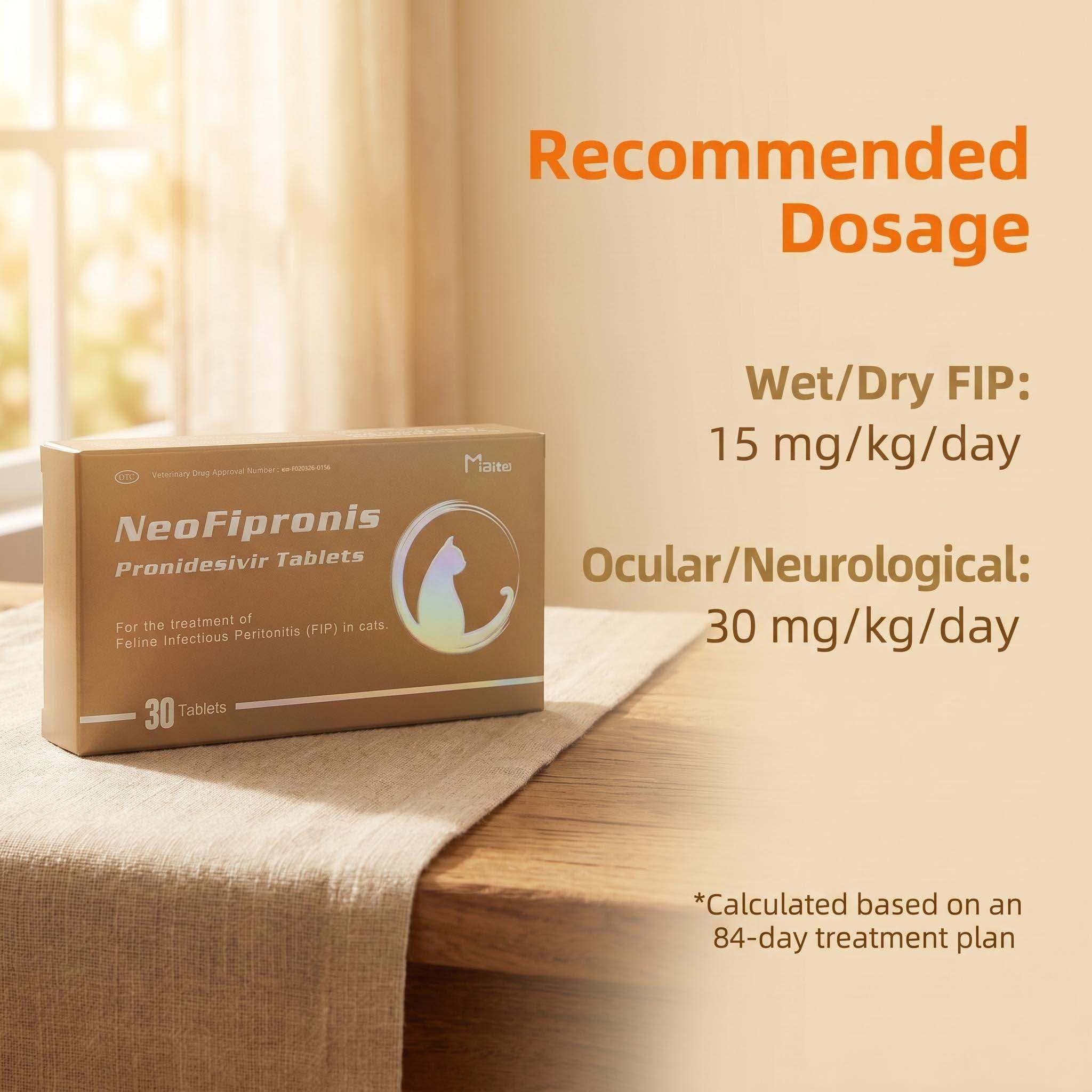
Recent developments have shifted the landscape of FIP prognosis through the advent of antiviral medications. Miaite NeoFipronis (Pronidesivir) GS-441524 is a groundbreaking antiviral therapy suitable for symptoms caused by feline infectious peritonitis, including neurological manifestations such as nerve damage. This medication effectively addresses symptoms like loss of appetite, lethargy, fever, ascites, pleural effusion, lymphadenopathy, inflammatory granulomas, nerve impairment, and uveitis.
NeoFipronis (Pronidesivir) offers several advantages:
Excellent therapeutic effects on FIP
World’s first officially approved oral treatment for FIP by the Lao Ministry of Agriculture and Forestry (MAF) in March 2026, with an official drug registration number
Safety and tolerability: Non-invasive, rapidly absorbed, fast-acting, and well-tolerated with minimal side effects
The availability of this antiviral markedly alters clinical management, providing hope for cats affected with neurological FIP.
Diagnostic Algorithms for Neurological FIP
Early and accurate diagnosis is essential to initiate effective treatment. A stepwise diagnostic algorithm includes:
1. History and Clinical Signs: Focus on neurological symptoms alongside systemic signs
2. Neuroimaging: MRI/CT scans to identify characteristic lesions
3. CSF Analysis: Detect inflammatory changes consistent with FIP
4. Serological and Molecular Testing: FCoV antibody titers and PCR assays
5. Histopathology (if possible): For definitive diagnosis, especially post-mortem
6. Therapeutic Trial: Initiate antiviral therapy and observe clinical response
Timely diagnosis combined with effective antiviral treatment can significantly improve a cat’s quality of life and prognosis.
Prevention and Management Strategies
While there is no fully effective vaccine for FIP, management strategies focus on reducing exposure and early detection:
Minimize feline coronavirus transmission in multi-cat environments
Maintain good hygiene practices
Regular health monitoring, especially in young and immunocompromised cats
Implement antiviral therapy promptly upon suspicion or diagnosis of FIP
Supportive care remains essential during antiviral treatment, including nutritional support, anti-inflammatory medications, and symptomatic relief.
Future Perspectives and Research
Ongoing research aims to develop more precise diagnostic tools and targeted therapies. The expanding understanding of FIP’s neuropathology is paving the way for improved management protocols. The integration of antivirals like NeoFipronis (Pronidesivir) demonstrates promising results and sets a precedent for future drug development.
Summary
Neurological FIP presents unique diagnostic and therapeutic challenges. An integrated approach—combining clinical assessment, advanced imaging, laboratory diagnostics, and antiviral therapies—serves as the cornerstone of effective management. The advent of oral antivirals, notably NeoFipronis (Pronidesivir), represents a significant step forward in the fight against this devastating disease.
References
“Feline Infectious Peritonitis: Pathogenesis and Diagnosis”
“Advances in Antiviral Therapy for FIP”
“Neurological Manifestations of FIP: Clinical Approach”
“MRI Features of FIP in Cats”
“Treatment Outcomes Using NeoFipronis (Pronidesivir) GS-441524”